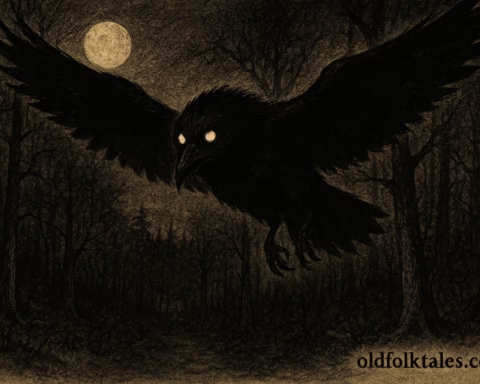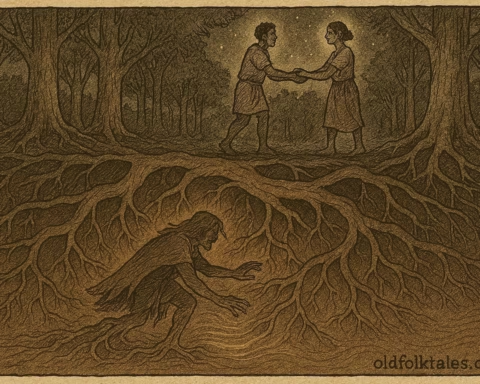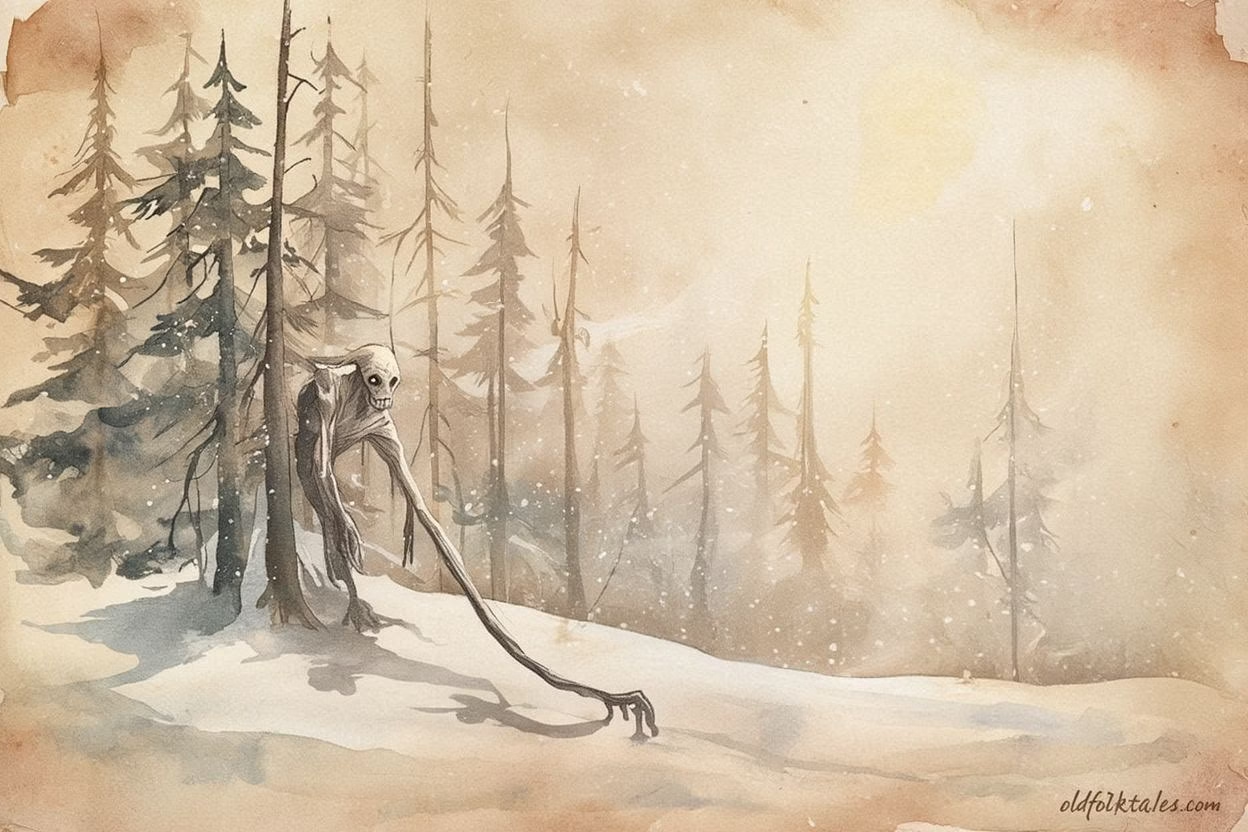
In the frozen forests surrounding the Great Lakes, where winter dominates for months and the wind cuts through the trees like a sharpened blade, there lives a spirit both feared and revered. Known as the Wendigo, it is a being born of hunger, pride, and human transgression. Travelers tell stories of seeing its gaunt figure moving silently among the snow-laden pines, eyes glowing like embers in the endless twilight. Its presence is a warning that greed, excess, and selfishness can twist the human heart into monstrous form.
Long ago, a man named Niskayuna set out with his companions to hunt and gather food in the northern woods. They were brave and strong, accustomed to hardship, but one winter proved harsher than any before. Snow fell endlessly, the lakes froze over, and their supplies dwindled to almost nothing. Their bodies ached from the cold, and the shadow of hunger grew heavy upon their spirits. One night, as they huddled around a meager fire, despair whispered among them.
When provisions finally ran out, the group faced a terrible choice. One man, driven by desperation, suggested they consume the flesh of a fallen companion to survive. The words fell into the freezing air like poison, yet hunger clouded their reason. The moment the taboo was broken, Niskayuna felt a darkness enter his chest. His blood ran cold, his skin tightened unnaturally over his bones, and he felt his limbs lengthen and twist. His heart filled with an unquenchable hunger, deeper and more insistent than anything he had ever known. He had become a Wendigo, a spirit of greed given form.
Encounter dragons, spirits, and beasts that roamed the myths of every civilization
The transformation was immediate and horrifying. No matter how much he ate, the gnawing hunger remained. His mind was no longer fully his own; a voice whispered from within, urging him to consume without end. Those who had shared in the act soon fell under the same spell, their bodies contorting into thin, icy shapes that reflected their insatiable appetites. It was not only a punishment for breaking the sacred law against cannibalism but also a moral lesson encoded in the flesh and spirit: unchecked desire consumes the soul.
Over time, the Wendigo became a legend among Algonquian and Cree peoples, a guardian of moral balance in the unforgiving northern forests. Hunters spoke of encountering its shadow on quiet trails, its long limbs stretching silently through the snow. It would sometimes appear as a human to tempt travelers with hunger or greed, only to reveal its monstrous form when they faltered. The Wendigo’s whispers were said to infect the mind, pushing the weak and desperate to acts of selfishness and transgression.
Yet the story is not solely one of terror. Communities near the forest learned to leave offerings to appease the spirits of the woods, to avoid excessive pride or selfishness, and to respect the cycles of life and death. Elders told their children that moderation in all things hunger, desire, and ambition was the surest protection against the Wendigo. The myth became a vessel for teaching restraint, communal responsibility, and reverence for the natural world. It reminded people that moral failure is not only a personal tragedy but also a danger to the community.
Hunters and travelers also learned that the Wendigo could not be defeated by force or speed. The spirit’s power was not physical alone; it was spiritual and moral. Courage, wisdom, and adherence to sacred customs were the only shields against its temptation. Legends recount travelers surviving encounters not by fleeing or fighting but by offering thanks, showing humility, and refusing to yield to excessive desire. In this way, the Wendigo serves as both a warning and a guide, embodying the consequences of violating the natural and ethical laws that bind society together.
The story endures across generations because it speaks to universal human experiences. Cold, hunger, fear, and the pull of desire are present in every age. The Wendigo teaches that excess leads to transformation, corruption, and eventual destruction. Even a person of great strength and skill may fall if greed takes root in the heart. The spirit reminds us that survival is not just a matter of body but of soul. True strength lies in moderation, moral courage, and respect for others.
To this day, Algonquian and Cree storytellers recount tales of the Wendigo around fires in the long winter nights. Each retelling emphasizes that the forest holds spirits beyond human understanding, that hunger is both physical and spiritual, and that the mind must remain disciplined even in extreme circumstances. The Wendigo is a guardian of morality, a reflection of human weakness made flesh, and a mirror in which society sees the consequences of desire unbridled.
The legend of the Wendigo remains alive as a cautionary tale. It teaches that unchecked desire devours the soul, that moral transgression has tangible consequences, and that respect for sacred rules and nature is essential to survival. In every gust of wind through the northern trees and in the silence of snow-covered forests, the spirit’s lesson whispers: temper your appetite, control your greed, and the spirit of humanity will endure.
Author’s Note
The Wendigo legend is more than a story of fear; it is a profound moral and cultural teaching. In Algonquian and Cree traditions, it illustrates the dangers of greed, selfishness, and excess, particularly in times of hardship. It shows that violating sacred laws carries consequences that extend beyond the immediate act, transforming both body and soul. The myth encourages reflection on self-discipline, communal responsibility, and respect for the natural world. By understanding the Wendigo, we are reminded that moral restraint is not a weakness but the foundation of human resilience.
Knowledge Check
1. What does the Wendigo symbolize?
It symbolizes greed, insatiable hunger, and the consequences of violating sacred rules.
2. How does a human become a Wendigo?
By committing cannibalism or succumbing to extreme greed and desire.
3. What effect does the Wendigo have on its victims or the land?
It haunts forests, preys on humans, and spreads fear and moral lessons through its presence.
4. Why is the Wendigo legend important in Algonquian and Cree culture?
It teaches moderation, respect for nature, and the dangers of selfishness and excess.
5. Can the Wendigo be defeated by strength alone?
No, it can only be avoided or resisted through humility, adherence to sacred laws, and moral discipline.
6. What is the ultimate warning of the Wendigo myth?
Unchecked desire and moral failure destroy the soul, not just the body.
Source:
Adapted from the Algonquian folktale “The Wendigo” in The Windigo and Other Tales of the North, collected by William W. Warren (1851), Wisconsin Historical Society.
Cultural Origin:
Algonquian and Cree Peoples, North America