In the time when the world was younger and the Lakota people walked the great plains beneath skies that stretched endlessly in all directions, there came a season of terrible hardship. The buffalo, upon whom the people depended for food, clothing, shelter, and tools, had disappeared from the land. The herds that usually darkened the grasslands like moving shadows were nowhere to be found. The people’s lodges, which should have been filled with dried meat and warm robes, stood nearly empty.
Hunger walked among the Lakota like an unwelcome visitor who would not leave. Children cried in the night. Elders grew weak. Even the strongest hunters returned from their journeys with empty hands and heavy hearts. The people gathered in council, their faces lined with worry, wondering what they had done to lose the favor of the spirits, what prayers they had forgotten, what sacred ways they had neglected.
The chiefs, seeking guidance and desperate to help their people, sent out the best hunters to search the four directions for any sign of the buffalo. Among those who volunteered for this crucial mission were two young men, scouts known for their keen eyes and their ability to travel far and fast across the rolling plains. They set out early one morning when the sun was just beginning to paint the eastern horizon with streaks of red and gold, determined not to return until they had found the buffalo or learned where they had gone.
For days, the two hunters traveled across the endless grasslands. The wind moved through the tall grasses like invisible hands, creating waves that reminded them of the great waters they had heard about in stories but never seen. Above them, hawks circled on broad wings, and below, the earth stretched out in gentle swells and valleys, beautiful but empty of the life the people needed.
On the fourth day of their journey, as they stood atop a high ridge scanning the horizon, one of the hunters suddenly gripped his companion’s arm. “Look,” he whispered, pointing to the valley below. “Do you see?”
Through the shimmering heat that rose from the sun-warmed earth, a figure approached. As it drew nearer, both hunters realized they were seeing something extraordinary. A woman walked toward them across the prairie, and she seemed to glow with an inner light that made her visible even at a great distance. She was dressed in buckskin of the purest white, adorned with sacred symbols that neither hunter had seen before but which seemed to carry meaning that resonated in their very bones.
Her beauty was unlike anything in their experience. It was not merely the beauty of physical form but something deeper and more powerful, a radiance that seemed to come from the spirit world itself. Her hair, black as a raven’s wing, flowed behind her as she walked. In her arms, she carried a bundle wrapped in buffalo hide, and even from a distance, the hunters could sense that whatever lay within that bundle was sacred beyond measure.
One of the hunters, overcome by desire and perhaps confused by hunger and exhaustion, thought only of the woman’s physical beauty. His intentions turned impure, and he spoke to his companion of approaching her with disrespect. The other hunter, sensing something sacred in what they witnessed, warned his friend. “This is no ordinary woman,” he said, his voice low and urgent. “We should approach with respect and pure hearts. Can you not feel the sacred power that surrounds her?”
But the first hunter would not listen. As the woman drew near enough to hear, he stepped forward with improper intentions clear in his manner. The woman, who knew the thoughts of both men as clearly as if they had spoken aloud, looked upon the disrespectful hunter with eyes that held both sadness and judgment.
“Come forward,” she said to him, her voice like music but also like thunder, gentle but commanding. The hunter approached, and as he reached her, a strange mist descended, covering both figures. When the mist cleared moments later, only the woman remained standing. At her feet lay a pile of bones, all that remained of the hunter who had approached with impure thoughts. The bones were being consumed by serpents, a sign of how base desires can consume a person from within.
The second hunter, witnessing this terrible and awesome display of sacred power, fell to his knees, terrified that he too would be destroyed. But the woman spoke to him kindly. “Stand up,” she said. “You need not fear. Your heart is respectful, and your thoughts are good. I have come with a message for your people, and you will be my messenger.”
With trembling legs, the young hunter stood. The woman looked at him with eyes that seemed to see not just his present form but his past and future, his ancestors and descendants, the full measure of his spirit across all time.
“Return to your people,” she instructed. “Tell them to prepare a great lodge in the center of the camp, a sacred space where I may meet with them. Tell them to gather the chiefs and elders, the holy men and women, and all who wish to learn the sacred ways. I am Ptehíŋčala Ska Wíŋ, the White Buffalo Calf Woman, and I bring gifts from the spirit world that will sustain your people not just in body but in spirit, not just for this season but for all the generations to come.”
The hunter, his fear transformed into awe and reverence, ran back to his people faster than he had ever run before. He burst into the camp calling for the chiefs, and when the people gathered, he told them everything he had witnessed. Some were skeptical, but the elders sensed truth in his words and in the expression on his face. They instructed the people to prepare as the woman had commanded, constructing a large ceremonial lodge in the camp’s center and purifying themselves with sage and sweet grass.
Four days later, as the sun reached its highest point in the sky, Ptehíŋčala Ska Wíŋ appeared at the edge of the camp. She walked slowly and with great dignity through the assembled people, who parted before her in silence and wonder. Children stared with wide eyes. Warriors who had faced enemies without flinching felt their hearts pound with awe. Grandmothers wept, recognizing something in this sacred woman that connected to the deepest roots of their spiritual understanding.
She entered the ceremonial lodge where the chiefs and holy people had gathered. The light seemed to change inside that space, becoming softer and more golden, as if the ordinary world had become thin and the sacred world was shining through. Ptehíŋčala Ska Wíŋ stood in the center, and all eyes were upon her.
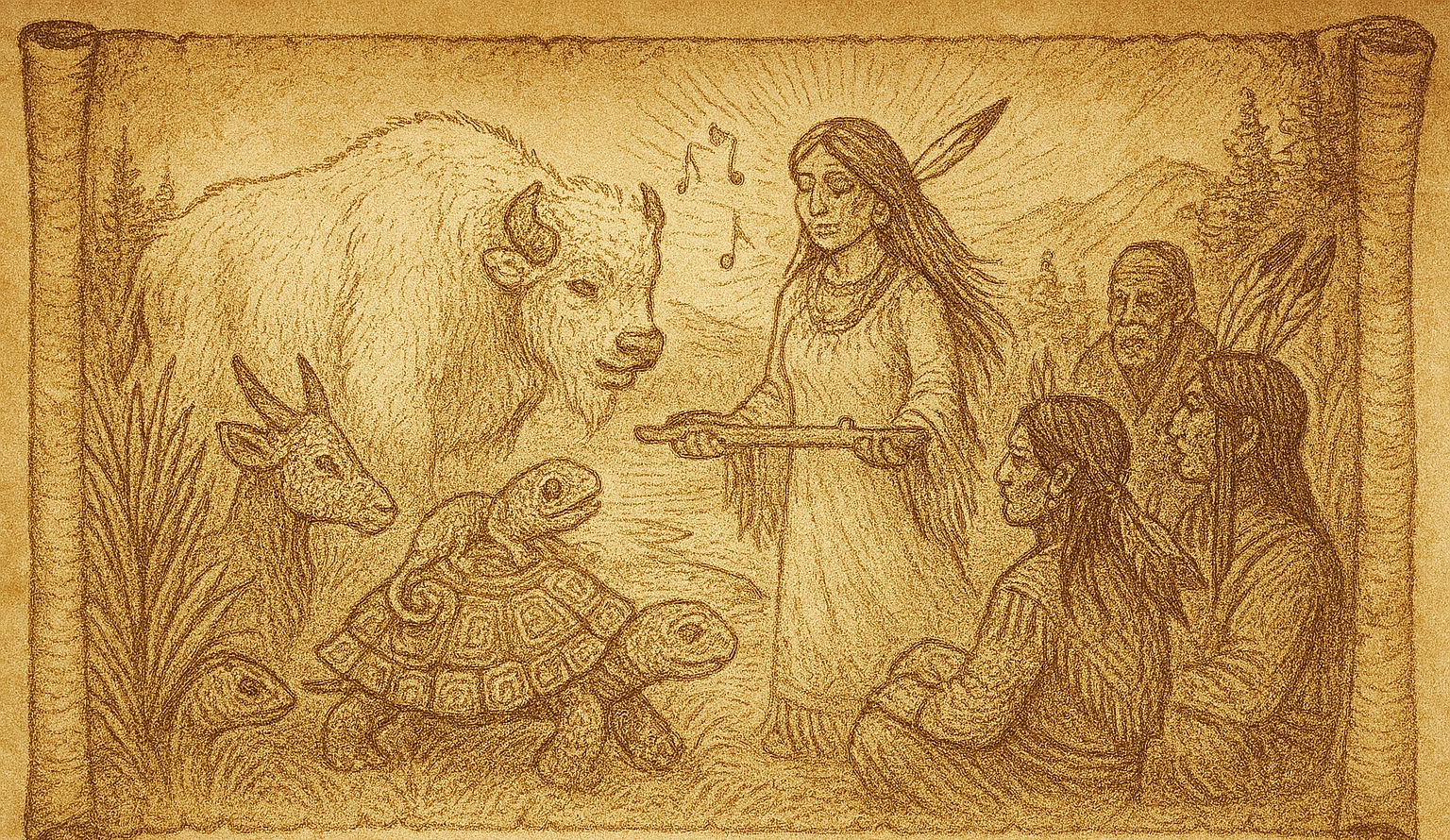
Slowly, with great ceremony, she unwrapped the bundle she had been carrying. Inside was an object of profound beauty and power: the Chanunpa, the Sacred Pipe. Its bowl was made of red stone that seemed to hold within it the color of the earth and the blood of all living things. Its stem was crafted from wood and adorned with sacred symbols and decorations.
“This is the Sacred Pipe,” she said, her voice filling the lodge though she did not speak loudly. “The bowl is of red stone and represents the earth, the mother of all life. The stem is of wood and represents all growing things. When you join these two parts together and light the sacred tobacco, the smoke that rises carries your prayers directly to Wakan Tanka, the Great Mystery, the sacred presence that dwells in and through all things.”
She then proceeded to teach the people how to use the pipe properly, with what prayers and in what manner, explaining that it was not a thing to be used lightly or without proper preparation and respect. The smoke, she told them, represented the breath of the Great Spirit, and those who smoked the pipe in ceremony were sharing breath with the divine, creating a sacred bond between the human and spirit worlds.
Over the course of four days, Ptehíŋčala Ska Wíŋ taught the Lakota people seven sacred rites, ceremonies that would guide their spiritual life and ensure their connection to the sacred powers. She taught them the Inípi, the purification ceremony of the sweat lodge where the people could cleanse themselves physically and spiritually. She taught them Haŋbléčheyapi, the vision quest where young people could seek guidance and purpose through fasting and prayer in isolated places. She taught them Wiwáŋyaŋg Wačhípi, the sun dance, where the people could offer their prayers and even their own flesh as sacrifice for the good of the community.
She taught them Hunkápi, the making of relatives ceremony that created sacred bonds beyond those of blood, joining families and tribes together. She taught them Išnáthi Awíčhalowanpi, the coming of age ceremony for young women entering womanhood. She taught them Tapa Waŋka Yap, the throwing of the ball ceremony that represented the soul’s journey and the interconnection of all life. And finally, she taught them Wanáǧi Yuhápi, the keeping of the soul ceremony, honoring those who had passed into the spirit world.
Each teaching was rich with meaning, layered with symbolism, connected to the great web of life that holds all things together. The people listened with hearts open, understanding that they were receiving something precious beyond measure, wisdom that would guide not just them but their children and their children’s children through all the ages to come.
When the teachings were complete, Ptehíŋčala Ska Wíŋ spoke to the assembled people one final time. “Keep these sacred ways,” she said. “Honor the Chanunpa and the seven rites I have given you. Walk the sacred path with humble hearts and respect for all living things. If you do these things, you will never want for what you truly need. The buffalo will return to you, and more than buffalo, you will have spiritual strength and balance. You will know your place in the great circle of life.”
She promised them that she would return one day to see how they had kept her teachings, and that her return would be a time of great change for all peoples. Then, having delivered her message and her gifts, the White Buffalo Calf Woman turned and began to walk away from the camp.
The people watched in silence as she moved across the prairie. After traveling a short distance, she stopped and lay down upon the earth. When she rose, she had transformed into a black buffalo. She walked a bit farther and lay down again, rising this time as a brown buffalo. A third transformation brought her up as a red buffalo. Finally, she lay down one last time, and when she rose, she had become a white buffalo calf, rare and sacred, a sign of peace, renewal, and the presence of the sacred in the world.
The white buffalo calf walked on until distance and the shimmering heat made her disappear into the horizon, but the people knew she had not truly left them. Her teachings remained, her pipe remained, and her promise remained. True to her word, the buffalo returned to the plains, and the people never again knew such desperate famine. More importantly, they now possessed a spiritual foundation that would sustain them through all the challenges and changes that the future would bring.
From that time forward, the Chanunpa became the most sacred object of the Lakota people, handled only with proper ceremony and respect. The seven sacred rites became the backbone of Lakota spiritual life, guiding the people in how to live with balance and reverence. And the story of Ptehíŋčala Ska Wíŋ was told and retold, passed from grandmother to grandchild, from holy person to seeker, ensuring that each new generation understood the sacred responsibility they carried.
To this day, the Lakota people and many other indigenous nations honor the teachings of the White Buffalo Woman. The appearance of a white buffalo calf, an extremely rare occurrence in nature, is still considered a sacred sign, a reminder of her visit and her promise, a call to return to the sacred ways and to live with respect for all of creation. The pipe ceremony continues, the sacred rites are practiced, and the wisdom she brought continues to guide those who seek to walk the sacred path with humble hearts and open spirits.
Click to read all Myths & Legends – timeless stories of creation, fate, and the divine across every culture and continent
The Moral Lesson
This sacred Lakota story teaches profound lessons about respect for the sacred, the importance of spiritual practice, and living in balance with all creation. The fate of the disrespectful hunter demonstrates that approaching sacred matters or any aspect of life with impure intentions brings destruction, while respect and humility open doors to wisdom and blessing. The seven sacred rites and the Chanunpa represent a complete spiritual path that addresses all aspects of life, from birth to death, from individual growth to community welfare. Most importantly, the story teaches that spiritual strength and balance are as essential as physical sustenance, and that maintaining proper relationship with the sacred ensures not just survival but meaningful, purposeful life. The White Buffalo Woman’s promise reminds us that keeping sacred commitments and living respectfully ensures that we will always have what we truly need.
Knowledge Check
Q1: Who is Ptehíŋčala Ska Wíŋ and why did she come to the Lakota people?
A: Ptehíŋčala Ska Wíŋ, the White Buffalo Calf Woman, is a sacred being from the spirit world who came to the Lakota people during a time of great famine and spiritual need. She came to bring the Chanunpa, the Sacred Pipe, and to teach the seven sacred rites that would provide the people with not just physical sustenance but spiritual guidance and balance for all future generations. Her appearance represented divine intervention at a moment of crisis.
Q2: What happened to the hunter who approached the White Buffalo Woman with disrespect?
A: The hunter who approached with impure thoughts and disrespectful intentions was consumed by a sacred mist. When the mist cleared, only his bones remained, being consumed by serpents. This demonstrated the sacred power of Ptehíŋčala Ska Wíŋ and taught the crucial lesson that approaching sacred matters or beings with impurity or disrespect brings destruction. It served as a powerful warning about the importance of maintaining respect and proper intentions.
Q3: What is the Chanunpa and why is it considered sacred?
A: The Chanunpa, or Sacred Pipe, is a ceremonial object given to the Lakota by the White Buffalo Woman. Its bowl of red stone represents the earth and all life, while its stem of wood represents all growing things. When joined and used properly, the smoke carries prayers directly to Wakan Tanka, the Great Mystery. It creates a sacred connection between the human and spirit worlds, allowing people to share breath with the divine. It remains the most sacred object in Lakota spiritual practice.
Q4: What are the seven sacred rites and what do they represent?
A: The seven sacred rites taught by White Buffalo Woman cover all important aspects of Lakota spiritual life: Inípi (purification in sweat lodge), Haŋbléčheyapi (vision quest for guidance), Wiwáŋyaŋg Wačhípi (sun dance as communal sacrifice and prayer), Hunkápi (making of relatives ceremony), Išnáthi Awíčhalowanpi (coming of age for young women), Tapa Waŋka Yap (throwing of the ball to represent life’s journey), and Wanáǧi Yuhápi (keeping of the soul to honor the deceased). Together they provide a complete spiritual framework for living in balance.
Q5: What is the significance of the White Buffalo Woman’s four transformations as she left?
A: The White Buffalo Woman transformed into four different colored buffalo, black, brown, red, and finally white, as she departed. These transformations represent the four directions, the four seasons, the four ages of life, and the unity of all races of humanity. The final transformation into a white buffalo calf established that rare creature as a sacred sign. Her transformations demonstrated her connection to all aspects of creation and established the white buffalo as a continuing reminder of her presence and promise.
Q6: Why do the Lakota consider the appearance of a white buffalo calf to be sacred?
A: The appearance of a white buffalo calf is considered sacred because it directly connects to the White Buffalo Woman’s departure and her promise to return. Since white buffalo are extremely rare in nature, occurring perhaps once in several million births, their appearance is seen as a powerful spiritual sign, a reminder of the sacred teachings, and a call to return to or strengthen commitment to the sacred ways. It represents peace, renewal, and the continued presence of the sacred in the world.
Source: Adapted from The Sacred Pipe: Black Elk’s Account of the Seven Rites of the Oglala Sioux by Joseph Epes Brown, which records the sacred teachings as transmitted by the holy man Black Elk, preserving crucial aspects of Lakota spiritual tradition.
Cultural Origin: Lakota (Sioux) Nation, Great Plains, United States.