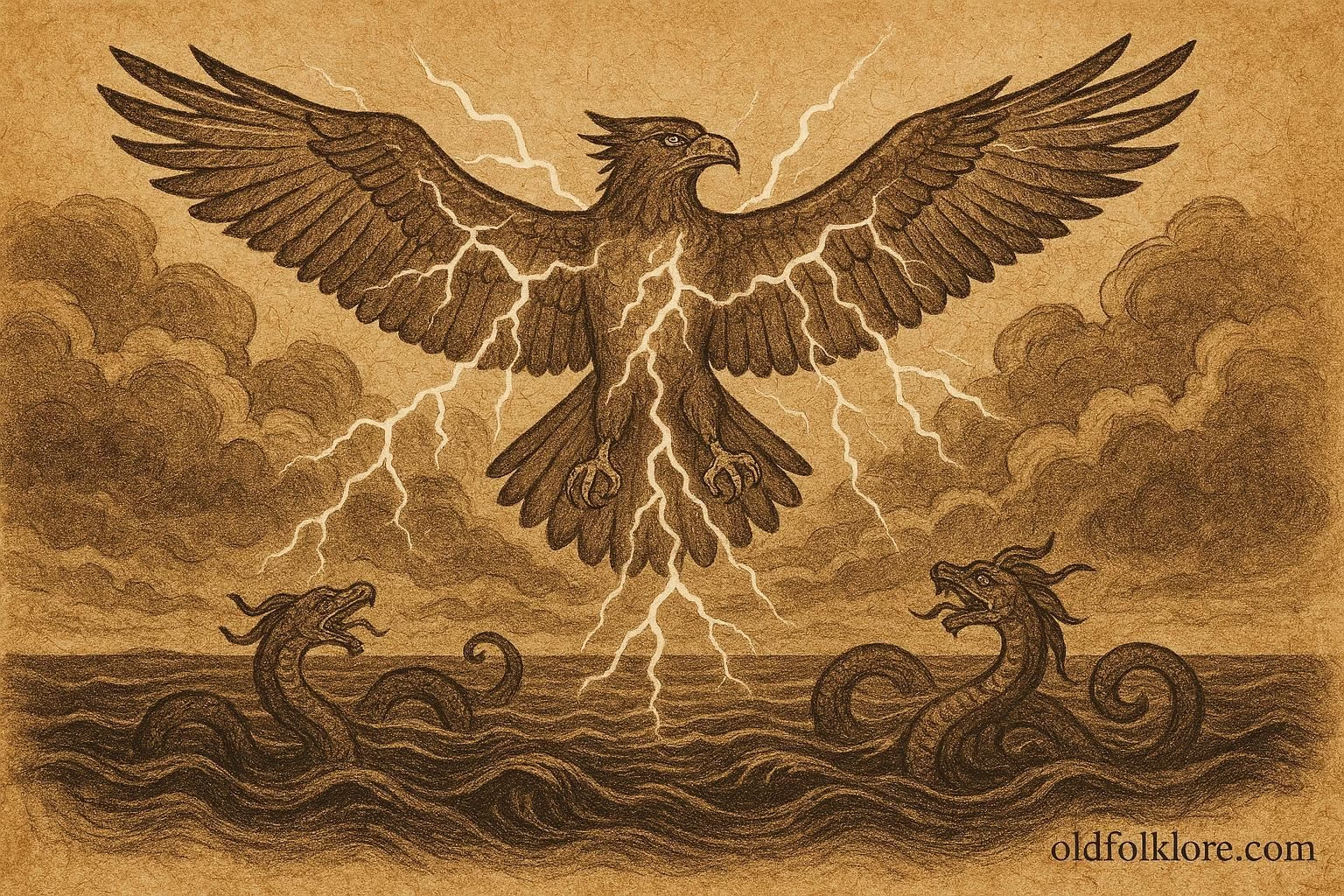
In Ho-Chunk (Winnebago) tradition, the Thunderbirds, known as Wakąjá, are mighty sky-spirits who dwell in the uppermost reaches of the heavens. They rule the realm of storms, lightning, thunder, and the moral order that binds the world together. Majestic and colossal, they are often described as great birds whose wingbeats stir the clouds and whose eyes burn with the power of the storm itself. The Thunderbirds are guardians of humanity, enforcers of cosmic balance, and sworn enemies of the Underwater Spirits, the Wakčéxi, chaotic serpent beings who dwell in the depths and seek to disrupt the order of nature.
The Thunderbirds are also tied to clan lineage among the Ho-Chunk people; certain families trace their sacred origin to these sky-beings. In ceremonies, prayers, and narratives, they are honored as protectors, peacemakers, and bringers of rain, whose storms cleanse the land and empower the cycles of life.
Discover the ceremonies and sacred festivals that honored gods and balanced nature’s powers
MYTHIC STORY: The Battle of Wakąjá and the Underwater Spirits
Long before humankind walked the earth, when the world was young and the elements still argued over their dominion, there was a great tension between the realms above and below. High in the upper sky lived the Wakąjá, the Thunderbirds, vast beings of shimmering feathers and thunderous breath, whose wings carried the winds of the world. Below the earth and under every river, lake, and deep pool lived the Wakčéxi, the Water Spirits, serpentine powers of immense strength, coiling beneath the surface and shaping the currents with their moods.
The Thunderbirds guarded the balance of the world. They brought storms that nourished the earth, protected the people, and held back the forces of chaos. The Water Spirits controlled the depths, guiding the hidden paths of fish, shaping the rains from below, and commanding secrets carried in silent waters. Peace existed only in fragile intervals, for both held immense power, and the world trembled when their wills clashed.
One season, the struggle broke open into war.
It began when a great Wakčéxi, angered by a long drought that weakened the rivers, rose from the deepest waters and began to lash out with destructive waves. Lakes overflowed, rivers surged, and storms of the lower waters swept across the land, destroying villages, uprooting forests, and swallowing the earth. Humans, caught between these forces, cried out in fear and prayed to the Thunderbirds for aid.
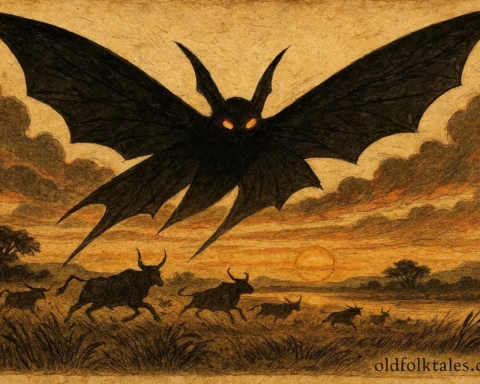
High above, the Thunderbirds heard the cries. Their leader, a mighty being often described as the most radiant of his kind, his wings edged with crackling blue fire, opened his immense wings and soared downward from the heights. Behind him followed the host of Wakąjá, their feathers glittering like storm-lit clouds.
As they descended, the sky darkened. The people felt a sudden wind rush across the plains, lifting their hair and rattling the trees. Lightning flashed without sound. Then the first Thunderbird spread his wings over the valley, and thunder cracked across the heavens, echoing through the hills.
He called out to the Wakčéxi:
“You endanger the balance. Withdraw, or face the storm.”
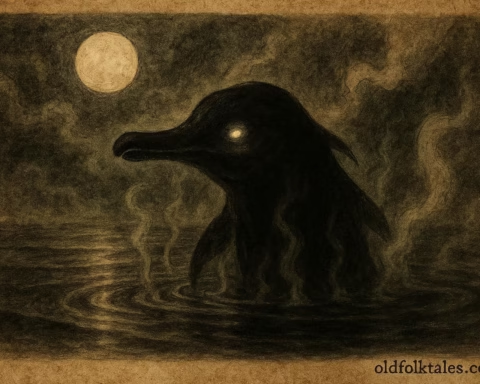
But the Water Spirits, proud and ancient, refused. They surged upward in great coils of water, their eyes glowing like embers beneath the currents. The largest among them rose to meet the Thunderbirds, its head towering like a living pillar of the river itself.
What followed was a battle that shaped the memory of the world.
The Wakčéxi lashed upward with torrents of water, summoning whirlpools and waves that reached for the sky. The Thunderbirds responded with lightning that split the air, striking the water with crackling fury. Steam rose in great plumes as lightning met river. Winds howled across the land. Trees bent nearly to the ground as the Thunderbirds beat their colossal wings, driving the storm onward.
The leader of the Thunderbirds faced the great Wakčéxi directly. He rose high into the clouds, drawing power from the heart of the storm, where thunder is born. When he descended, his talons glowed with the fire of the sky. With a cry that shook the mountains, he struck.
The lightning-charged blow broke through the waters that shielded the Wakčéxi and burned against its scaled hide. The spirit writhed, coiling back into the deep. But it did not yield. It struck again, rising in a massive wave that attempted to engulf the Thunderbird whole. Again the Thunderbird answered with thunder, beating his wings so fiercely that the wave shattered into mist.
The battle raged from dawn until the edge of twilight.
At last, weakened by repeated strikes, the great Wakčéxi retreated to the depths, its wounded form sinking beneath the waters. The lesser spirits followed, vanishing into the shadows below as the currents stilled.
The Thunderbirds circled once above the quieted waters. Then, satisfied that the balance had been restored, they rose back into the sky, their wings trailing the final echoes of thunder. The rains they brought washed the land clean, refilling lakes and nourishing the earth.
From that day forward, the Ho-Chunk people remembered:
The Thunderbirds stand between the world and chaos, guardians whose storms are blessings, whose battles protect the living.
Learn the ancient stories behind deities of light, storm, and shadow from cultures across the world
Author’s Note
This myth reveals the Ho-Chunk vision of a world held together by tension and harmony. The Thunderbirds are not merely storm spirits—they are guardians who act when balance is threatened. Their battle with the Water Spirits echoes a deeper truth: the forces that sustain the world are powerful, unpredictable, and interdependent. In honoring the Thunderbirds, the Ho-Chunk recognize the sacred responsibility of maintaining balance—within nature, and within the human heart.
Knowledge Check
Q1: What are the Thunderbirds called in Ho-Chunk language?
A: Wakąjá.
Q2: Who are the Thunderbirds’ primary adversaries?
A: The Wakčéxi, or Underwater Spirits.
Q3: What natural forces do Thunderbirds command?
A: Thunder, lightning, storms, and powerful winds.
Q4: Why did the Thunderbirds intervene in the mythic story?
A: To stop the destructive floods caused by the enraged Water Spirits and restore balance.
Q5: What does the battle symbolize in Ho-Chunk worldview?
A: The necessity of balance between cosmic forces and the role of guardianship.
Q6: What did the Thunderbirds bring after the battle?
A: Cleansing and life-giving rain.
Source: Ho-Chunk (Winnebago) Mythology, North America.
Source Origin: Ho-Chunk (Winnebago), North America