Tinku is an ancient Andean ritual practiced primarily in the highland communities of northern Potosí, Bolivia, especially around the region of Macha. Its roots stretch deep into pre-Hispanic Quechua and Aymara traditions, where seasonal gatherings, kinship rivalries, and offerings to the Earth Mother shaped community life. Although each village preserves its own customs, the central idea remains constant: the encounter, or tinku, is a meeting of opposing groups whose clash produces both social balance and spiritual nourishment. Historically, these events took place during planting or harvest seasons when communities needed the Earth to respond with generosity. The ritual, therefore, emerged not as simple violence but as a cosmological and communal duty.
Description
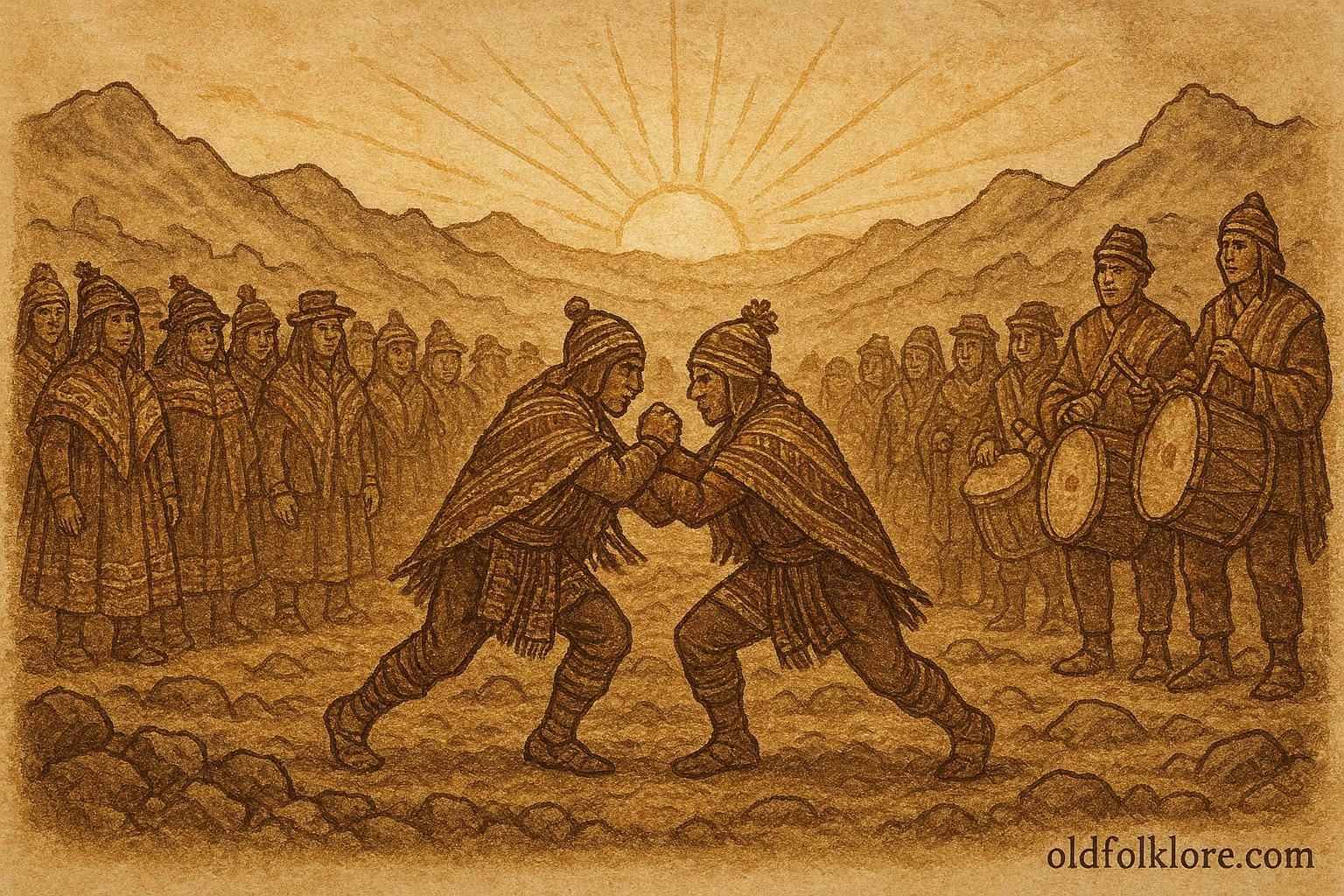
Tinku means “encounter,” and the word captures both the physical and symbolic nature of the ritual. Villagers from different ayllus, extended kin groups, meet in designated fields or plazas after processing with music, bright woven clothing, and ceremonial banners. The atmosphere resembles a festival. Musicians play high-pitched charangos and pounding drums while dancers move in deliberate patterns. The communities arrive together yet retain their separate identities until the ritual begins.
The combat is structured, communal, and historically believed to please Pachamama. Participants fight with bare hands or simple, blunt weapons such as slings without stones or tightly wrapped cloths. The clashes are not chaotic. They follow established rhythms, with elders supervising, musicians maintaining continuity, and participants understanding limits. Although injuries can occur, the ritual has never been conceived as pointless aggression. It is a form of sacred offering. Andean cosmology places great emphasis on reciprocity; the Earth gives when humanity gives. In this worldview, a small shedding of blood feeds the soil, encouraging rain, fertility, and protection for crops.
Modern Tinku has evolved. Government regulations and community agreements now limit the intensity of fights. Police and local leaders intervene to maintain safety. In some towns, the ritual has become more ceremonial and includes staged reenactments that highlight dance and symbolic gestures rather than intense combat. Yet the core idea survives: rivalry is transformed into renewal, and competition becomes a way of strengthening social bonds. Music, feasting, and communal gatherings follow the encounters, turning struggle into celebration.
In many regions, Tinku is now performed during annual fiestas tied to Catholic calendars, demonstrating how Indigenous and Christian traditions have intertwined. The ritual often appears during early May, when feasts honor both local saints and Pachamama. This blend reflects centuries of cultural adaptation while preserving the ritual’s Andean foundation.
Mythic Connection
Tinku is grounded in Andean cosmology. Pachamama, Earth Mother, stands at the center of agricultural and spiritual life. She is the source of growth, rain, and protection. Andean communities believe that humans and Earth share a reciprocal relationship known as ayni. If people honor the land, the land responds with abundance. The ritual combat embodies ayni in physical form. The offering of courage, sweat, and minimal blood signals commitment to the cycle of life.
These concepts tie Tinku to a larger Andean worldview where sacred mountains (apus), ancestral spirits, and living landscapes participate in human affairs. The Earth is not passive. She listens, responds, and protects when fed through ritual. Combat becomes a dialogue between humanity and nature. The clash of bodies echoes the clash of seasons, the shift of rains, and the ongoing negotiation between harsh environments and human survival.
At a social level, the ritual balances rival communities. Ancient Andean societies embraced dualism: upper and lower moieties, opposing clans, and paired identities organized village life. Tinku allows these oppositions to meet, assert strength, and resolve tension. Victory matters less than the act of showing up. By participating, each group reaffirms ancestry, loyalty, and cosmic place.
Even today, participants explain the ritual in spiritual terms. They describe Pachamama as receptive to human bravery and sincerity. The ritual honors ancestors who fought in the same fields generations before. Thus, Tinku weaves past and present into a living cultural thread. It remains one of the most striking examples of how a community ritual can express cosmology, identity, and resilience.
Author’s Note
This article examines Tinku as a structured Andean ritual that unites cosmological belief, agricultural need, and community identity. It highlights how combat becomes a sacred offering to Pachamama, how social dualism shapes the encounter, and how modern communities preserve the rite through adapted forms that retain its spiritual essence.
Knowledge Check
1. What does “Tinku” mean?
It means “encounter,” referring to both the meeting of communities and the ritual clash that follows.
2. Why was combat linked to agriculture?
Andean cosmology teaches that offerings to Pachamama promote rain and fertility, ensuring balanced crop cycles.
3. What role do music and dance play in Tinku?
They maintain ritual rhythm, support participants, and mark the ceremony as a festive communal event.
4. How has modern Tinku changed?
Regulations and oversight reduce danger, and some communities now use symbolic or staged encounters.
5. What is the spiritual principle behind Tinku?
Ayni, the reciprocal exchange between humans and the Earth.
6. Why is Tinku tied to social identity?
It reinforces clan rivalries, ancestry, and communal unity through structured ritual conflict.