In the heart of the South African plains, where the stars gleam like ancestral eyes, the people of an old village feared a being that crept unseen in the night. It was said that envy and anger could summon it, that whispered curses carried on the wind might give it form. They called it Tokoloshe, a small but wicked spirit, born from jealousy and fed by hatred.
The story begins with a woman named Nomvula, known for her beauty and her laughter that could brighten even the grayest days. She and her husband, Mandla, were beloved by the village, for they were generous, kind, and prosperous from their hard work. Yet not all hearts were free of envy. Among them lived Zanele, a woman whose jealousy grew like a hidden thorn. She resented Nomvula’s joy and whispered in secret that no one could deserve such happiness without stealing it from another.
One evening, as the sun dipped below the hills, Zanele went to visit an old witch who lived near the marshlands. The witch’s hut smelled of roots and smoke, and strange charms hung from its rafters. When Zanele confessed her jealousy, the witch smiled and said softly, “If you wish to see her fall, you must call upon the Tokoloshe.” She took a small clay figure shaped like a child and painted its eyes black with ash. “This is his vessel. You must place it beside the river at night and whisper your wish.”
Learn the ancient stories behind deities of light, storm, and shadow from cultures across the world
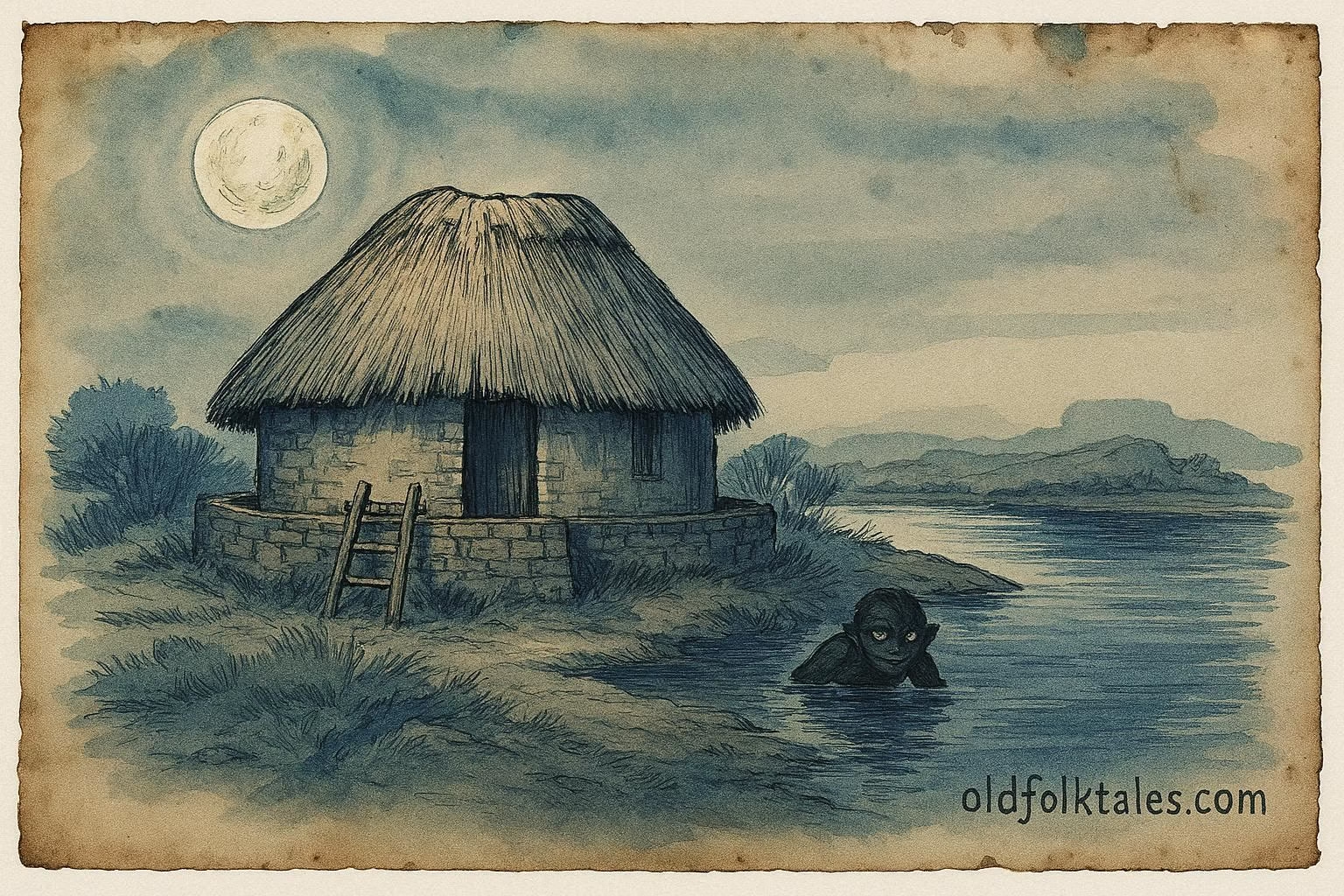
Blinded by envy, Zanele obeyed. She knelt by the riverbank and whispered for Nomvula’s laughter to end. As the moon rose, the water stirred. A ripple moved across the surface, and something small climbed from the depths a creature no taller than a child, with hair like reeds and skin that shimmered like wet stone. Its eyes glowed faintly, and its teeth glistened in the dark. The Tokoloshe was awake.
That night, Nomvula stirred in her sleep. A chill crept through the hut though the fire still burned. Her husband slept soundly beside her, but Nomvula’s dreams twisted with fear. She felt a weight on her chest and heard faint laughter, cruel and childish, echoing from nowhere. When she awoke, she saw nothing, but the smell of river mud filled the room.
By dawn, her strength began to fade. Each night after, she grew weaker, her eyes sunken and her laughter gone. The healer was called, and he burned herbs to drive away bad spirits, but the sickness remained. Some whispered that she had been cursed. Others feared that the Tokoloshe had found her.
One night, as Mandla sat by her side, he heard the faint sound of splashing outside. Grabbing his spear, he crept to the doorway. The moonlight glistened on the river path, and there crouched in the reeds, he saw a small figure licking the mud from its fingers. It looked up with eyes like burning coals, and Mandla’s heart turned cold. The Tokoloshe hissed and vanished into the shadows.
Mandla ran to the village elder, who listened gravely. “You must lift the curse,” the elder said. “The Tokoloshe obeys envy. To drive it away, you must make peace with the heart that summoned it.” Together they prepared charms of river clay and wild herbs, hanging them above the hut and raising their bed upon bricks, for the Tokoloshe was said to hate sleeping high above the ground.
The next morning, Mandla went to Zanele’s hut. She trembled when she saw him, for her guilt had become unbearable. “Forgive me,” she whispered, weeping. “I did not know it would go so far.” Mandla asked her to come to the river with him, and there they both knelt before the elder. The old man chanted prayers of cleansing, offering milk to the water and calling upon the ancestors to wash away the jealousy that had summoned the creature.
That night, as the moon shone over the village, the Tokoloshe came once more. It crawled from the reeds toward Nomvula’s hut, but when it reached the doorway, it stopped. The charms above the bed glowed faintly with sacred smoke, and the voices of the ancestors whispered through the wind. The spirit hissed, shrinking smaller and smaller, until it vanished into the earth with a sound like a sigh.
When dawn came, Nomvula awoke refreshed, her color returned and her laughter rising like sunlight over the plains. The villagers rejoiced, and even Zanele, humbled and repentant, found peace again through service and prayer. From that day on, no one spoke lightly of envy, for they knew the Tokoloshe listened from the shadows, waiting for the sound of a jealous heart.
The story of the Tokoloshe became a lesson told by elders to children on cool nights by the fire. It taught that evil does not come from the outside but is born within when the heart loses its balance. To guard against the Tokoloshe, they said, one must first guard against jealousy itself. And so, even now, when a bed in South Africa stands on bricks, it is not merely for comfort. it is a silent reminder of the night creature that envy calls forth.
Author’s Note:
The Tokoloshe legend reflects the moral imagination of the Zulu and Xhosa peoples, who link spiritual disturbance to emotional imbalance. In this story, jealousy is not just a feeling but a force that shapes reality. The Tokoloshe embodies human envy given form a dark echo of unkind thought. Its defeat through confession and ritual shows that community healing depends on truth, forgiveness, and balance between people and spirit.
Knowledge Check
1. What emotion gave birth to the Tokoloshe in this story?
Jealousy and envy.
2. How did Zanele summon the Tokoloshe?
By placing a clay figure by the river and whispering her wish.
3. What signs showed that Nomvula was being tormented by the spirit?
She grew weak, lost her laughter, and her home smelled of river mud.
4. How did the villagers protect themselves from the Tokoloshe?
They raised their beds on bricks and hung charms of herbs and clay.
5. What action finally drove the Tokoloshe away?
Zanele’s confession and the elder’s cleansing ritual.
6. What moral lesson does the story teach?
That jealousy and envy can summon evil, and peace comes through forgiveness.
Source:
Adapted from the Zulu folktale “Tokoloshe Tales” in Tokoloshe Tales: Reflections on the Cultural Politics of Journalism in South Africa, ed. Lesley Fordred-Green, Current Anthropology (2000).