The Taumafa Kava is the most sacred of all Tongan rituals, an ancient ceremony in which kava is prepared and consumed to install, honor, or legitimate chiefs and kings. Rooted in pre-Christian Polynesian cosmology and preserved into modern Tongan identity, this ceremony expresses the kingdom’s deepest values: hierarchy, mana (spiritual power), tapu (sacred restriction), and the reciprocal flow of obligation between ruler and people.
Its mythic foundation is anchored in the story of Kava‘onau, a young woman whose death gave birth to the first kava plant, transforming tragedy into a sacrament of leadership, loyalty, and divine order.
Traditional accounts, preserved through oral history and cultural scholarship, including the work of Arcia Tecun, and Reeves & Wolfgramm, emphasize that the Taumafa Kava is not simply a drink but an entire system of social balance. Only specific persons may serve, prepare, or receive the kava; every gesture reinforces cosmic and earthly authority. Through this ritual, Tonga maintains one of the oldest continuous monarchical traditions in the world.
Description
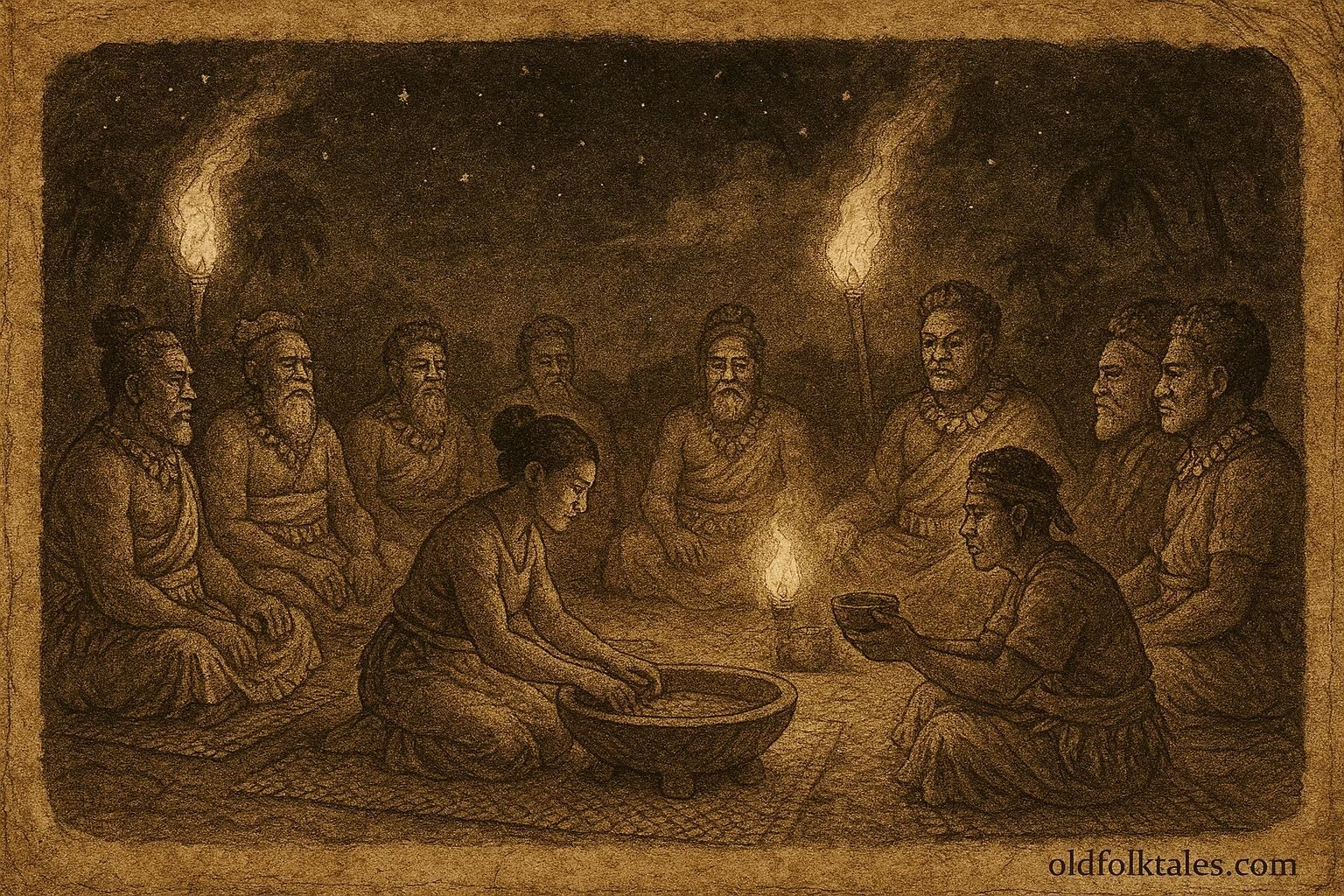
The Taumafa Kava is performed with precision and ritual choreography. The space is circular, symbolizing unity and the cosmic cycle. Chiefs, nobles, and attendants sit in designated positions according to rank. At the apex sits the monarch, or the chief being installed, representing the node through which ancestral mana flows downward into the people.
At the center of the circle rests the tāno‘a, a large wooden bowl carved with great care. Within it lies the powdered or pounded root of the kava plant (Piper methysticum), mixed with water and strained through fibrous cloth. Though kava is consumed socially in many contexts across Polynesia, this royal form is uniquely formal, solemn, and bound by protocol.
Every movement is deliberate.
Every participant knows their exact role.
The tou‘a, typically a young woman, prepares the kava with disciplined calm. The matāpule (talking chiefs) announce each stage of the ceremony, their voices acting as ceremonial bridges between the human and the sacred. The to‘a, or cup-bearers, distribute the kava in a strict sequence reflecting Tongan ranks, genealogies, and alliances.
The first cup is always reserved for the king or high chief. When he drinks, he affirms not only his authority but also his responsibility: to protect the land, uphold justice, and act as steward of the people’s welfare. The act of drinking kava links him to the ancestors whose mana grants legitimacy to his rule.
Following rounds of kava consumption, chants, speeches, and gifts may accompany the ceremony. These are not decorations but extensions of the ritual’s meaning, verbal offerings that acknowledge lineage, loyalty, and shared memory.
Mythic Connection
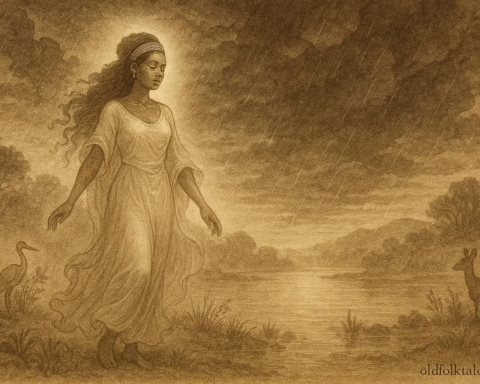
The heart of the Taumafa Kava lies in the ancient tale of Kava‘onau, a young woman of great beauty and gentle heart. According to tradition, she and her father, Fevanga, lived in poverty but held deep loyalty to their chief. When the chief visited their home, Fevanga wished to offer him something worthy of honor, yet he had nothing.
In an act both tragic and sacred, Kava‘onau gave her life so her body could serve as the offering. When she was buried, two plants grew from her grave:
kava, representing sorrow, sacrifice, and discipline;
and sugarcane, representing sweetness, renewal, and strength.
Together they symbolized the balance necessary for leadership.
The chief, moved by this sacrifice, decreed that kava would forever be used in ceremonies honoring chiefly authority. Thus, every cup of kava consumed in the Taumafa Kava ritual recalls Kava‘onau’s gift. Leaders who drink it are reminded that true power is rooted in service, humility, and the willingness to bear the people’s burdens.
This mythic origin underscores the spiritual dimension of the ceremony. Kava is not merely a beverage, it is a memory made physical, a living legacy linking Tonga’s rulers to the land, the ancestors, and the moral expectations of leadership.
Cultural Reflection
The Taumafa Kava reveals how Tongans conceive of kingship: not as domination, but as reciprocal stewardship. Chiefs hold authority because the people allow them to hold it, because the ancestors recognize them, and because kava, born from sacrifice, binds all participants to ancient law.
The ritual also communicates the Tongan understanding of mana and tapu.
Mana, the spiritual potency residing in persons, chiefly lines, and sacred objects, is heightened through kava.
Tapu, sacred restriction, ensures that the ritual maintains purity, order, and respect.
Even in modern Tonga, the Taumafa Kava remains central to royal investitures and state occasions. Though Tonga has transitioned through Christianity, colonization, and global change, the ceremony endures, affirming identity and continuity.
Through it, Tongan culture remembers who it is, and who it must strive to remain.
Author’s Note
This article explores the ancient Tongan Taumafa Kava ceremony, tracing its origins, its mythic foundation in the story of Kava‘onau, and its enduring role in legitimizing chiefly power. The narrative highlights how the ritual expresses core Tongan values of mana, tapu, loyalty, and cosmic balance, showing its lasting influence in both traditional and modern contexts.
Knowledge Check
1. What is the primary purpose of the Taumafa Kava?
To legitimize and honor chiefs or kings through a sacred kava-drinking ceremony.
2. What myth explains the origin of the kava plant?
The sacrifice of Kava‘onau, from whose grave kava and sugarcane grew.
3. What does kava symbolize in the ritual?
Sacrifice, authority, discipline, and ancestral connection.
4. Who drinks first during the ceremony?
The king or highest-ranking chief present.
5. What do mana and tapu represent in Tongan belief?
Mana is spiritual power; tapu is sacred restriction that preserves order.
6. Why is the Taumafa Kava still important today?
It preserves Tongan identity, ancestral values, and the continuity of the monarchy.