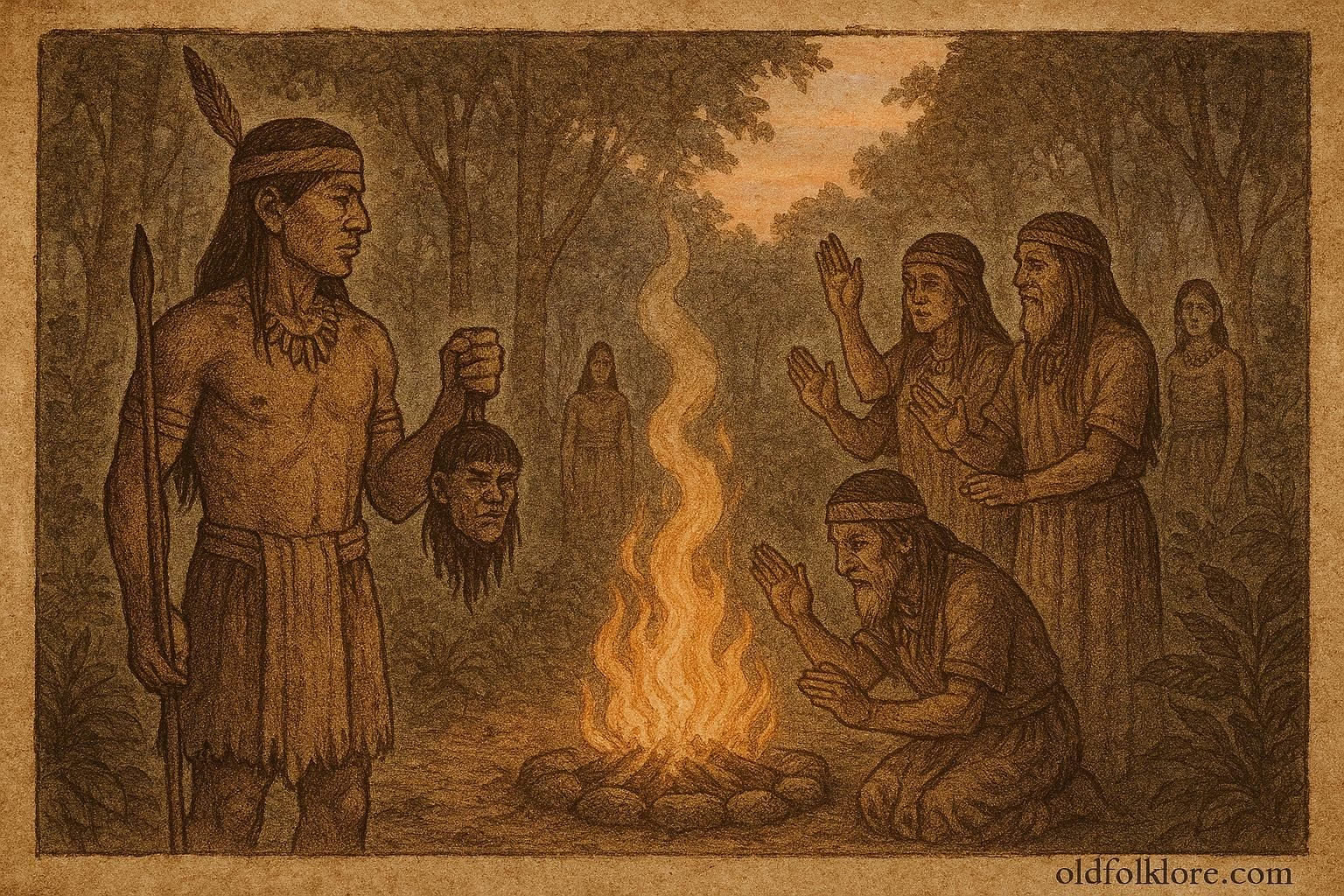
The Tsantsa ritual, often called the “shrunken-head ritual”, originated among the Shuar, Achuar, and other Jivaroan peoples of the Ecuadorian and northern Peruvian Amazon. Long before European contact, the Shuar developed a complex spiritual framework in which the human soul was divided into distinct parts. One of these, the muisak, was believed to be the avenging spirit of a slain enemy. The Tsantsa was not created as a trophy, but as an essential ritual designed to neutralize the dangerous spirit, restore harmony, and protect the community from supernatural retaliation.
In the dense forests of the Amazon, where warfare was intertwined with spiritual cosmology, the Shuar saw the Tsantsa not as a celebration of violence but as a cosmic responsibility. The procedure held meaning within a larger worldview that emphasized power balance, social protection, ancestral authority, and the management of unseen forces.
Because its meaning was spiritual rather than decorative, the Tsantsa tradition was performed with ritual solemnity. Only certain community members had the authority to manage the rite, and every step served a symbolic function in the cycle of spiritual equilibrium.
Description
The Tsantsa ritual began after a conflict, when a warrior believed he had disrupted the spiritual balance by taking a life. The Shuar held that the slain enemy’s muisak would attempt to avenge its death by causing misfortune, illness, or discord. The Tsantsa ceremony aimed to capture and silence this spirit. This act was never performed lightly; it was considered a duty of survival for the entire community.
The ritual followed a structured sequence:
1. Preparation of the Sacred Space
The warrior’s family prepared the hearth and communal area. Elders directed prayers to forest spirits, requesting protection. The atmosphere was solemn, emphasizing purification and responsibility.
2. Spiritual Containment
Only publicly known aspects are summarized here: the Shuar believed that sealing and symbolically closing the head prevented the muisak from emerging. This act represented binding violence, halting anger, and transforming destructive force into protective power.
3. Communal Feast and Blessing
After the ritual work was completed, the community held a ceremonial feast. This was a moment of reintegration, allowing the warrior to rejoin communal life after the period of spiritual vulnerability. Elders offered blessings for peace, agriculture, and future harmony.
4. Display and Final Purpose
The Tsantsa did not function as a trophy. It was displayed only briefly within the community to demonstrate that the muisak had been safely contained. Afterward, it served as a spiritual object whose meaning was tied to protection. Many Tsantsas were later discarded, buried, or ritually hidden, depending on local tradition.
The practice declined sharply in the 20th century due to external pressures, missionary influence, legal restrictions, and the harmful demand created by outsiders. Modern Shuar cultural leaders emphasize that the ritual’s original purpose was spiritual balance, not spectacle.
Mythic Connection
The Tsantsa ritual emerges from a Shuar cosmology built on interconnectedness between humans, spirits, forests, and ancestors. Every life held spiritual force. Every wrongdoing created imbalance. Every death carried consequences.
Central to this worldview is the muisak, the potent avenging spirit released when a life is taken unjustly or violently. The muisak is neither evil nor vengeful by nature, it is a spiritual reaction to cosmic imbalance. Without ritual containment, the muisak could harm the warrior or the community, not out of malice, but because unresolved energy disrupts harmony.
The Tsantsa thus served several mythic purposes:
1. Restoring Balance in the Spiritual World
By ritually transforming the head, the Shuar believed they closed the pathway through which the muisak could strike back. It symbolized the binding of chaos.
2. Honoring Ancestral Laws
The ceremony reaffirmed the teachings of the ancestors, who instructed the people on how to manage spiritual danger. The ritual expressed obedience to ancestral authority and the continuity of ancient knowledge.
3. Transforming Violence into Protection
Once the muisak was contained, its energy was believed to strengthen the warrior’s household. Violence was converted into protective life-force, echoing the broader Amazonian theme of turning conflict into balance.
4. Reinforcing Social Bonds
The ritual was communal. It reminded everyone that their safety depended on collective action. The feast, prayers, and blessings reinforced unity.
In this way, the Tsantsa was not a ritual of brutality but a ceremony of spiritual responsibility, rooted in a worldview where every action echoed across visible and invisible realms.
Author’s Note
This article presents a respectful, academic overview of the Tsantsa ritual, focusing on its publicly documented cultural meaning rather than its restricted details. The goal is to clarify that the Tsantsa was fundamentally a ritual of spiritual balance within Shuar and Achuar cosmology, grounded in beliefs about the muisak, ancestral law, and community protection. It highlights the ritual’s cultural depth, symbolic purpose, and transformation over time, situating it within Amazonian traditions of cosmic harmony and reciprocal responsibility.
Knowledge Check
1. What culture developed the Tsantsa ritual?
The Shuar, Achuar, and related Jivaroan peoples of the Ecuadorian and Peruvian Amazon.
2. What spirit was central to the ritual’s meaning?
The muisak, the avenging spirit believed to emerge after a violent death.
3. Why was the Tsantsa ritual performed?
To contain the muisak, restore spiritual balance, and protect the community.
4. Was the Tsantsa originally a trophy?
No. Its purpose was spiritual containment and protection, not display or celebration.
5. What role did the community play?
They prepared the ritual space, supported the warrior, offered blessings, and shared in the reintegration feast.
6. Why did the practice decline?
External pressure, missionary influence, legal restrictions, and demand from outsiders.