Before the world was divided by the hooves of warring riders, before the clans scattered like sparks from a wind-tossed fire, the Eternal Blue Sky cast its gaze upon the earth and mourned. The spirits of the steppe whispered that harmony was fading. Tribes quarreled over water, herds, and honor; khans rose and fell like dust devils. In that age of unraveling, the heavens resolved to send a guardian, part mortal, part divine, whose name would one day echo across the plains as Tugh Temür.
He was born beneath a night sky so bright with stars that elders said Tengri Himself leaned close to watch. The newborn’s eyes glowed the pale silver of moonlit frost, and a halo of wind stirred around him though the ger was sealed. His mother, Altan-Üjin, dreamt of a celestial wolf bowing before her child, and the shaman-women proclaimed, “He is chosen by Tengri. His name shall be Tugh Temür, He Who Bears the Heavenly Iron.”
Tugh Temür grew with the swiftness of a young stallion and the quiet strength of the mountains. By boyhood he could read the flight of hawks, discern the moods of storms, and speak with spirit-guides who flickered like embers on the horizon. Yet he was no mere mystic, he wrestled stronger, rode farther, and shot truer than any youth of the tribes. Still, he carried himself with humility, always listening, always learning.
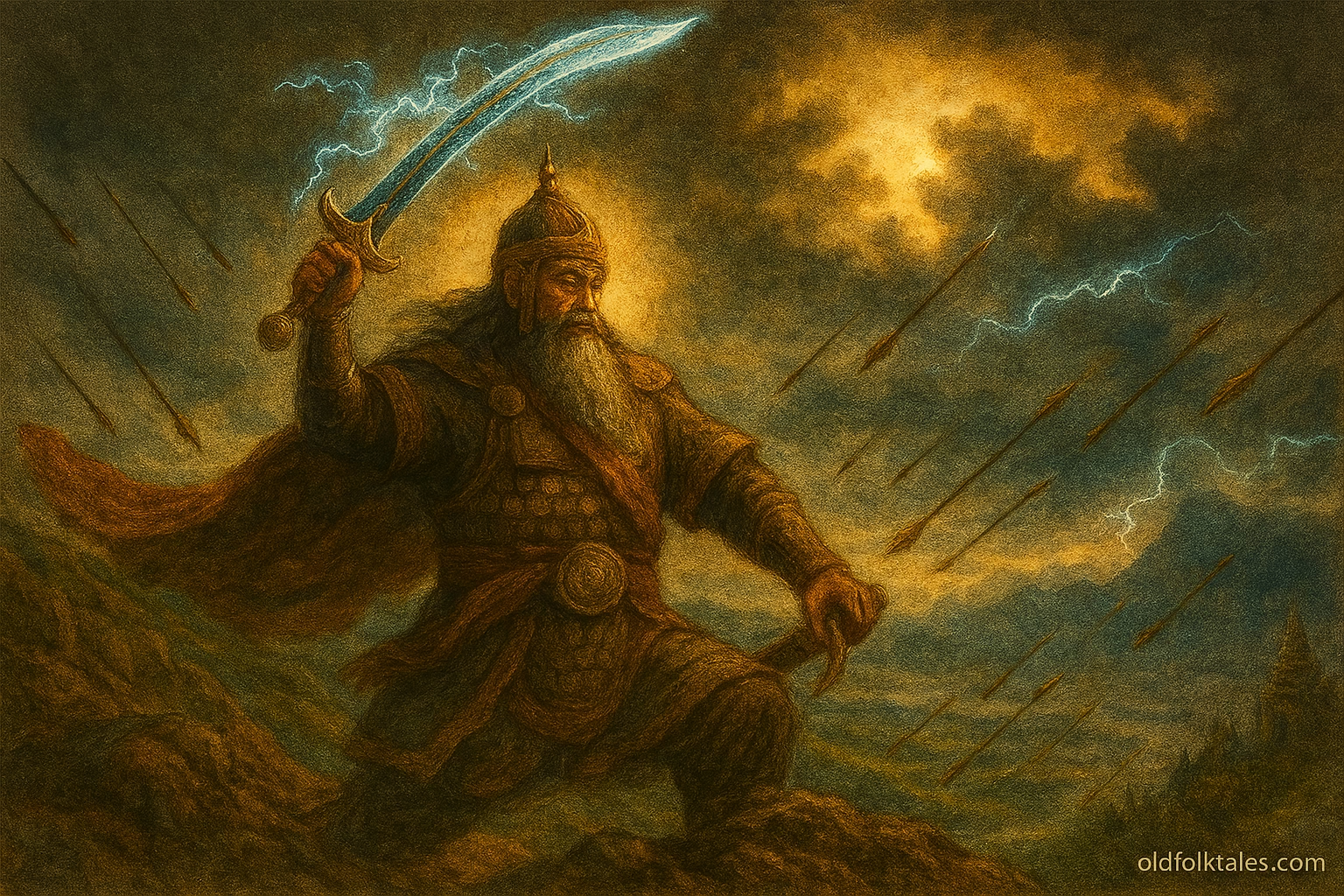
But beyond the steppe’s rolling vastness, shadows gathered. Rivals warred endlessly, desecrating sacred groves, seizing herds, and breaking ancient pacts. The celestial mandate that once bound the tribes as children of the same Sky had nearly dissolved. It was then that Tugh Temür journeyed to the Khökh Khangai Mountains, where the barrier between worlds thinned. There, atop a cliff hammered by winds, he called upon Tengri.
The sky darkened. Lightning coiled like serpents. A voice, vast as the steppe and cold as winter’s edge, thundered:
“My son, bearer of balance. Will you bind your fate to the clans and carry the burden of unity? Know that to rule is to bleed, and to choose is to suffer.”
Tugh Temür knelt, forehead pressed to the sacred earth.
“If order must be restored, let my spirit bear its weight.”
A blade of star-forged iron descended into his hands, the Heavenly Saber, its edge shimmering like frozen dawn. With it came visions: of raging horsemen, of treachery among khans, of hard decisions that would carve scars into his soul. But he accepted all.
His first trial emerged swiftly. The Black Lan Horde, fierce and ambitious, began raiding nomad camps, claiming they alone held the right to rule by heaven’s will. Their leader, Khar Boroq, was a warrior of monstrous strength, said to have drunk the blood of wolves and grown invulnerable to mortal blades. Villages burned in his wake.
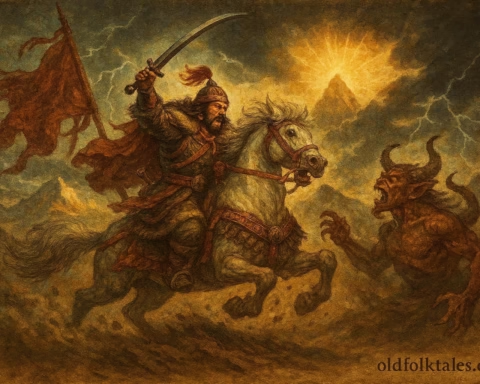
Tugh Temür rode to confront him, not with an army, but with only nine loyal companions. They crossed salt plains and ice-rivers until they reached the Black Lan stronghold, a fortress of bone and stone beneath brooding cliffs. When Khar Boroq strode out, the very ground trembled.
“Another dream-filled youth seeking glory?” he mocked, raising his spiked mace. “Come, child of sky, show me your thunder.”
Their duel raged from mountain foot to cliff peak, shaking rocks loose and scattering ravens. Khar Boroq struck with the ferocity of a tempest, but Tugh Temür answered with grace touched by the divine. When the warlord roared and swung his mace in a killing arc, Tugh Temür leapt, calling the name of Tengri.
The Heavenly Saber shone like a falling star and cleaved the mace in two. A second strike broke the spell shielding the warlord, and the third sent him crashing to the dust. The Black Lan warriors, awed and humbled, bent their knees and swore fealty.
Yet victory brought not triumph, but moral anguish. For unity demanded more than battlefield triumphs. Rival khans came to him seeking mediation, each with a claim steeped in pride and blood. Some asked for justice that would sow further revenge; others sought alliance at costs that would betray smaller clans. Tugh Temür wrestled not with men, but with conscience.
His greatest torment came when two brother-chiefs accused one another of murder. Both were beloved by their people; both defended themselves with honor. If he chose wrongly, a civil war would ignite. So Tugh Temür went alone into the night, praying for clarity. There, the spirits of the ancestors showed him a vision of the truth: neither brother was guilty, the killing had been wrought by a jealous third party hiding in shadow.
When dawn came, Tugh Temür revealed the culprit and prevented the tribes from fracturing forever. That day, the people declared him Khaghan of the Celestial Mandate, a ruler whose authority flowed not from conquest, but from wisdom and sacrifice.
Under his reign, peace spread like spring grass across the plains. Trade revived, sacred feasts returned, and the tribes rode as one beneath the wide blue vault of heaven. Tugh Temür never forgot the burden he had chosen; he wore his crown lightly and his sword reluctantly.
When his earthly years waned, Tengri’s eagle descended to carry his spirit upward. Legend says that on nights when storms gather but do not break, one can hear hooves galloping among the clouds, Tugh Temür, still guarding the steppe.
AUTHOR’S NOTE
Tugh Temür endures in Mongol legend as the ruler who restored cosmic balance not through domination, but through moral clarity, courage, and spiritual purpose. His tale reminds listeners that true leadership demands sacrifice, empathy, and alignment with principles greater than oneself. His legacy is a call to all who seek harmony amid division: the sky watches, and justice must be carried with steady hands.
KNOWLEDGE CHECK (6 Questions)
-
What celestial force chose Tugh Temür at birth?
-
What divine weapon did Tugh Temür receive during his mountain vision?
-
Who was the warlord he defeated to quell the Black Lan Horde?
-
What moral struggle tested his sense of justice between two brother-chiefs?
-
What title did the tribes bestow upon him after unification?
-
How is Tugh Temür said to manifest in the sky after death?
CULTURAL ORIGIN: Mongol epic tradition; steppe heroic folklore associated with celestial mandate beliefs.
SOURCE: Based on Mongol epic cycles and mythic materials as collected and interpreted by Walther Heissig (1970).