Long ago, when the world was younger and gods walked among mortals, there lived a powerful deity named Tuna. He was no ordinary god, Tuna ruled over the freshwater streams and rivers, taking the form of a magnificent eel. His body was sleek and serpentine, shimmering with scales that caught the sunlight like polished stones beneath clear water. Tuna was a god of fertility, a keeper of life-giving waters, and his presence brought abundance to the land.
In those ancient days, Tuna fell deeply in love with a beautiful woman whose grace and spirit captivated his divine heart. She was beloved by her people, admired for her kindness and strength. But Tuna was not the only one who desired her affection. The great trickster and hero Māui, known throughout the islands for his cunning and courage, had also set his eyes upon her. Māui was a demigod of remarkable power the one who had fished up islands from the ocean floor, who had slowed the sun itself to give humanity longer days. His reputation stretched across every shore where waves broke upon sand.
Click to read all Myths & Legends – timeless stories of creation, fate, and the divine across every culture and continent
The woman found herself caught between two extraordinary suitors: Tuna, the ancient god of freshwater who promised eternal devotion and divine protection, and Māui, the clever hero whose adventures were sung in every village. Her heart, however, turned toward Māui. Perhaps it was his boldness, his humanity mixed with divinity, or the stories of his great deeds that won her over. Whatever the reason, when she made her choice known, Tuna’s heart broke like a dam giving way to floodwaters.
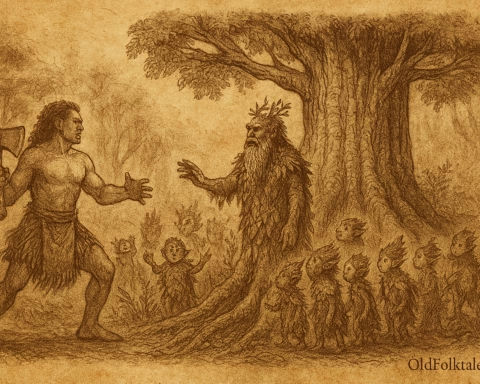
But Tuna would not surrender easily. His love burned too fiercely, his pride ran too deep. The eel god challenged Māui to combat, determined to win the woman through strength if he could not win her through affection. The challenge echoed across the islands a god of the waters against a hero of earth and sky.
The battle that followed was fierce and terrible. Tuna’s form writhed and coiled through streams and pools, his power drawing strength from every river and spring. Water surged and crashed as the eel god fought with divine fury. Māui met him with all the cunning and might he possessed, moving with the swiftness that had allowed him to catch the sun, striking with the strength that had lifted islands from the deep.
The struggle seemed endless, water against will, ancient power against heroic determination. But Māui was not called the great trickster for nothing. With a combination of strategy and raw courage, he finally overcame the eel god. In the final moments of their battle, Māui struck a fatal blow, and Tuna fell, his divine form stilled at last.
As Tuna lay dying, something remarkable happened. The fierce anger that had consumed him melted away, replaced by a strange peace. In his last moments, the eel god spoke to Māui with unexpected wisdom. He acknowledged his defeat and accepted that the woman’s heart belonged to another. But Tuna made one final request a request that would transform his death into an eternal gift.
“Take my head,” Tuna told Māui, his voice growing faint. “Plant it in the earth. From my body, let something grow that will sustain the people. Let my death bring life.”
Māui, moved by the eel god’s final words, honored this sacred request. He carefully severed Tuna’s head and carried it to fertile ground. There, with reverence, he planted it in the soil, covering it as one would plant the most precious seed.
Days passed, then weeks. The people watched the burial site with wonder and anticipation. Soon, a strange shoot emerged from the earth unlike any plant they had seen before. It grew tall and straight, reaching toward the sky with remarkable speed. Its trunk was smooth and ringed, echoing the segmented body of an eel. At its crown, great fronds spread out like a fountain of green.
Then came the fruit large, round, and covered with a rough husk. When the people opened the first coconut, they marveled at what they found. The hard shell reminded them of a skull, and inside, the white flesh and clear water sustained them as no other food could. They could see three dark spots on the shell that resembled eyes and a mouth the face of Tuna, forever preserved in the fruit that bore his sacrifice.
The coconut palm became sacred, a tree that would sustain the island peoples for generations to come. Every part of it proved useful the water quenched thirst, the meat provided nourishment, the husk and shell became tools and vessels, the fronds thatched roofs and wove mats, and the wood built homes and boats. From death came life. From jealousy and battle came generosity and abundance.
And so, Tuna the eel god achieved a form of immortality not through victory in combat, but through sacrifice and transformation. His spirit lives on in every coconut palm that sways in the tropical breeze, in every coconut that falls to feed the hungry, in every drop of sweet water that refreshes the weary traveler.
The Moral Lesson
This ancient Polynesian tale teaches us that true greatness lies not in holding onto what we desire but in transforming our defeats into gifts for others. Tuna’s story reminds us that sacrifice made with wisdom and grace can create a legacy far more enduring than any victory won through force. When we let go of jealousy and pride, we open ourselves to become sources of nourishment and life for those around us. The coconut tree stands as a testament that even from endings can come new beginnings, and that the greatest heroes are those who give of themselves so that others may thrive.
Knowledge Check
Q1: Who was Tuna in Polynesian mythology and what was his divine role?
A1: Tuna was a powerful god who ruled over freshwater streams and rivers, taking the form of a magnificent eel. He was a deity of fertility and keeper of life-giving waters, bringing abundance to the land through his divine presence over the island’s water sources.
Q2: Why did Tuna challenge Māui to battle?
A2: Tuna challenged Māui because both the eel god and the demigod hero loved the same woman. When she chose Māui over Tuna, the heartbroken eel god refused to surrender and challenged Māui to combat, hoping to win her through strength since he could not win her heart through affection.
Q3: What was Tuna’s final request after being defeated by Māui?
A3: In his dying moments, Tuna asked Māui to take his head and plant it in the earth. He requested that from his death, something would grow to sustain the people, transforming his defeat into an eternal gift that would bring life to future generations.
Q4: What grew from Tuna’s planted head and how did it resemble the eel god?
A4: The first coconut palm grew from Tuna’s planted head. The tree’s smooth, ringed trunk echoed the segmented body of an eel, while the coconut itself bore three dark spots resembling eyes and a mouth—the face of Tuna forever preserved in the fruit born from his sacrifice.
Q5: What is the symbolic meaning of the coconut tree in this Polynesian legend?
A5: The coconut tree symbolizes the transformation of death into life and the cycle of cosmic renewal. It represents how sacrifice and selflessness create lasting legacies, linking divine beings to the sustenance of mortal life and demonstrating that endings can become new beginnings that nourish generations.
Q6: How did the coconut palm sustain the island peoples according to the story?
A6: The coconut palm provided complete sustenance its water quenched thirst, its meat offered nourishment, its husk and shell became tools and vessels, its fronds thatched roofs and wove mats, and its wood built homes and boats. Every part of the tree proved useful, fulfilling Tuna’s wish to sustain the people through his sacrifice.
Source: Adapted from Polynesian oral traditions regarding Tuna and Māui, as documented in various collections of Pacific Island mythology and Hawaiian legends.
Cultural Origin: Polynesia (Hawaiian Islands and various Pacific Islands including Samoa, Tahiti, and other island cultures across the Polynesian triangle)