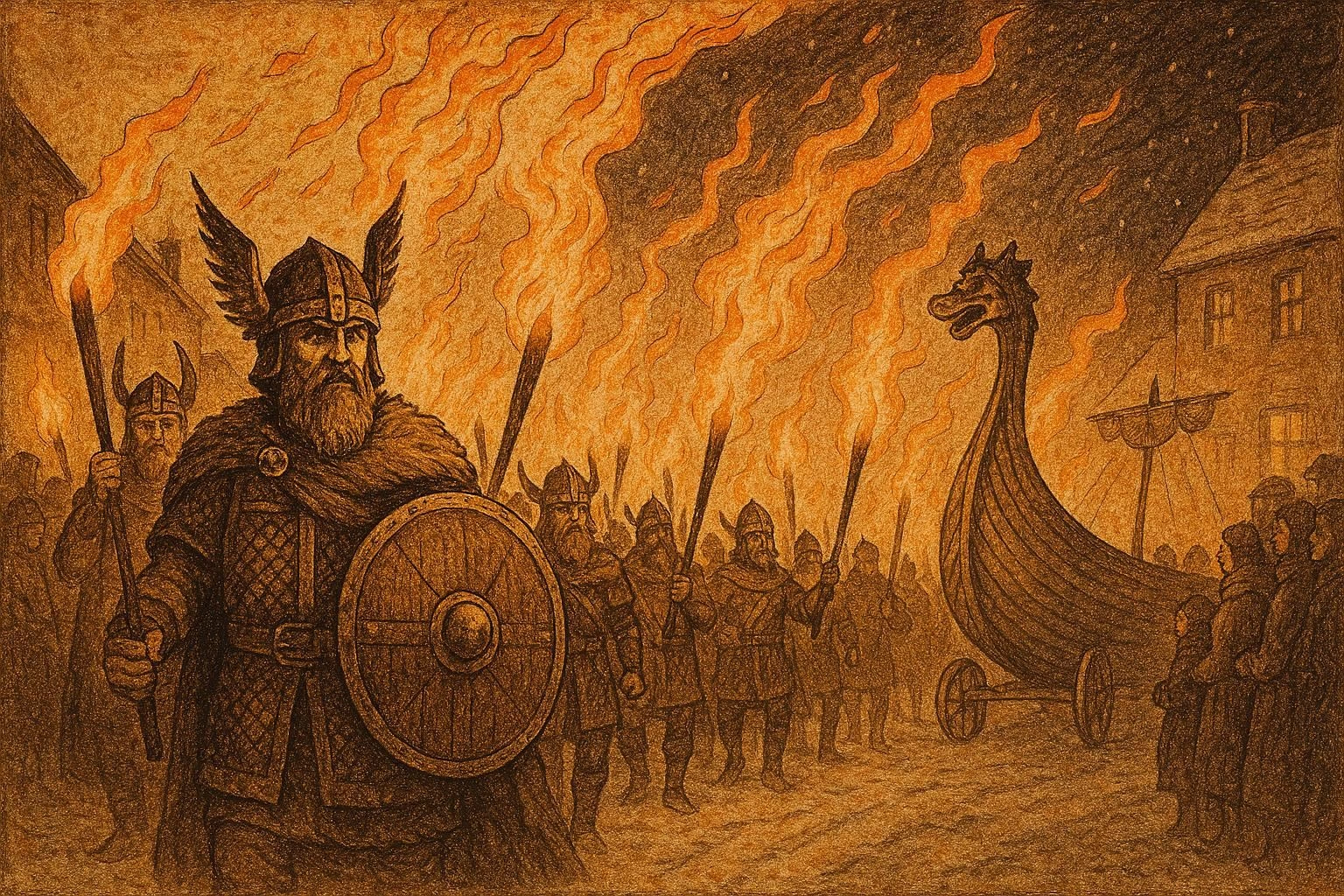
Up Helly Aa is Shetland’s grand winter fire festival, held annually in Lerwick and several surrounding communities. Although it draws heavily on Viking imagery, the celebration is not an ancient Norse survival but a cultural transformation rooted in nineteenth-century Shetland life. Earlier winter customs across the islands, particularly Yule festivities involving tar-barrel dragging, rowdy fire running, and public mischief, were gradually restricted by local authorities seeking safer and more controlled communal events. In response, Shetlanders reshaped their winter traditions into something more organized, symbolic, and meaningful.
The growing Victorian fascination with Norse heritage offered the perfect framework. Shetland’s history includes deep Scandinavian influence: for centuries the islands belonged to Norway, and Old Norse cultural memory lingered in place-names, folklore, and identity. By the late 1800s, local societies began staging costumed processions, public performances, and an annual galley burning. Over time, these elements coalesced into the festival now known as Up Helly Aa. Each year, the event centers on a newly elected “Guizer Jarl,” a figure modeled on a Viking leader who presides over the festivities.
Today, Up Helly Aa stands as one of Scotland’s most visually striking communal rituals, a torchlit declaration of winter resilience, cultural pride, and shared heritage.
Description of the Festival
Up Helly Aa unfolds through a rhythmic sequence of ceremonies and performances. Preparations last months, as squads, called “guizers”, design costumes, rehearse skits, and build the elaborate wooden Viking galley that will be burned at nightfall. The festival morning begins with the Guizer Jarl and his squad marching through Lerwick’s streets in meticulously crafted Norse-styled armor. Their presence signals a shift from ordinary winter life to a day shaped by spectacle, ritual, and pageantry.
Throughout the day, squads visit schools, community centers, and public venues, performing songs, humorous sketches, or short dramatic scenes. The Jarl Squad carries shields and weapons inspired by Viking aesthetics, while other groups select themes ranging from historical reenactments to comedic social commentary. As evening approaches, thousands of spectators gather along the Lerwick streets, waiting for the torchlit procession.
Once the signal is given, the night transforms into a river of fire. Nearly a thousand torch-bearers advance in disciplined formation, their flaming torches illuminating the winter sky. The wooden galley, painted, carved, and decorated with mythic detail, awaits at the heart of the gathering. When the procession reaches its final staging point, the guizers circle the ship, chant festival songs, and finally hurl their torches into the vessel. Flames engulf the galley, turning it into a blazing beacon that symbolizes the triumph of community spirit over winter darkness.
After the burning, squads disperse to local halls for private performances, social gatherings, music, and feasting that last deep into the night. The next morning, Lerwick returns quietly to daily life, as if the fiery spectacle had momentarily opened a door between the ordinary and the mythic.
Mythic Connection and Symbolic Meaning
Although Up Helly Aa’s modern form emerged in the nineteenth century, its symbolic power flows from much older cultural memories and elemental relationships. Fire, winter, and communal identity shape every aspect of the celebration.
Fire as Renewal:
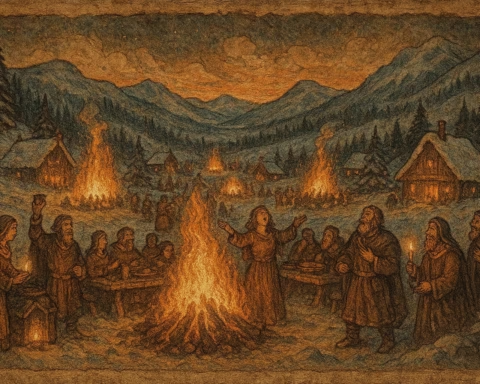
In many Northern European traditions, fire marks the turning of the seasonal cycle. The burning galley acts as a luminous offering that pushes back winter’s long nights. It echoes ancient rites in which communities used flame to purify, protect, or invite returning light. Shetlanders reinterpret this elemental symbolism, not as a literal religious ritual, but as a cultural expression of continuity and resilience.
Viking Imagery and Ancestral Memory:
Even if the festival is modern, the Norse motifs reflect genuine historical traces. Shetland’s Scandinavian era left behind sagas, place-names, and maritime stories that shaped local identity. The Guizer Jarl symbolizes a remembered past, not as historical reenactment but as a cultural mythos, a way for the community to honor its heritage and project its values into the present. The galley burning mirrors the funerary ship rituals described in Norse literature, transforming the old motif into a collective ceremony of symbolic rebirth.
Community Unity:
Up Helly Aa is not an isolated ritual but a social contract. Building the galley, crafting costumes, and organizing squads require hundreds of volunteers. This collective labor strengthens social bonds, blending humor, craftsmanship, performance, and tradition. The festival’s evolution to include women in many local variants reflects a broader cultural shift: heritage must adapt to remain meaningful.
Light Against Darkness:
Finally, Up Helly Aa reflects humanity’s universal response to winter’s burdens. By staging a dramatic victory of flame over night, Shetlanders affirm that communities can kindle warmth and meaning even in the coldest season. The ritual becomes a metaphor for endurance, one grounded in both local identity and ancient Northern symbolism.
Author’s Note
This article traces how Up Helly Aa emerged from Shetland’s winter customs and Victorian reinterpretations of Norse heritage. It outlines the festival’s structure, describes the iconic torchlit procession, and explains how fire, myth, and community identity shape its symbolic meaning. The summary highlights the festival’s role as a cultural ceremony expressing renewal and shared memory.
Knowledge Check
1. What historical period inspired the festival’s Viking imagery?
Norse heritage from Shetland’s Scandinavian era shaped the symbolic framework.
2. Why was the original tar-barrel tradition replaced?
It became dangerous and unruly, prompting safer, organized alternatives.
3. What is the central role of the Guizer Jarl?
To lead the procession as a symbolic Viking chief and cultural figurehead.
4. Why is the burning galley significant?
It symbolizes renewal, the victory of light over darkness, and communal unity.
5. How do squads contribute to the festival?
They perform skits, craft costumes, and support the event’s entertainment.
6. How has the festival evolved socially?
Many local variants now include women and update cultural practices.