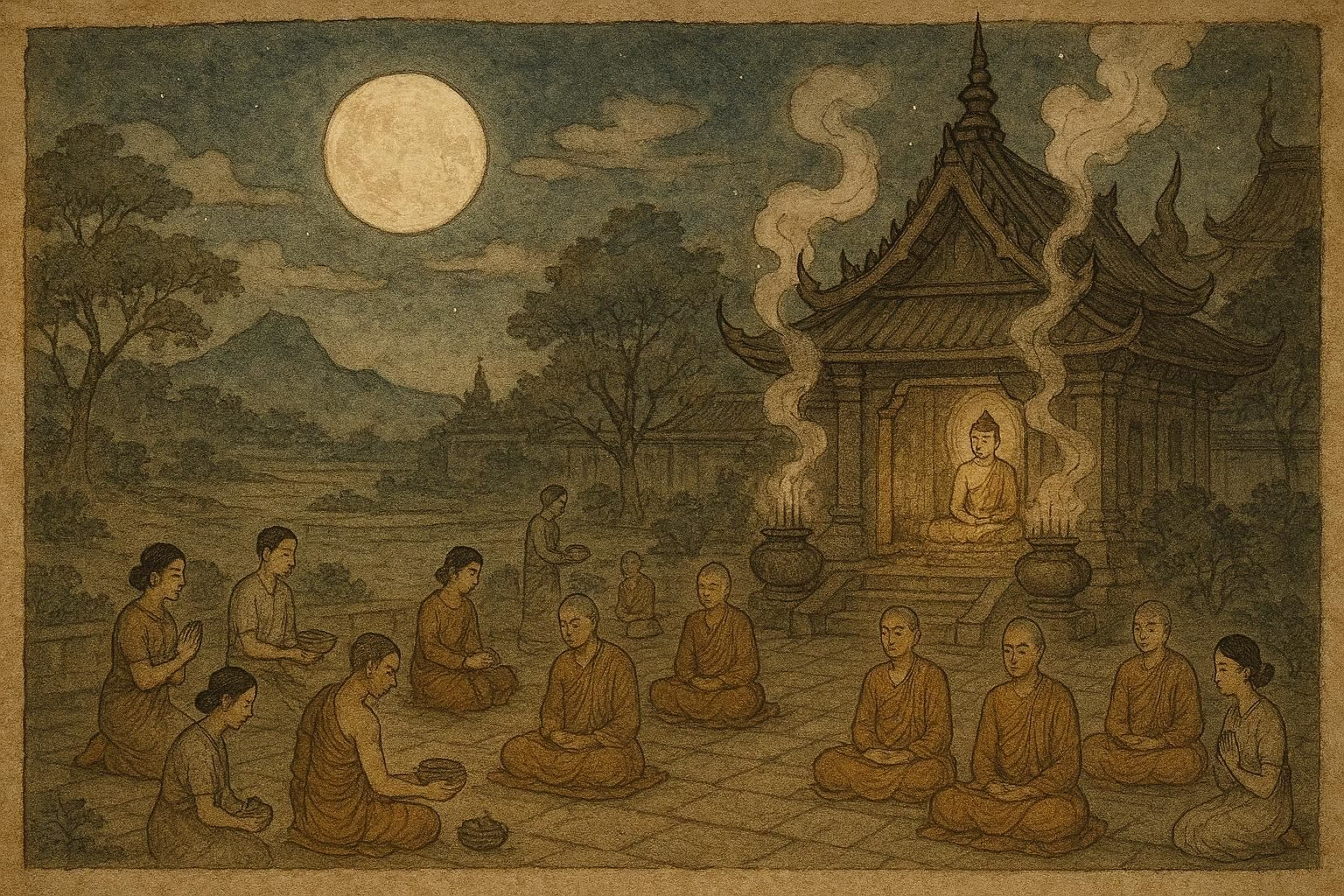
Across Buddhist communities in South and East Asia, the Uposatha ritual stands as one of the oldest and most enduring observance practices. Rooted in monastic discipline and lay devotion, its purpose is to purify the mind, renew commitment to ethical conduct, and reinforce the collective rhythm of spiritual life. Although variations exist among regions and Buddhist traditions, the core principle remains constant: Uposatha is a day set apart for intensified spiritual practice.
Historically, Uposatha dates to the time of the historical Buddha in the fifth century BCE. Early monastic communities met regularly to recite the Pātimokkha (the monastic code) and strengthen unity within the Saṅgha. Lay followers were encouraged to participate by observing stricter moral rules and engaging in extended meditation. The term “Uposatha” comes from the Pali root upavasatha, meaning “to fast” or “to keep vigil”, emphasising the discipline required during these observances.
Most Buddhist-majority countries observe Uposatha in alignment with lunar phases. Generally, the ritual is held on four key days each lunar month: the new moon, the full moon, and the two quarter moons. However, Theravāda traditions, especially in Thailand, Sri Lanka, Myanmar, Laos, and Cambodia, prioritise the new moon and full moon as the most significant. In East Asian Mahāyāna communities, similar observance days exist, though under local names such as Zhai Jie in Chinese Buddhism and Busu in Japanese Buddhism. Despite these regional distinctions, the devotional and ethical functions remain aligned with the original Pali canon.
For lay practitioners, Uposatha is characterised by the adoption of the Eight Precepts, an expanded set of moral rules observed more strictly than the daily Five Precepts. These include abstaining from killing, stealing, sexual activity, harmful speech, intoxicants, eating after noon, entertainment or adornment, and luxurious sleeping arrangements. Lay Buddhists use the day to cultivate simplicity and mindfulness, often spending long hours at temples, listening to Dhamma teachings, and practising meditation. Families may visit monasteries together, bringing alms for the monks and participating in communal chanting.
Monastics engage in a different set of ritual duties. On full-moon and new-moon Uposatha days, the Saṅgha gathers to recite the Pātimokkha. This recitation serves both as a communal reaffirmation of discipline and as a formal occasion for monks to confess breaches of conduct. In countries with large monastic populations, such as Thailand and Myanmar, thousands of monks may gather at major temples for these ceremonies. Even in smaller monasteries, the rhythm of the Uposatha day reinforces the continuity of the monastic lineage.
The rhythm of Uposatha varies by season. The most important observance occurs during Vassa, the rainy-season retreat. During this period, monks remain in one monastery for three months, and the full-moon Uposatha marks significant milestones, including the Pavāraṇā ceremony that concludes the retreat. Lay followers increase their visits to temples during Vassa, seeing it as a time of heightened spiritual merit.
In Sri Lanka, the observance takes on a distinctive cultural flavour. Villagers often dress in white, symbolising purity, and recite the Tisarana and Sil, reaffirming faith in the Buddha, Dhamma, and Saṅgha. Full-moon days, known locally as Poya Days, are public holidays, reflecting the ritual’s important role in national identity. Each Poya Day is associated with a specific historical or doctrinal event, such as the Buddha’s first visit to Sri Lanka or the ordination of Prince Mahinda.
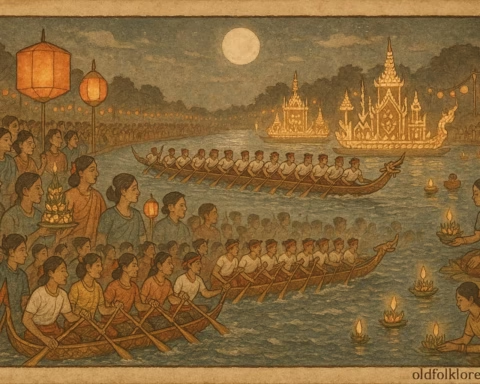
In Thailand, Uposatha is marked by serene stillness in temples, especially during full-moon nights. Candlelit processions known as Wian Thian are common, where devotees walk clockwise around the main hall carrying candles, incense, and flowers. These processions symbolise honour to the Buddha and illuminate the temple grounds with soft, rhythmic light. Many Thai Buddhists choose Uposatha days to renew vows, meditate more intensely, or seek blessings from senior monks.
East Asian traditions observe their own equivalents with regional adaptations. In Chinese Mahāyāna practice, the observance day known as Zhai Jie emphasises vegetarian fasting and reading of sutras. Japanese Buddhism integrates its version of the ritual, Busu or Fusatsu, with ethical vows derived from Zen tradition. Despite the linguistic and doctrinal differences, all these observances share a focus on moral restraint, reflection, and ritual purity.
The purpose of Uposatha remains unchanged across centuries: to create cyclical spaces for spiritual renewal. In a world of increasing distraction, the discipline of setting aside specific days for mindfulness offers practitioners a structured way to reconnect with the foundational teachings of Buddhism. For lay communities, it strengthens ethical commitment and supports meditation practice. For monastics, it ensures continuity of the disciplinary tradition, binding each generation of monks into a unified lineage.
Uposatha endures because it offers a balance between ritual formality and personal introspection. Its consistency across cultures reinforces a shared Buddhist identity, while regional variations highlight the adaptability of the tradition. Whether in the quiet halls of Thai temples, the Poya observances of Sri Lanka, or the sutra recitations of Mahāyāna communities, Uposatha remains a vital thread in the fabric of Buddhist religious life.
Author’s Note
This article examines the Uposatha ritual as a lunar-based Buddhist observance practised across South and East Asia. It outlines its historical origins, core ethical disciplines, monastic recitations, and regional variations in Sri Lanka, Thailand, and East Asian traditions. The analysis highlights the ritual’s enduring role in reinforcing moral commitment and communal identity.
Knowledge Check
1. What is the primary purpose of Uposatha in Buddhist practice?
A. To celebrate seasonal festivals
B. To purify conduct and renew spiritual commitment
C. To honour royal traditions
D. To mark the agricultural cycle
Correct Answer: B
2. Which lunar phases are most associated with Uposatha?
A. Only the half-moon
B. Full moon and new moon
C. Only the full moon
D. Any random day of the month
Correct Answer: B
3. Which set of rules do lay Buddhists commonly observe on Uposatha days?
A. The Five Daily Duties
B. The Noble Eightfold Path
C. The Eight Precepts
D. The Vinaya Rules
Correct Answer: C
4. Which country refers to Uposatha full-moon days as Poya Days?
A. Japan
B. Thailand
C. Sri Lanka
D. Laos
Correct Answer: C
5. What ceremony do monks perform on Uposatha days?
A. The Lotus Sutra offering
B. The Pātimokkha recitation
C. The tea ceremony
D. The rain-calling ritual
Correct Answer: B