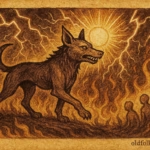
Veles is one of the most powerful and enigmatic gods of the Slavic pantheon, a deity of earth, water, forests, herds, magic, and the underworld. Often depicted as a horned or serpentine figure, he embodies the fertile soil, the hidden riches of the land, and the mysterious pathways connecting the living and the dead. He is the eternal rival of Perun, the thunder god, and their cosmic struggle structures the Slavic understanding of seasons, storms, and divine order.
Veles is a guardian of cattle, prosperity, and oaths. His sacred animals include serpents, bears, wolves, and cattle, creatures tied to mystery, wealth, and ancestral spirits. He moves between worlds easily, shifting form from serpent to man to cloud, guiding souls through the realm beneath the roots of the world-tree. Shrines to Veles appeared near rivers, in deep forests, or beside burial grounds, where offerings of milk, honey, and carved wooden idols were placed to honor his role as protector and guide.
Mythic Story: The Theft of Perun’s Cattle and the Battle Across the Skies
Long before the first plow struck the soil, when the world-tree still trembled with the breath of creation, the people say that Veles rose from the shadowed roots of the earth. His body glimmered like shifting scales; his eyes shone with the deep wisdom of caverns and rivers. Where he moved, life stirred, mushrooms pushing up from damp soil, moss spreading across stone, waters whispering secrets of the underworld.
Above him, in the realm of storms, ruled Perun, the thunderer, bright, high, orderly, the keeper of the sky’s law. And between these two gods, a tension older than the first forest root stretched across the world. For Veles, wild and wandering, flowed wherever mystery called him, while Perun demanded structure, oath, and obedience.
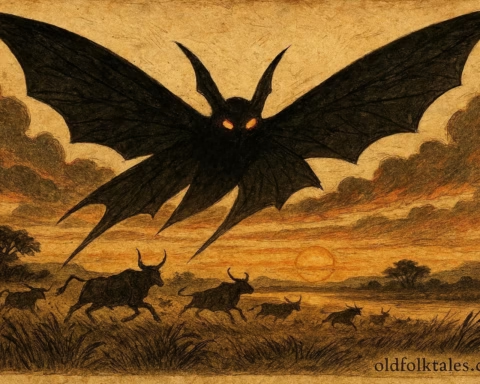
One spring, when the snows melted and the rivers began to swell, Veles gazed up to the heavens and saw Perun’s cattle grazing in a meadow of clouds, golden cattle whose breath shaped the winds, whose hooves rang like thunder. These cattle represented divine order, wealth, and vitality. To possess them was to command the rhythm of the year.
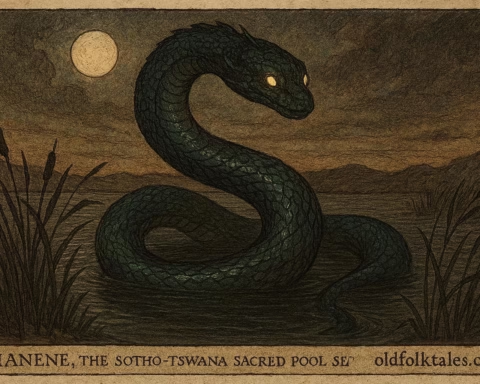
Veles, ever the shapeshifter, ever the trickster, coiled himself into the form of a serpentine mist and rose along the world-tree’s trunk. He slipped into the sky silently, moving through cloud and shadow, until he found the herd unguarded. With a rumble like distant thunder, he seized them and began driving them downward toward the mortal world.
The moment the cattle left the sky, Perun awoke.
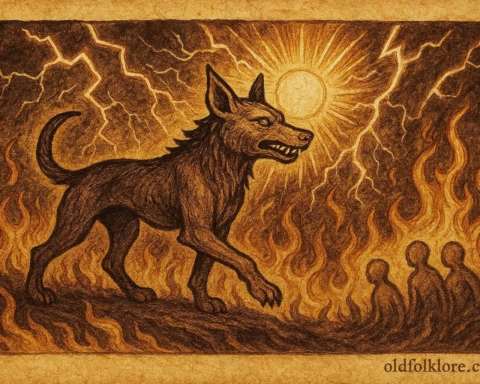
His voice cracked like a storm. “Veles!” he roared, and the heavens darkened. Lightning shivered across the sky as he pursued the thief.
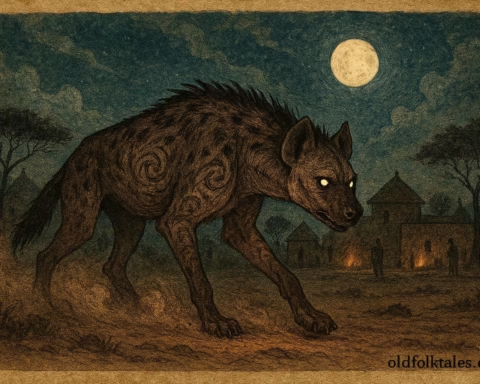
Veles fled across the earth, taking shape after shape: a wolf racing through tall grass, a bear crashing through the forest, a serpent gliding into rivers. Each form hid him for a moment, but Perun’s lightning struck the earth again and again, splitting treetops, shattering stones, and chasing him across fields and mountains.
The people below saw only the signs, storms building suddenly, trees sundered by fire, clouds coiling like serpents above their villages. They understood: the ancient battle was being fought again.
At last Veles dove into the underworld, carrying the stolen cattle with him. Here, Perun could not easily follow. The underworld belonged to Veles, a realm of roots stretching like tendons, of cavern rivers gleaming with pale light, of ancestral spirits whispering in the dark. The cattle wandered through luminous glades beneath the earth, grazing on ghostly moss.
But Perun would not be denied. He struck the earth so fiercely that rivers boiled and mountains trembled. The blow split the boundary between the worlds, and through this fissure his lightning burst into the underworld, illuminating caverns that had never known the touch of sky-fire.
Veles rose again, wounded but laughing. The duel resumed across the horizon, thunder rolling like the hooves of a thousand spectral cattle. At last Perun’s lightning found its mark. Veles fell upon the earth in serpentine coils, and the cattle were driven back to the heavens.
But Veles, being a god of renewal, death, and rebirth, did not remain defeated. From his fallen body, rivers flowed; from his breath, mists rose; from his shed skin, new life emerged. When he rose again, he bowed, not in submission, but in acknowledgment of the cosmic order both gods maintained.
As the years turned, the people observed a pattern: each spring Veles would rise, stirring the waters, awakening the soil, and challenging Perun’s thunder. Storms would chase across the land until lightning “struck Veles down,” ending the cycle. But from this ritual struggle came rain, fertility, and renewal. Fields blossomed, herds multiplied, and rivers swelled with life.
To the Slavs, this myth was not merely a story of conflict but of balance, the meeting of chaos and order, of sky and earth, of life and death. Veles did not steal to harm; he stole to stir the world, to begin the cycle again. And Perun did not strike to destroy; he did so to restore harmony.
Thus the world endured through their ancient dance.
Discover the gods, goddesses, and divine spirits who ruled the heavens and shaped human fate
Author’s Note
Veles teaches that the unseen world matters as deeply as the visible one. His myth reminds us that life is shaped by tensions, between order and chaos, law and instinct, light and shadow. His cycle with Perun reflects the seasons themselves: disruption followed by renewal. Through Veles, we learn that mystery, change, and the hidden paths of the world are not threats to creation but essential to its movement.
Knowledge Check
Q1: What domains does Veles rule?
A: Earth, water, magic, animals, prosperity, and the underworld.
Q2: Who is Veles’s primary rival?
A: Perun, the Slavic thunder god.
Q3: What form does Veles often take in myths?
A: Serpent, horned figure, bear, wolf, or cloud.
Q4: What triggers the cosmic conflict between Veles and Perun?
A: Veles’s theft of Perun’s cattle.
Q5: What natural phenomenon represents their battle?
A: Thunderstorms and seasonal weather changes.
Q6: Why do the Slavs see their conflict as necessary?
A: It drives the cycle of seasons, fertility, and cosmic balance.
Source: Slavic Mythology, Eastern & Central Europe.
Source Origin: Slavic Mythology, Eastern & Central Europe