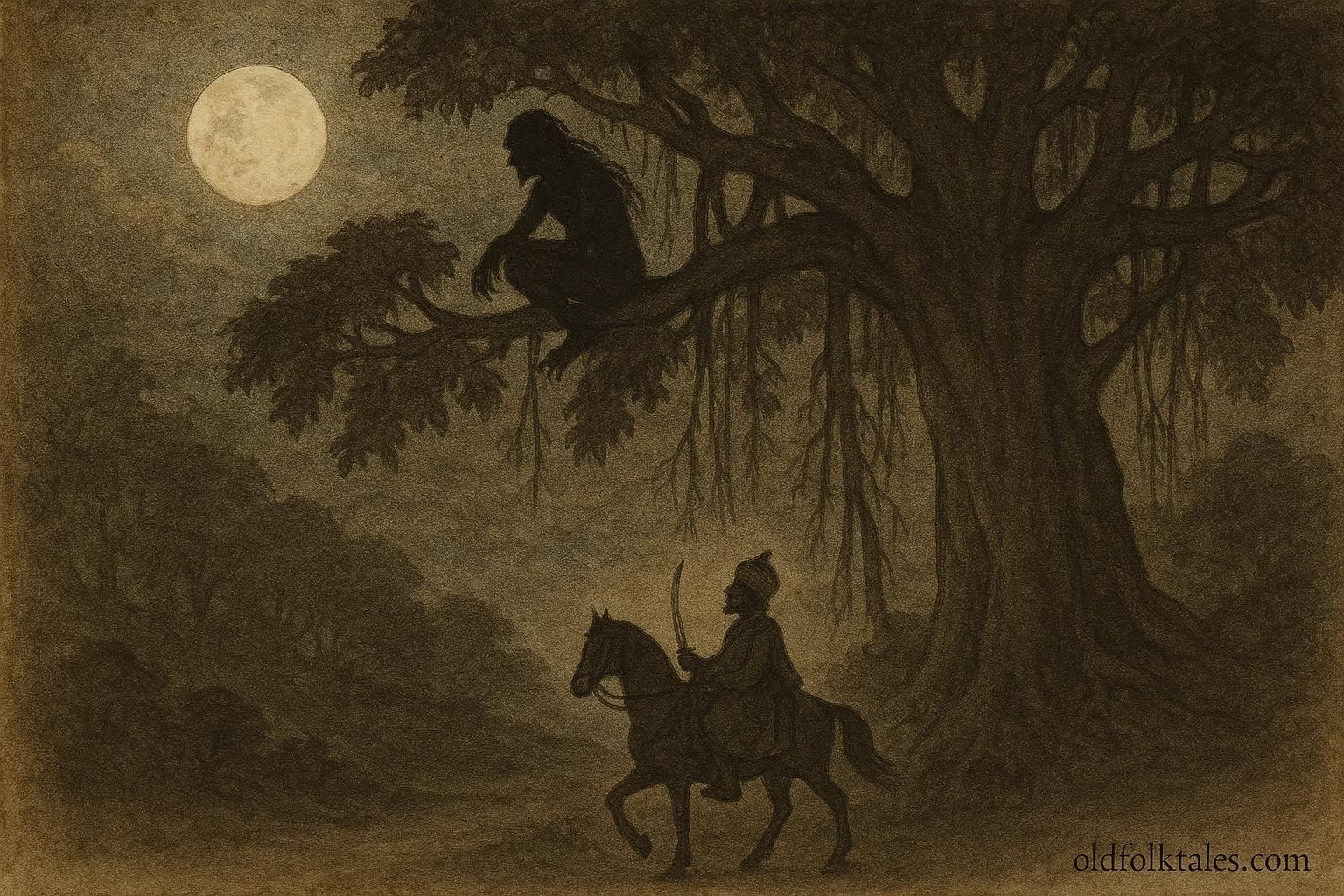
In the deep stillness of the Indian night, when the wind moves like a whisper through banyan branches and the moon casts a pale silver glow over ancient temples, the Vetala wanders. Neither fully alive nor entirely dead, the Vetala dwells in the silence between worlds, slipping into abandoned bodies and roaming graveyards where the living rarely dare to tread. To many, it is a demon. To others, a guardian of moral law whose twisted form hides a sharp and discerning mind.
One well known tale begins with a king traveling through a remote forest to fulfill a promise to a wandering ascetic. The ascetic had asked him to retrieve a corpse from a banyan tree. Though strange, the king agreed, for he was a ruler who valued honor. When he finally reached the tree, he found the corpse hanging upside down, its limbs stiff and cold. As he touched it, the body twitched. The king hesitated but did not step back. Then the corpse turned its head and spoke.
It was no corpse at all. The Vetala had taken hold of the body.
With a voice that echoed as if from a deep cavern, the Vetala mocked him. You cannot make me follow you. If you try to carry me, I will return to this tree again and again. Still, the king lifted the body onto his shoulders and began the long walk back. True to its word, the Vetala slipped away and returned to the tree. The king retrieved it again. And again. Each time the Vetala laughed, admiring the man’s persistence.
Encounter dragons, spirits, and beasts that roamed the myths of every civilization
Finally, the Vetala proposed a bargain to ease the endless journey. I will allow you to carry me if you answer my riddles. But if you speak the answer aloud and are wrong, your life is forfeit. If you know the answer and remain silent, your head will burst from the weight of your knowledge. Thus began the strange partnership between mortal and spirit.
As they traveled, the Vetala told its first tale. It spoke of a young prince torn between friendship and duty. He had promised to help his dear friend, yet doing so would betray his father’s command. Which path is righteous and which path is treacherous The king paused. He considered the harmony of family and the loyalty of friendship. Finally he answered. The spirit nodded, amused, but drifted back into silence.
Yet the Vetala was not done. It told the story of a merchant tricked by his own greed, of a wife who loved two men for different reasons, and of a warrior forced to choose between honor and survival. Each tale ended with a question that pierced the king like a spear. And each time, though he wished to stay silent, his sense of truth compelled him to speak.
The Vetala respected this. Unlike mortals who acted from fear or selfishness, the king sought understanding with a clear heart. But the forest grew darker with each step, and the burden of the body grew heavier. Sweat ran down the king’s brow. His legs trembled, yet he would not stop.
In the final moments of their journey, the Vetala told a last riddle. There was a man, a saint, and a thief caught in a storm. The saint prayed for shelter, the thief sought a place to hide, and the man followed both with no clear intention. When the storm passed, which of them found true peace The king answered that the saint found peace because his intention was pure. The thief found safety but no peace. And the man found nothing because he followed without purpose.
The Vetala remained quiet for a long time before speaking again. You have answered wisely. You are a king who sees beyond surface and shadow. Now I will tell you the truth. The ascetic who sent you here is no saint. He seeks to bind me with forbidden magic. If you deliver me, he will use my power to harm your people. You must decide. Follow your promise or protect your kingdom.
The king stood still in the dim forest path. His promise weighed heavily on him, yet the safety of his people mattered more. He spoke with resolve. I choose my kingdom. With that, the Vetala slipped free from the body and vanished into the folds of the forest. A cold wind swept through the trees. By dawn, the ascetic’s illusions were revealed and he was driven away from the land.
The king returned home, weary but wiser. For the Vetala had not merely haunted bodies. It had tested hearts. Through its riddles, it had exposed truths, revealed motives, and reminded him that leadership required not only strength, but clarity of moral vision. The Vetala did not trouble the kingdom again, but travelers say that on certain moonless nights, the rustling banyan leaves still whisper riddles carried on the wind.
Author’s Note
The Vetala legend endures because it speaks to the tension between duty and wisdom. It shows that spiritual beings can challenge mortals not just with fear but with insight. By testing the king’s judgment, the Vetala becomes a mirror of human morality, reminding readers that virtues shine brightest when choices are difficult.
Knowledge Check
-
What is the Vetala known for in Indian mythology
The Vetala inhabits corpses and challenges mortals with riddles tied to moral truth. -
Why does the Vetala test the king with riddles
It seeks to measure his wisdom honesty and sense of justice. -
What danger awaited if the king answered wrongly
A wrong answer meant the king would lose his life to the spirit. -
Why did the Vetala warn the king about the ascetic
Because the ascetic planned to capture the spirit for harmful magic. -
What choice did the king make at the end of the tale
He chose to protect his kingdom instead of fulfilling the ascetic’s request. -
What central theme does the Vetala story emphasize
The importance of discernment moral clarity and the weight of righteous duty.
Source
Adapted from Vetala Tales in Kathasaritsagara eleventh century
Cultural Origin
Northern India South Asian Tradition