The Vila (plural Vile, also Vily in broader Slavic usage) are among the most radiant, feared, and beloved beings of South Slavic myth. They stand at the crossroads of fairy, nymph, and goddess, semidivine maidens who dwell in wild places: mountain peaks, deep forests, turbulent winds, and sacred springs. Their presence in Serbian epic poetry, collected faithfully by Vuk Karadžić in the 1800s, signals their deep antiquity and importance in pre-Christian Slavic cosmology.
Appearance
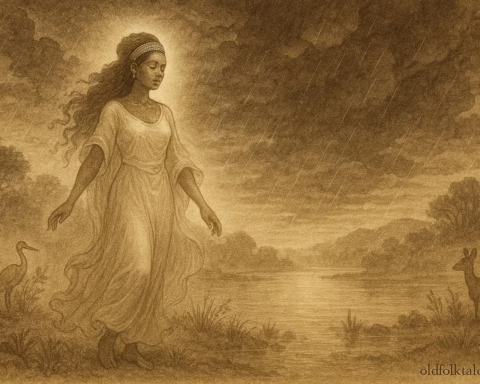
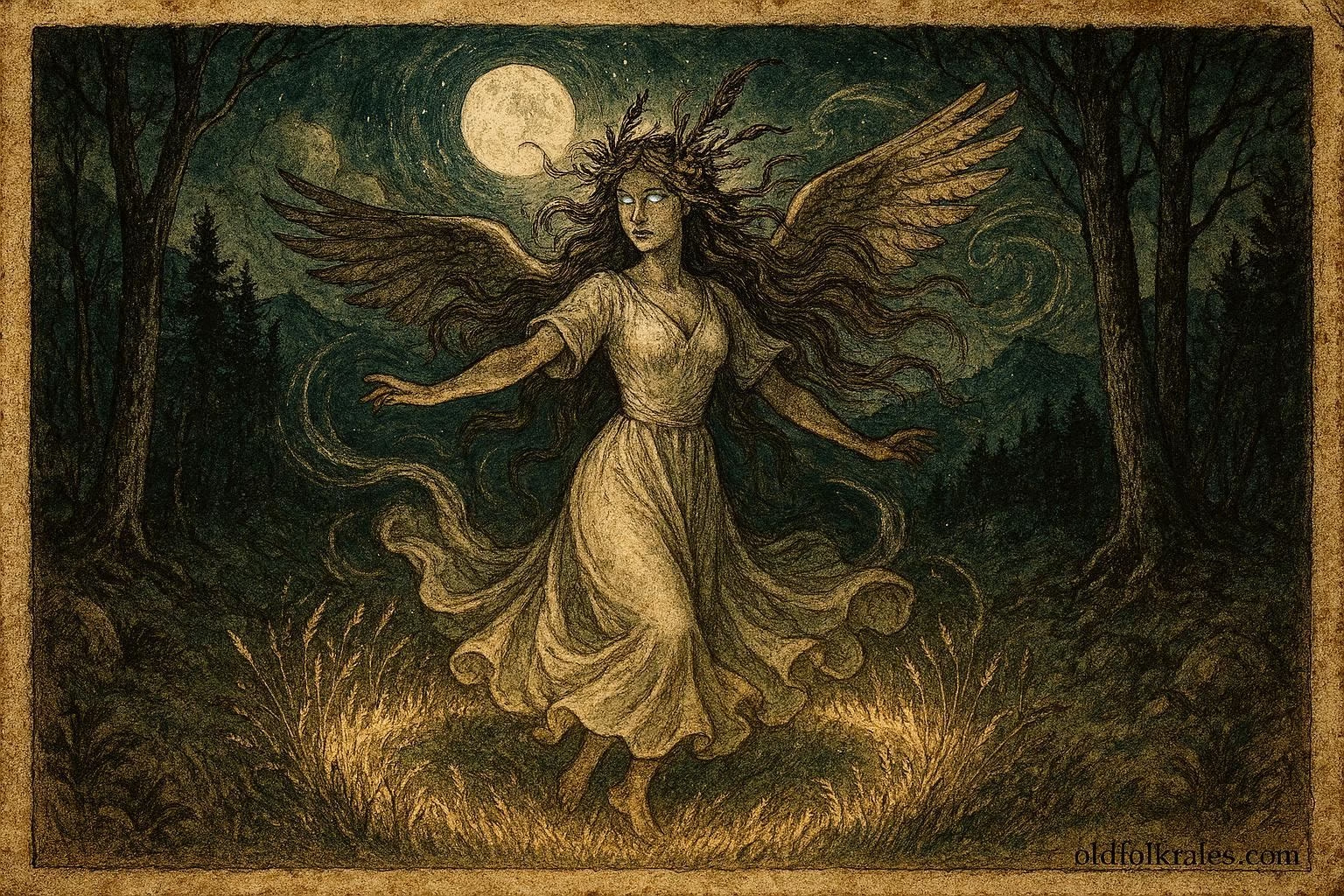
Vile are described as blindingly beautiful, otherworldly women with luminous skin and shining hair. Their beauty does not obey mortal standards, it is not simply attractiveness, but an unearthly radiance that announces their supernatural nature.
Discover the gods, goddesses, and divine spirits who ruled the heavens and shaped human fate
Common attributes include:
- long golden, chestnut, or moon-white hair, often reaching the ground
- flowing white dresses or garments made of mist, leaves, feathers, or storm-light
- crowns of herbs, wildflowers, or glowing diadems
- eyes described as sun-bright or storm-dark, depending on mood
- voices that echo like mountain streams, winds, or birdsong
In some traditions, particularly among Montenegrin and Bosnian epics, Vile have wings, either swan-like, eagle-like, or made of shimmering light. Other variants depict them with the ability to vanish, dissolve into fog, or transform into animals such as swans, falcons, or horses.
Their presence is often accompanied by:
- sudden gusts of wind
- swirling leaves
- trembling branches
- rings of flattened grass where they dance
The Vila’s beauty is awe-inspiring but also dangerous, for to gaze at her without permission is to risk madness.
Behavior and Powers
The Vila is a paradoxical being, at once benevolent and wrathful. Their temperament mirrors the natural world: beautiful but untamed.
Primary powers and traits include:
- Mastery of Nature
Vile control aspects of the earth, especially:
- winds and storms (Tempest-Vilas)
- forest growth and wild beasts (Forest-Vilas)
- mountain paths, caves, and springs (Mountain- and Water-Vilas)
They are guardians of liminal places where humans must tread cautiously.
- Healing and Harm
A Vila’s gift of healing is legendary. She can:
- cure wounds
- restore eyesight
- mend bones
- revive the dying
Yet the same hands can bring:
- wasting illness
- sudden paralysis
- storms that sweep travelers off cliffs
Their justice is swift and unforgiving.
- Dance Magic
Their circle dances, the famed vila kolо, are portals of enchantment. Grass where they dance becomes permanently flattened, and any mortal who wanders into the ring becomes:
- enchanted
- confused
- lost for days
- or bound into servitude
But some heroes who survive the dance gain blessings of strength, luck, or poetic inspiration.
- Oath Binding & Truth Enforcement
Vile are fierce protectors of promises.
An oath sworn before a Vila is unbreakable. Those who betray such promises may be:
- struck by sudden misfortune
- hunted by storms
- cursed to wander
- or transformed into animals
This moral dimension makes Vile guardians of social integrity.
- Warrior Allies
In the Serbian epics, Vile often act as:
- tutors of heroic archers
- companions to warriors
- prophetic guides
They might teach a hero secret charms, grant weapons, or issue warnings about fate. Yet if a hero offends them, he becomes their mortal enemy.
Myths and Key Stories
Vile appear repeatedly in the guslar (bardic) tradition:
- Marko Kraljević, the greatest Serbian folk hero, is raised partly by Vile, who give him superhuman strength—but he later battles them for dishonoring him.
- The Vila Ravijojla, a famed mountain Vila, aids heroes, heals wounds, and intervenes in battles.
- Vile of Zlatibor and Durmitordwell in high cliffs, appearing as shining women who control the winds.
In many tales, Vile abduct men who trespass into sacred groves or take women who break ritual taboos near springs. Some stories feature a mortal who captures a Vila’s wings or magical garment, forcing her into marriage, yet she always eventually escapes.
Symbolism and Cultural Meaning
The Vila personifies wild, untouched nature, glorious, fertile, and deadly. Their mythic role reflects several deep concepts:
- Nature as Moral Force
Vile reward:
- bravery
- truth-telling
- respect for sacred spaces
They punish:
- arrogance
- broken promises
- harm done to animals or forests
- dishonorable warriors
Thus, they enforce a moral ecology.
- Female Power Beyond Domestication
Vile represent women unconstrained by society, powerful, wise, independent. Their freedom and strength contrast with historical gender norms, offering a glimpse of ancient matriarchal mythic structures.
- Liminal Guardians
They occupy the thresholds:
- human ↔ divine
- forest ↔ village
- truth ↔ deception
- life ↔ spirit world
Their domain is where the ordinary world blurs into the mystical.
- Echoes of Pre-Christian Goddesses
Scholars note parallels between Vile and early Slavic goddesses of:
- dawn
- fertility
- storms
- fate
Their survival into Christianized epics shows their cultural resilience.
Cultural Role
Vile were invoked in:
- village healing rituals
- songs sung during harvest or wedding preparations
- prayers for good weather
- heroic epics performed on the gusle
They function as both protectors and tests for humans, guiding them toward moral behavior and respect for the natural world.
Author’s Note
The Vila is not a simple fairy. She is a bridge between ancient goddess worship, early Slavic animism, and heroic folklore. Her complexity—both nurturing and terrifying—reflects the deep cultural respect for landscapes that are beautiful yet unforgiving. In many ways, the Vila is the spirit of the Balkans itself: proud, fierce, and untamed.
Knowledge Check (Q&A)
- What natural domains are Vile associated with?
Forests, mountains, winds, springs, and storms. - In Serbian epics, what heroes often interact with Vile?
Marko Kraljević and other guslaric heroes. - What is a vila kolo?
A supernatural dance circle that enchants or traps mortals. - What moral value do Vile fiercely enforce?
Keeping promises and honoring oaths. - How do mortals sometimes gain the help of a Vila?
Through respect, offerings, bravery, or surviving their tests. - What does a Vila symbolize in broader Slavic cosmology?
Wild nature, female power, moral justice, and liminal thresholds.
Source: Serbian epic poetry recorded by Vuk Karadžić (19th c., public domain); oral South Slavic legends
Origin: Southern Slavic regions,Serbia, Bosnia, Montenegro, parts of Croatia and Bulgaria