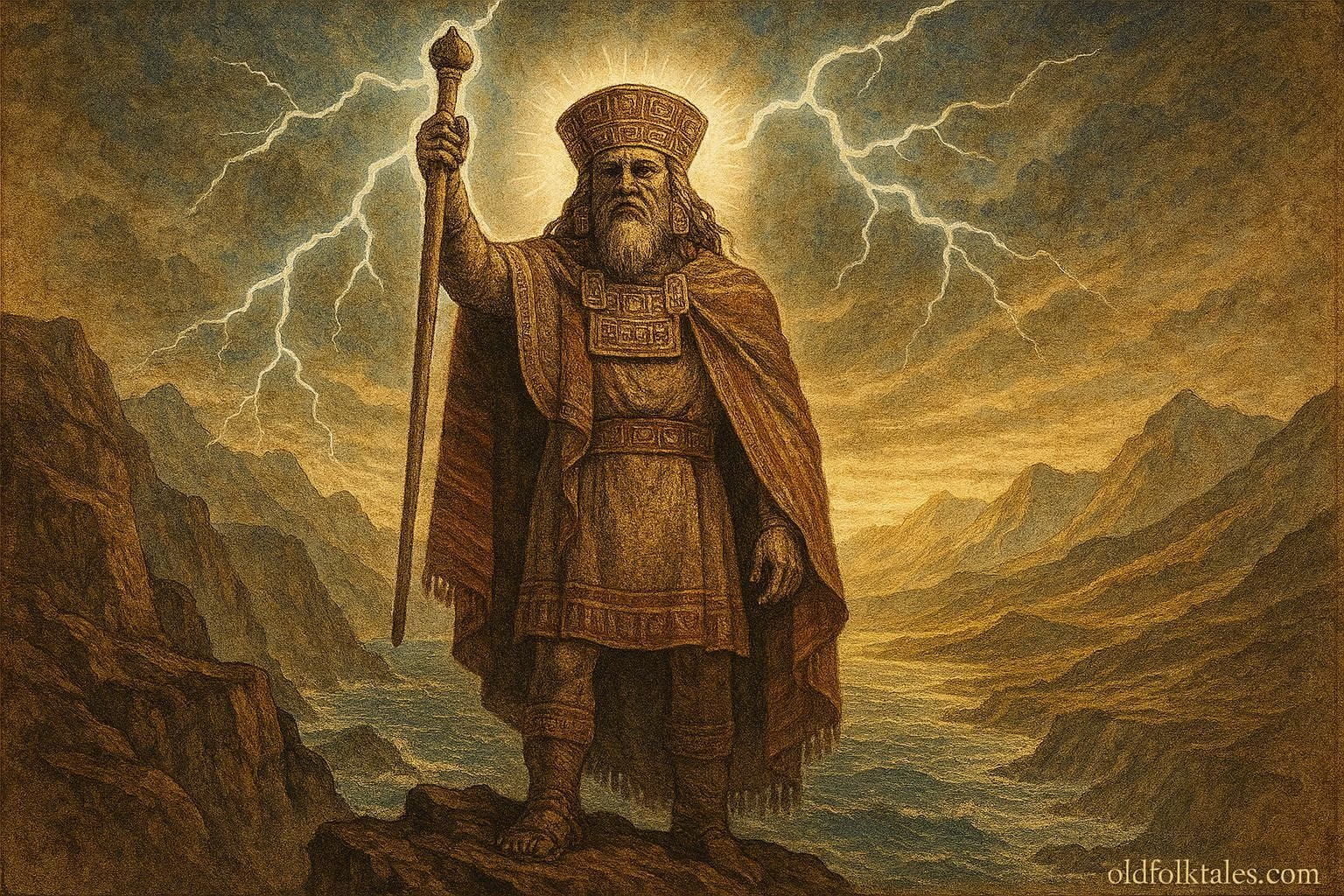
Before mountains thrust their granite ribs toward the heavens, before the sun first ignited the sky, before even the winds knew the taste of the earth, there was Viracocha.
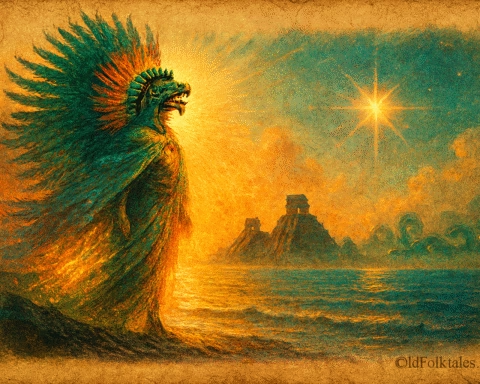
From the endless dark waters of Lake Titicaca, he rose in a surge of brilliance, a being woven from light older than time, a presence that made the silence crack like ice beneath a growing dawn. He stood upon the water’s trembling skin and spoke a single word, and from that word, the world unfolded.
Mountains flared upward. Valleys deepened like sacred breaths carved into the land. Rivers unfurled silver threads across the new earth. Stars kindled themselves in obedience to his command. And when the new cosmos settled into its shape, Viracocha shaped giants, beings of great strength but empty hearts, carved from stone and meant to steward creation.
But these first beings were flawed. They roamed the high plains with might but no wisdom, strength without compassion, power without restraint. They crushed forests beneath careless feet. They battered mountains in their play. They shouted challenges at the heavens, imagining themselves equal to their maker.
Viracocha watched, heavy with divine grief. Creation must not descend into chaos.
So the god called forth rain, not gentle water but a consuming deluge, a world-flood that roared down the Andes, swallowing the giants, reducing their bodies to scattered boulders still seen across the highlands. Only a few he spared, turning them into stone guardians of sacred places.
When the waters withdrew, the world lay cleansed, quiet again beneath the sky he had set in motion.
Yet the land was empty.
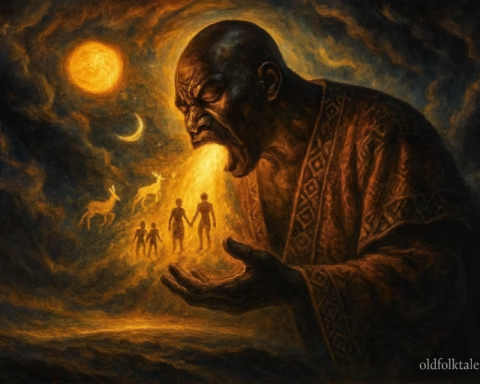
Viracocha knelt in the newly washed soil and shaped new beings, not from stone, but from clay mixed with the breath of stars. He molded them into the first humans, fragile but deeply capable, endowed with memory, emotion, and a spark of curiosity meant to evolve into wisdom. Humanity blinked awake before him, trembling yet full of promise.
But creation required more than breath and form. The world needed order.
So Viracocha began his wandering journey, a pilgrimage across the spine of the Andes. Cloaked in a simple traveler’s garb, staff in hand, he walked not as a god but as a quiet teacher whose brilliance glimmered behind his mortal guise. Over mountains crowned with snow, through valleys where the wind braided itself with prayer, across deserts where the sun scorched the bones of the earth, he walked.
Everywhere he traveled, he taught.
At Tiahuanaco, he instructed the people in the shaping of stone, how to carve the gateways that align with sun and season, how to set stones that whisper cosmic order.
In the high plains, he showed the people how to plant quinoa and potato in terraces that held the mountain’s breath.
In the deep valleys, he taught weaving, patterns that echoed stars and storms, llamas and light.
In the coastal lands, he revealed the secrets of irrigation so that water, the first destroyer, might now be a life-bringer.
Yet his greatest teaching was not craft but moral balance:
“To walk the world,” he said, “is to be responsible for its harmony.”
Humans must honor the land, respect the sky, and live with reciprocity, ayni, the sacred exchange that binds existence.
But as he taught, shadows gathered.
Some humans, like the giants before them, desired power. They wished to wield the lightning he commanded, to summon storms, to shape the earth with a god’s hand. One chieftain, bold in arrogance, raised a spear against the divine wanderer, believing the stranger in the dusty cloak to be weak.
Viracocha did not retaliate with fury. His struggle was not with the spear but with the moral failing it represented, a world always balanced on the edge between creation and destruction. So he lifted his staff, and from its tip a single flash of fire leapt into the sky, cracking thunder overhead. The chieftain fell trembling, not dead but humbled, as the god cried:
“Power without virtue becomes flood. Wisdom without humility becomes ruin.”
Then he forgave the man and his people, for the purpose of his wandering was not to punish but to teach humanity how to rise beyond its flaws.
As centuries passed, his journey neared its end. At the edge of the western sea, the mighty Pacific, Viracocha stood upon a cliff where foam leapt against rock like pale serpents. The people who had followed him wept, for they sensed that his time among mortals was closing.
Viracocha raised his hands, calling the horizon to listen.
“I have shaped the world,” he said. “But now you must shape its future. Hold to the balance I have taught. Honor the land. Walk in reciprocity. Let your hands build, not break.”
Then, in a shimmer of light as soft as dawn and as fierce as creation’s first tremor, Viracocha walked into the sea.
The waters did not swallow him, they parted, glowing.
And from beyond the ocean’s edge, thunder answered like the heartbeat of the cosmos.
Some say he will return when the world trembles again,
when mountains crack, when order falters, when humanity forgets the teachings of balance.
For a god who wanders does not abandon; he circles the edges of the world, waiting for the moment the Andes call him home.
AUTHOR’S NOTE
In Inca tradition, Viracocha stands as the bridge between creation and civilization. He is not merely a world-maker but a moral guide, shaping humanity’s ethical compass. His wandering symbolizes the lifelong pursuit of wisdom and balance, values that anchored Inca society. The story of his eventual departure into the sea reflects the enduring hope that moral order, once learned, must be upheld by humans themselves.
KNOWLEDGE CHECK
-
From where does Viracocha first rise in the Inca creation epic?
-
Why does Viracocha destroy the first race of giants?
-
How does he create the second generation of humans?
-
What central moral principle does Viracocha teach during his wandering?
-
How does he handle the chieftain who attacks him?
-
What is the symbolic meaning of his departure into the sea?
CULTURAL ORIGIN: Inca Creation Epics – Andean, Quechua-speaking peoples of the Central Andes.
SOURCE: Juan de Betanzos, Narrative of the Incas (1551).