Long before the sun rose over the towering peaks of the Andes, before the first llama grazed the mountain grasslands, and before human voices echoed through the valleys, there was only darkness. The world existed in a state of profound chaos formless, purposeless, wrapped in an eternal night. Into this void stepped Viracocha, the great creator deity, the one who would bring order from confusion and light from shadow.
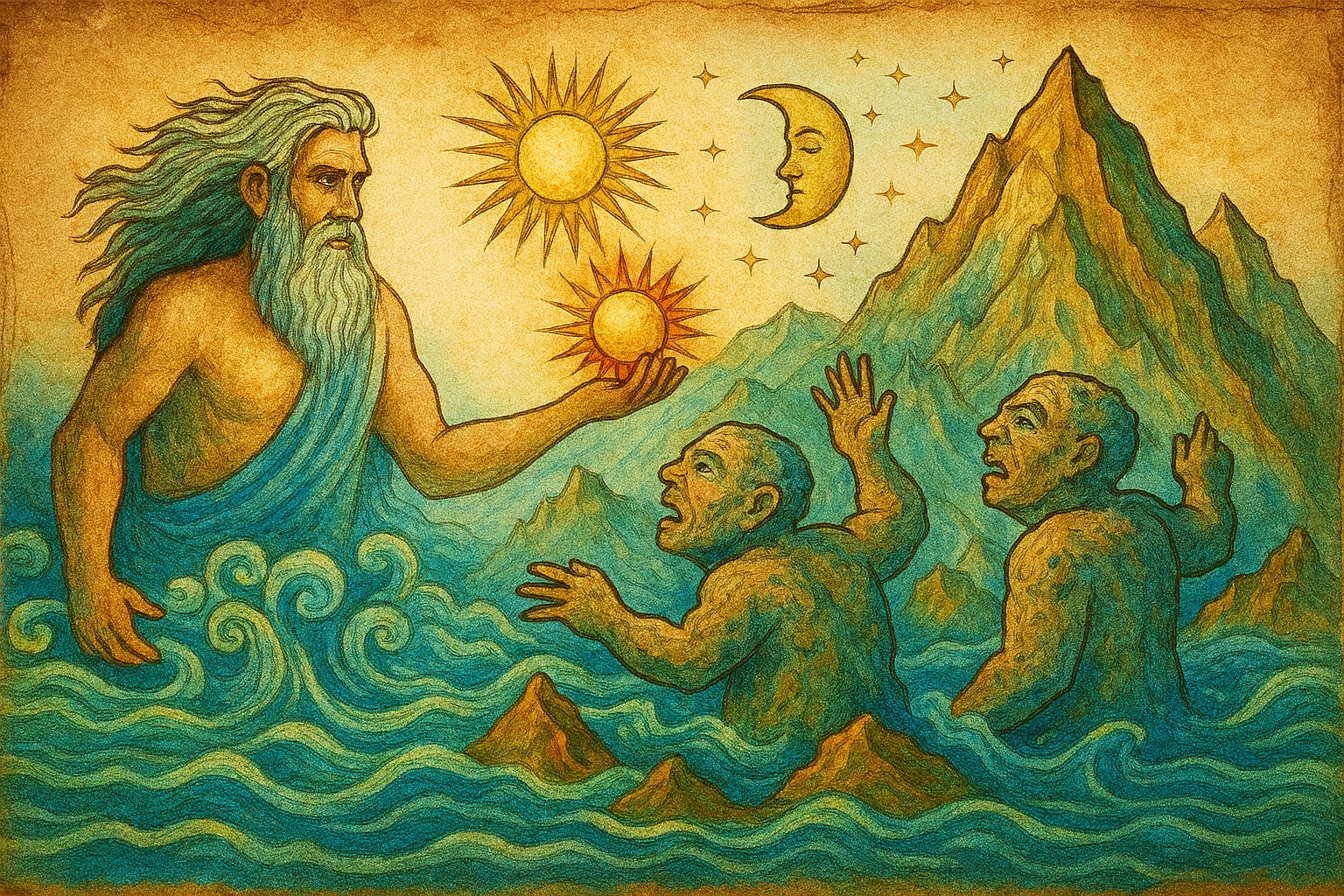
Viracocha emerged from the sacred waters of Lake Titicaca, his presence commanding and divine. With deliberate purpose, he began the work of creation. First, he reached into the heavens and kindled the sun, a blazing orb that would bring warmth and life to the cold earth. Then he fashioned the moon, gentle and silver, to rule the darkness with softer light. Around them, he scattered countless stars across the night sky like seeds of luminous corn, each one a spark of divine intention illuminating the cosmic order.
Click to read all Myths & Legends – timeless stories of creation, fate, and the divine across every culture and continent
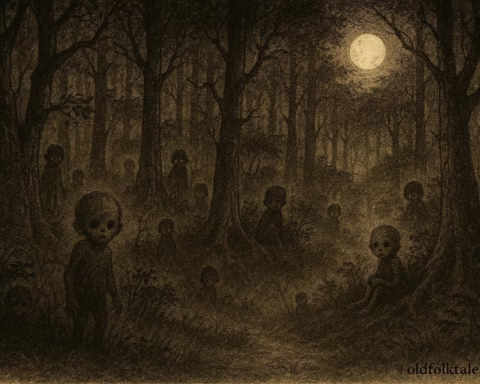
But a world of light and darkness alone was empty it needed inhabitants, beings who could appreciate the beauty of creation and live according to the divine plan. So, Viracocha turned his attention to fashioning the first people. With great care, he shaped beings from stone, carving them from the very bones of the mountains themselves. These first creations were giants enormous, powerful creatures who walked the earth with thunderous footsteps that shook the valleys and caused rockslides on the mountain slopes.
Viracocha watched these stone giants with hope, expecting them to honor the order he had established, to live in harmony with the land and sky he had given them. But as time passed, his hope turned to disappointment, and disappointment deepened into sorrow. The giants proved to be unruly and rebellious. They refused to acknowledge their creator, showing no gratitude for the gift of life or respect for the sacred balance of the world. Instead, they fought among themselves, destroyed the landscape, and lived without purpose or reverence. They were strong in body but empty in spirit, lacking the wisdom and humility necessary to fulfill their role in creation.
Viracocha observed their chaos with a heavy heart. He had not created the world so that it could be torn apart by arrogance and violence. He had not lit the sun and moon so that they could shine down on disorder and disrespect. The creator deity knew that these stone giants could not be reformed their hearts were as hard and unmovable as the rock from which they had been carved. If the world was to fulfill its divine purpose, if harmony was to be established, then the old creation would have to be swept away entirely.
And so, Viracocha made a decision that would reshape the world forever. He would send the Unu Pachakuti the great flood, the water that overturns the land, the deluge that would cleanse the earth of all that had gone wrong. This would be no ordinary rain, no gentle stream flowing down from the mountains. This would be a cosmic purification, a washing away of failure so that something new and better could emerge.
The floodwaters came with terrifying force. The sky opened, releasing torrents of rain that fell without ceasing. Rivers burst their banks and roared through valleys like angry serpents. Lakes overflowed, merging into vast inland seas. The ocean itself rose up, sending massive waves crashing against the shores and surging inland, swallowing villages and farmlands. Water poured down from the mountain peaks in thundering waterfalls, and the earth trembled beneath the weight of so much liquid fury.
The stone giants, for all their size and strength, were powerless against the flood. They tried to flee to higher ground, scrambling up mountainsides, but the waters followed them relentlessly. They tried to stand and fight, but one cannot battle water with fists or strength. As the deluge surrounded them, the giants began to transform. Their bodies, already made of stone, hardened further and became fixed in place. Their limbs froze mid-stride their faces locked in expressions of terror and surprise. Where once they had walked as living beings, now they stood as silent stone formations massive rocks and boulders scattered across the Andean landscape, eternal monuments to Viracocha’s judgment.
The flood continued its work, covering everything beneath a vast sheet of water. Mountains became islands, valleys became lakes, and the world as the giants had known it disappeared entirely. The chaos they had created was washed away, dissolved in the purifying waters, leaving behind only silence and emptiness.
But Viracocha’s plan was not complete. In his wisdom and mercy, the creator had chosen to spare a small number of beings in some tellings, just two survivors who had shown respect and reverence for the divine order. These chosen ones were sheltered from the flood, protected by Viracocha himself, so that they might serve as the seeds of a new humanity. When the waters finally began to recede, revealing muddy earth and cleansed landscapes, these survivors emerged to witness a transformed world.
With the slate wiped clean, Viracocha set about creating humanity anew. This time, he fashioned people with greater care and intention, beings who would carry within them the memory of what had been lost and the understanding of what was required. These new humans were not giants of stone but beings of flesh and blood, capable of learning, growing, and most importantly, living in harmony with the divine order that Viracocha had established.
The creator taught these new people the proper ways to live. He showed them how to cultivate the land, how to honor the sun and moon, how to respect the mountains and rivers that provided for them. He established laws and customs that would guide them toward a life of balance and reverence. The people listened, remembered, and passed these teachings down through generations, knowing that their very existence depended on maintaining the sacred order.
The world was restored under Viracocha’s divine rule. The sun rose each morning over a landscape marked by the stone remnants of those who had failed constant reminders of the price of arrogance and disorder. The new humanity flourished, building terraced fields on mountain slopes, raising temples to honor their creator, and living according to the laws that had been given to them. They understood that they had been granted a second chance, that the Unu Pachakuti had been both an ending and a beginning, both judgment and mercy.
And so, the world continued, generation after generation, with humans who remembered the great flood and the importance of living in harmony with creation. They looked upon the strange rock formations scattered across their land the petrified giants frozen in their final moments and they remembered. They honored Viracocha not out of fear alone, but out of gratitude for the order he had established and the gift of life he had granted them after the waters receded.
The Moral Lesson
The Unu Pachakuti teaches us that creation carries responsibility. When we receive the gift of life and the blessing of a world to inhabit, we must respond with gratitude, respect, and harmony rather than arrogance and chaos. The stone giants failed because they possessed strength without wisdom, power without purpose, and existence without reverence. Viracocha’s flood reminds us that divine order cannot be maintained through force or ignored with impunity when we live in discord with the sacred balance of creation, we risk losing everything. Yet the story also offers hope: even after catastrophic failure, renewal is possible for those who learn from the past and commit to living according to higher principles. The survivors were spared not because they were perfect, but because they understood their place in the cosmic order and honored their creator.
Knowledge Check
Q1: Who is Viracocha in Inca mythology and what did he create?
A1: Viracocha is the supreme creator deity in Inca and Andean mythology who emerged from Lake Titicaca. He created the sun, moon, and stars to bring light to the darkness, and fashioned the first beings stone giants to inhabit the earth he had formed.
Q2: What does “Unu Pachakuti” mean and why did Viracocha send it?
A2: “Unu Pachakuti” means “water that overturns the land” in Quechua the great flood of Andean tradition. Viracocha sent this deluge to destroy the unruly stone giants who refused to honor creation’s divine order and lived in chaos and violence without reverence for their creator.
Q3: What happened to the stone giants during the great Andean flood?
A3: During the Unu Pachakuti, the stone giants were unable to escape the floodwaters. They were transformed into solid rock formations and boulders, frozen in place across the Andean landscape as eternal reminders of Viracocha’s judgment against those who lived in disorder.
Q4: How many survivors were there after the Unu Pachakuti flood?
A4: According to Inca tradition, Viracocha spared only a small number of beings from the flood in some versions, just two survivors who had shown proper respect and reverence. These chosen ones were protected to repopulate the earth with a new, wiser humanity.
Q5: How was the new humanity different from the stone giants in Inca creation myth?
A5: The new humanity created after the flood was made of flesh and blood rather than stone, and possessed the capacity to learn, honor divine law, and live in harmony with creation. Unlike the giants, they understood the importance of gratitude, respect, and maintaining sacred balance.
Q6: What is the cultural significance of rock formations in Andean mythology?
A6: In Andean tradition, many unusual rock formations and boulders scattered across the landscape are believed to be the petrified remains of the stone giants destroyed in the Unu Pachakuti. These formations serve as constant reminders of the consequences of living without respect for divine order.
Cultural Origin: Inca Empire and broader Andean civilizations, Peru and the Andes Mountains region of South America