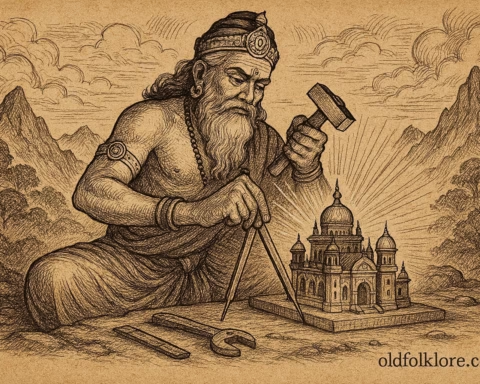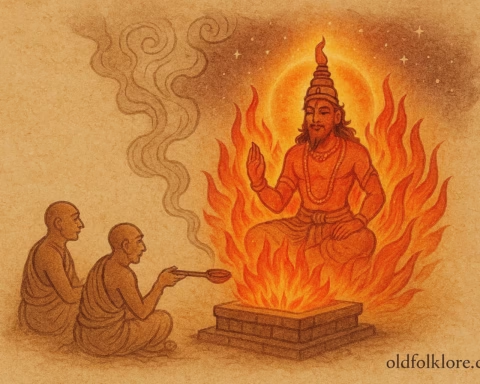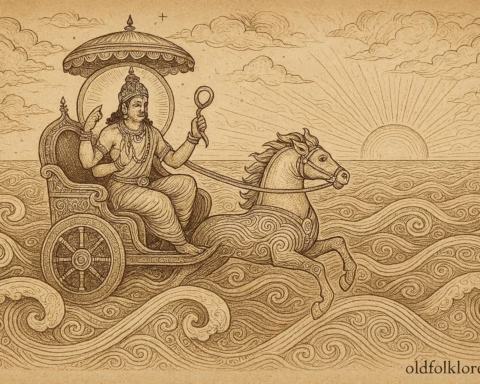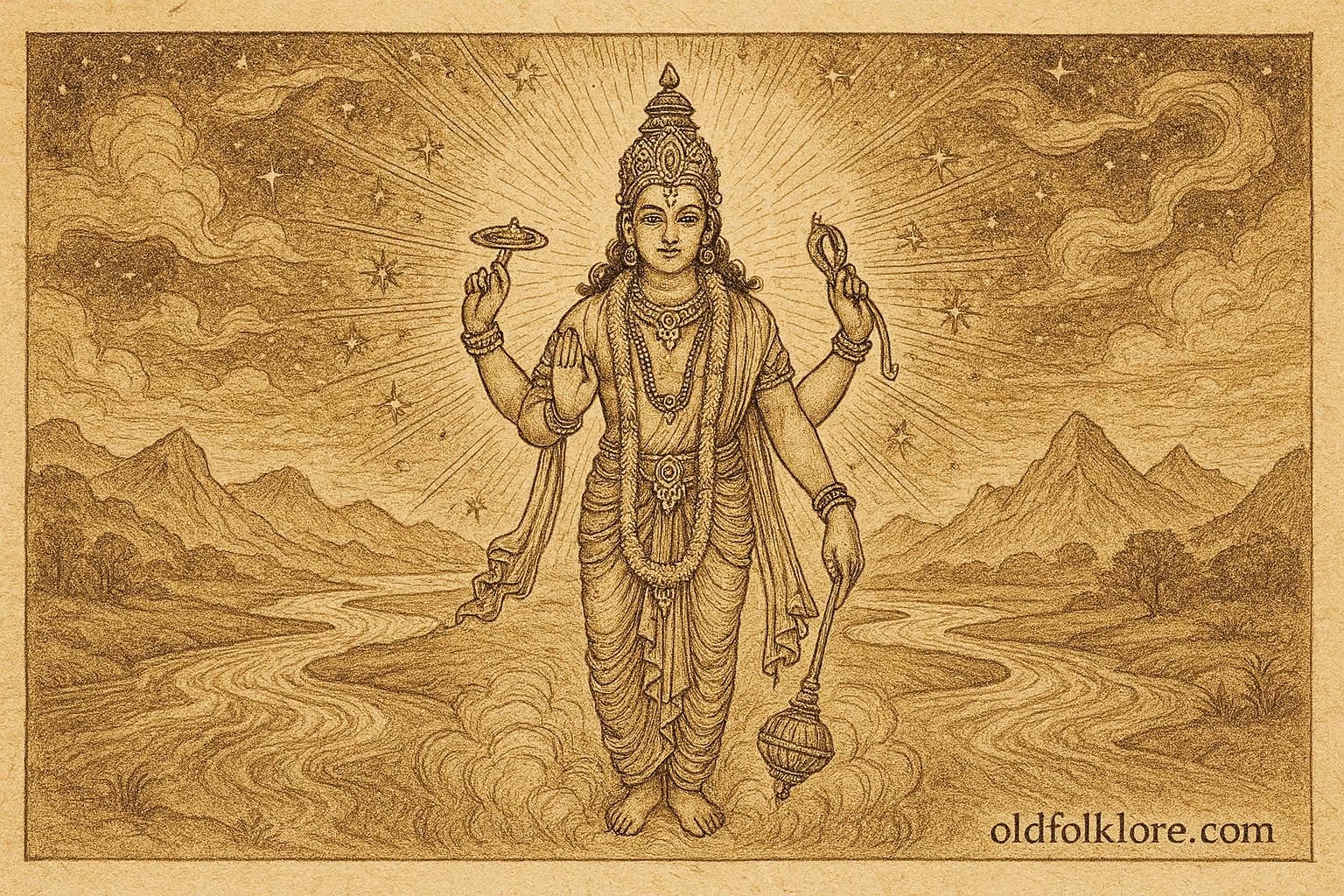
Vishnu, one of the principal deities of the Vedic pantheon, is revered as the preserver of cosmic order (ṛta) and the sustainer of life. Known as “The All-Present One,” Vishnu pervades every realm of existence. His power maintains balance between creation and dissolution, ensuring that the forces of chaos do not overwhelm the world. Often depicted as serene and radiant, he embodies mercy, protection, and the continuity of life. Though later Hindu traditions elaborate on his avatars, the Vedic Vishnu primarily manifests in a cosmic and transcendent form. His symbols include the chakra (discus), conch, and a radiant presence spanning earth, heavens, and the realm beyond. Worship in Vedic times involved fire rituals (yajnas) where offerings were made to invoke his protective oversight. Though temples as we know them emerged later, hymns in the Rig Veda attest to his central role in early Indo-Aryan spirituality.
Mythic Story: Vishnu’s Three Great Steps
Long ago, in the earliest age when the cosmos had begun to form, the universe was not yet fully measured. Heaven and earth existed, but the vast spaces between them waited for order to be established. It was then that Vishnu, the all-pervading, luminous god, moved across creation in three divine strides, shaping existence with each step.
Follow the paths of legendary warriors, kings, and demigods who defined ancient honor
The first step of Vishnu touched the earth itself. As he extended his foot, mountains rose from valleys, rivers carved their paths, and plains expanded beneath the sky. Trees sprouted, and all living beings stirred with the breath of life. The earth became a canvas, vibrant with fertility, greenery, and the subtle harmonies of creation. Animals of every kind awoke to walk, fly, and swim, guided by the balance Vishnu instilled with this first stride.
With the second step, Vishnu spanned the heavens. Celestial spheres were drawn into order; the sun, moon, and stars took their appointed places. Planets traced their orbits, clouds gathered in patterns that would one day govern seasons, and the winds began to circulate across land and sea. The motion of Vishnu’s stride breathed rhythm into time itself: days, nights, and months emerged, and the rhythm of the cosmos was set. The gods watched in awe as the universe was measured, stabilized, and sanctified by his vast, radiant form.
Finally, Vishnu placed his third step. This was not merely a step but a cosmic leap into the realm of immortality, the highest heaven beyond mortal sight. Here, the realms of gods, spirits, and celestial beings took form. The sacred spaces where dharma and order would flourish were established. It was as if the final stride stitched together heaven, earth, and the subtle realms between. The gods rejoiced, offering hymns and praise, for Vishnu had created the scaffolding of existence itself, and all that would live thereafter would inherit the blessings of his measured care.
Throughout these strides, Vishnu’s luminous presence radiated with a brilliance that transcended fire, sun, and lightning. The wind carried his voice, echoing the cosmic order. Rivers shimmered with his reflection, and mountains seemed to bow under the weight of his energy. The very act of walking was a divine orchestration: life, death, growth, and decay all threaded together by his omnipresent steps.
This myth is preserved in the earliest hymns of the Rig Veda, where Vishnu’s three strides are celebrated not only as a story but as a principle: the universe is maintained through careful, deliberate action guided by divine will. His strides are a symbol of balance, an assurance that life and cosmos are aligned through vigilance, presence, and wisdom. In ritual recitations, his name evokes protection, sustenance, and harmony, reminding mortals that the invisible rhythms of order are upheld by forces greater than any individual effort.
Thus, Vishnu’s three great steps remain an enduring symbol: the interconnectedness of earth, heaven, and the eternal realms. Every element of creation, from the tiniest seed to the farthest star, is touched by his care, a reminder that preservation is as vital as creation itself.
Author’s Note
Vishnu’s three strides offer a meditation on presence and responsibility. They illustrate that sustaining life, order, and morality requires careful, deliberate action. In human terms, they teach that balance, attentiveness, and integrity are vital for harmony. Just as Vishnu’s steps weave together cosmic realms, our choices, deeds, and care for the world shape the living order we inhabit. The myth reflects not only divine power but also the ethical and spiritual rhythms that govern life.
Knowledge Check
Q1: What is Vishnu’s primary role in the Vedic pantheon?
A: He is the preserver of cosmic order and sustainer of life.
Q2: How many strides did Vishnu take to establish the cosmos?
A: Three great strides.
Q3: What did Vishnu’s first step create or affect?
A: It measured and shaped the earth, creating mountains, rivers, plains, and life forms.
Q4: What is symbolized by Vishnu’s second stride?
A: The ordering of the heavens, celestial bodies, seasons, and the rhythm of time.
Q5: What is the significance of the third stride?
A: It established the highest realms of heaven and ensured cosmic harmony for gods and immortals.
Q6: From which ancient text is this myth primarily attested?
A: The Rig Veda, Book 1, Hymn 154.
Source: Rig Veda, India
Source Origin: India, Vedic tradition