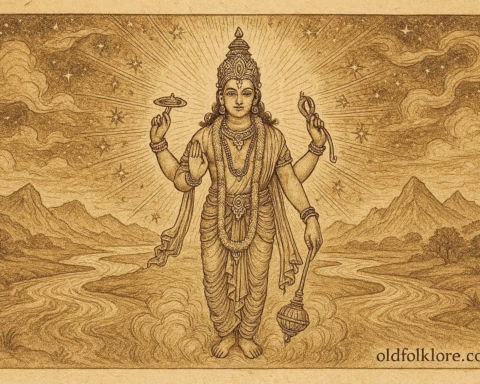
Vishwakarma is the divine architect and master craftsman of the Vedic pantheon. He governs architecture, craftsmanship, engineering, and sacred technology, creating not only the palaces of gods but also their weapons, chariots, and tools of power. Considered the celestial engineer, he embodies precision, creativity, and the sacred knowledge that bridges divine inspiration with tangible form.
His symbols include the tools of his craft, particularly the hammer, chisel, and measuring rod, signifying the harmony of art, science, and devotion. Vishwakarma’s creations are not mere objects; they are infused with divine energy, ensuring cosmic order and the protection of gods and humanity alike.
In the Vedic pantheon, he occupies a unique position: while many deities govern natural or moral domains, Vishwakarma crafts the very stage upon which divine action unfolds. His artistry extends beyond functionality; it represents spiritual insight, teaching humans that devotion, discipline, and skill are sacred paths.
Worship practices for Vishwakarma include ritual offerings of tools, prayers before construction, and annual Vishwakarma Puja, celebrated by engineers, artisans, and builders who invoke his blessing for success, safety, and precision in their craft.
Mythic Story: Vishwakarma and the Divine Creations
In the earliest hymns of the Rigveda, Vishwakarma is hailed as the “All-Creator”, whose hands shape the wonders of heaven and earth. Among his greatest feats is the creation of Indra’s thunderbolt (Vajra). When Indra faced the demon Vritra, whose power obstructed the rivers and threatened cosmic order, he turned to Vishwakarma. The divine craftsman forged the Vajra from the bones of the sage Dadhichi, combining divine strength with unerring precision. With this weapon, Indra released the waters, restoring life and harmony to the world.
Vishwakarma’s genius is not confined to weapons alone. Legends recount that he built Dwarka, the resplendent city of Krishna, whose palaces shimmered with jewels and whose streets reflected divine geometry. Every column, every arch, and every bridge bore the mark of perfection, combining aesthetics with functionality, demonstrating the sacred union of art and cosmic order.
The Mahabharata and Puranas describe how Vishwakarma fashioned chariots, flying palaces, and celestial cities, each imbued with magical properties and divine resilience. Gods relied upon him not only for beauty and defense but for the sustenance of their realms. Even sages and mortals who sought innovation or mastery over materials invoked his guidance, believing that skill honed through devotion mirrored the divine.
In one tale, Vishwakarma is said to have designed a palace of mirrors and gold to teach humility and insight. Mortals entering it saw not only themselves but the reflection of their intentions and deeds. Thus, his craftsmanship was not merely physical but a mirror of spiritual and moral truths, blending utility with wisdom.
Vishwakarma’s influence extends to mortal artisans as well. Guilds of carpenters, blacksmiths, stonemasons, and metalworkers have long celebrated him as a patron, offering prayers before commencing work, believing that dedication, precision, and devotion could align their hands with his divine craftsmanship. Through these rituals, Vishwakarma connects humans to cosmic order, reminding them that creation is both a sacred duty and a reflection of divine intelligence.
Through every legend, Vishwakarma emerges not merely as a builder but as a teacher of skill, discipline, and sacred knowledge. He demonstrates that art and technology are not separate from spirituality; each creation can carry the imprint of the divine, guiding both gods and humans toward harmony, beauty, and purpose.
Author’s Note
Vishwakarma’s myths teach that skill, devotion, and creativity are sacred paths, binding human ingenuity to cosmic order. His life and works remind us that every creation, from the humblest tool to the grandest palace, carries spiritual significance. In honoring craft and artistry, humans mirror the divine act of creation, cultivating discipline, precision, and insight in both work and life.
Knowledge Check
Q1: Who is Vishwakarma, and what domains does he govern?
A: Vishwakarma is the Vedic god of craftsmanship, architecture, and divine engineering.
Q2: What are Vishwakarma’s primary symbols?
A: Tools of the craft, including the hammer, chisel, and measuring rod.
Q3: Which famous weapon did Vishwakarma create for Indra?
A: The Vajra, the thunderbolt used to defeat the demon Vritra.
Q4: What city did Vishwakarma build for Krishna?
A: Dwarka, a magnificent city of palaces and divine architecture.
Q5: How do mortal artisans honor Vishwakarma?
A: Through Vishwakarma Puja, prayers, offerings of tools, and dedication before work.
Q6: What broader lesson does Vishwakarma convey?
A: That skill, devotion, and creativity are sacred, linking human craft to cosmic and spiritual order.
Source: Rigveda, Mahabharata, Puranas, Vedic India
Source Origin: Vedic India