In the ancient days when the world was young and magic still flowed through the northern lands like rivers of starlight, there lived a smith whose skill surpassed all mortal understanding. His name was Völundr, known across the frozen realms of Scandinavia as the greatest craftsman ever to work metal and stone. His hands could coax fire and iron into forms of such beauty that even the gods themselves coveted his creations.
Völundr lived with his two brothers in a remote hall beside a tranquil lake, where wolf tracks marked the snow and pine forests stretched endlessly toward distant mountains. The three brothers were not entirely mortal, for their lineage carried the blood of elves, granting them extraordinary abilities and unnaturally long lives. Each morning, they would work at their crafts, and each evening, they would gaze across the shimmering waters, content in their solitary existence.
Click to read all Myths & Legends – timeless stories of creation, fate, and the divine across every culture and continent
One fateful day, three swan maidens descended from the sky, their feathered cloaks allowing them to transform from birds into women of breathtaking beauty. These were valkyries, daughters of kings from distant lands, who had flown far from their homes. The brothers fell deeply in love with these mysterious women, and for seven winters, they lived together in happiness. Völundr wed the fairest of them, a maiden named Hervör, whose laughter was like music and whose presence filled his heart with joy.
But swan maidens are creatures of destiny and duty, bound by fates that mortals cannot fully comprehend. One winter morning, when Völundr awoke, his brothers’ wives had vanished into the dawn sky. His own beloved Hervör was gone as well, leaving behind only her golden ring as a token of their love. His brothers immediately set out to search for their lost wives, disappearing into the wilderness, never to return.
Völundr remained alone in the hall, his heart heavy with grief but sustained by hope. Day after day, he sat at his forge, crafting seven hundred identical golden rings, each one fashioned in memory of Hervör’s ring. He strung them on a cord, believing that if he could create enough beauty, she might somehow sense his devotion and return to him. The rhythmic hammering of his work echoed across the frozen lake, a lonely song of longing and determination.
Word of Völundr’s incredible skill reached the ears of King Níðuðr of Sweden, a greedy ruler whose hunger for wealth and power knew no satisfaction. The king coveted the master smith’s legendary abilities and the treasures he could create. One night, while Völundr slept, Níðuðr and his warriors crept into the hall. They discovered the seven hundred golden rings and, stealing one, left the others hanging as bait.
When Völundr returned from hunting and saw that one ring was missing, his heart leaped with desperate hope. He believed Hervör had returned and taken it as a sign. Exhausted from his search for her, he fell into deep sleep beside his forge. That was when Níðuðr’s men struck, binding the master smith in chains before he could resist.
The king’s cruelty knew no bounds. He feared that Völundr might escape, so he ordered his men to sever the tendons in the smith’s legs, crippling him so he could never walk freely again. Then Níðuðr imprisoned Völundr on a small island called Sævarstöð, accessible only by boat, where the captive smith was forced to forge treasures for his captor day and night. The king and his family grew wealthy beyond measure from Völundr’s forced labor, while the smith himself remained a broken prisoner, his dreams of freedom seemingly crushed forever.
But Völundr’s hands, though his legs were maimed, remained as skilled as ever. And in his heart, the fire of vengeance burned hotter than any forge. He appeared to submit to his fate, crafting ever more magnificent treasures for the king, but secretly he plotted his revenge with the patience and precision of a master craftsman planning his greatest work.
King Níðuðr had two young sons who were fascinated by the legendary smith and his wondrous creations. One day, the princes came secretly to Völundr’s island workshop, hoping to see treasures their father kept hidden. Völundr welcomed them with a cold smile, promising to show them marvels beyond imagination. He led them to a great chest, and as they peered inside, he struck them both down with swift, terrible vengeance. From their skulls, he fashioned jeweled drinking cups. From their eyes, he created precious gems. From their teeth, he made brooches. These grisly treasures he then presented to the unsuspecting royal family.
The king’s daughter, Böðvildr, also came to the island, bringing a golden ring that had broken, begging the famous smith to repair it. Völundr drugged her with ale and took his revenge upon the king’s bloodline in a manner that would ensure his enemy’s eternal shame and sorrow.
But revenge alone could not satisfy Völundr’s burning need for freedom. Using all his legendary skill and the knowledge passed down through his elvish heritage, he began to craft his masterpiece: a pair of mechanical wings fashioned from feathers, metal, and magic. He worked in secret, his crippled legs no hindrance to hands that could shape the impossible.
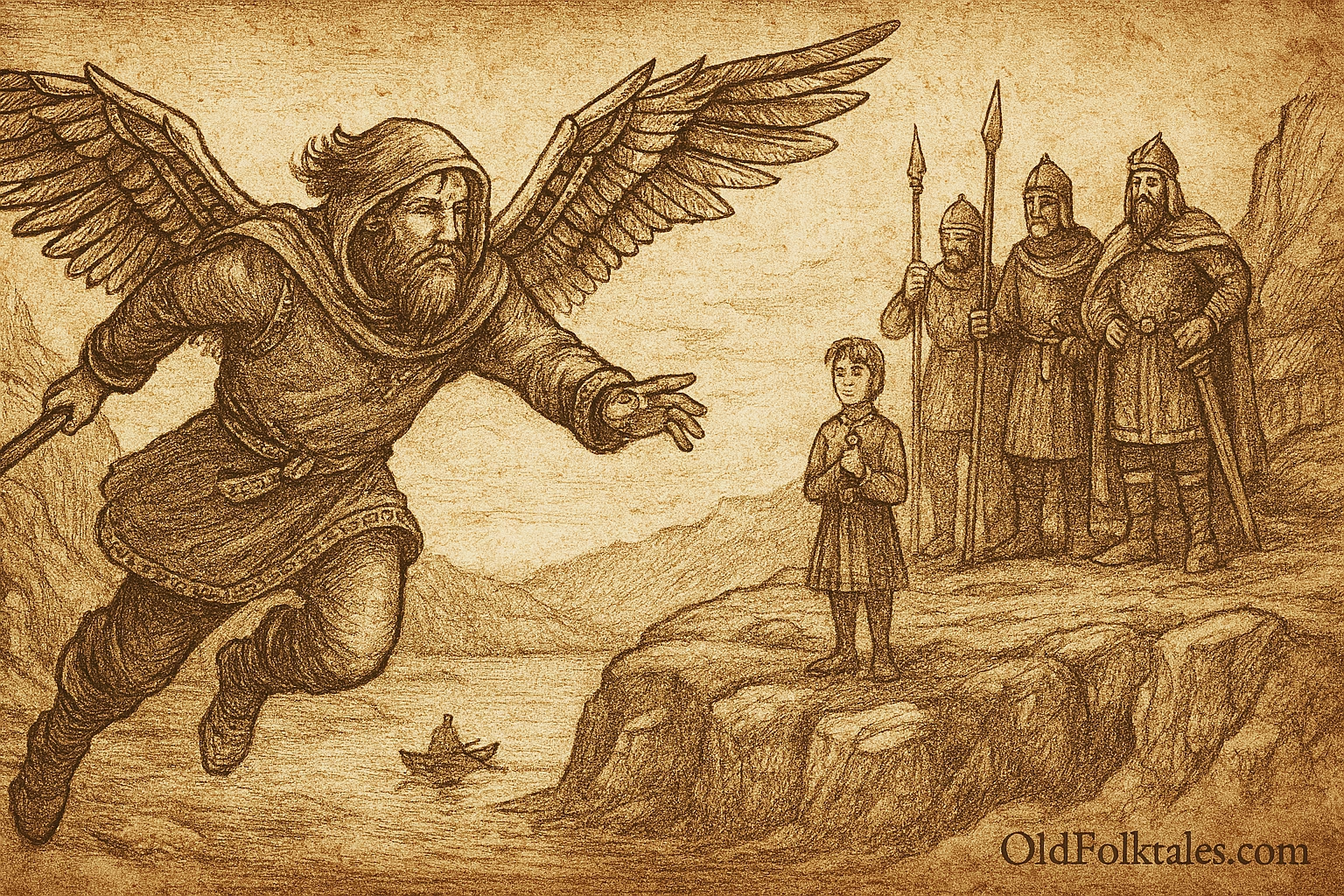
When Böðvildr discovered she was with child and the king finally learned the horrible truth about his sons’ fate, Níðuðr rushed to the island in fury and anguish. But he arrived only to witness Völundr’s final triumph. The master smith, standing atop his forge despite his ruined legs, revealed the terrible truth of what he had done. Then, donning his magnificent wings, Völundr launched himself into the air.
The king could only watch in impotent rage as his captive rose into the sky, soaring higher and higher like an eagle released from its cage. Völundr’s laughter echoed across the waters as he flew away to freedom, leaving behind a king broken by grief and a legend that would endure for countless generations. The crippled smith had transformed his pain and captivity into the power of flight itself, proving that neither chains nor cruelty could permanently bind the will of a master craftsman.
The Lesson
The legend of Völundr teaches us that true skill and knowledge cannot be imprisoned, even when the body is bound. It reminds us that cruelty and greed inevitably invite terrible consequences, and that those who abuse power over others should expect vengeance in return. Most profoundly, the tale illustrates how adversity can forge strength, how suffering can fuel determination, and how the human spirit, when combined with skill and intelligence, can transcend even the most brutal limitations to achieve freedom.
Knowledge Check
Q1: Who was Völundr in Norse and Swedish mythology?
A: Völundr, known as Wayland the Smith in other traditions, was a legendary master craftsman in Norse and Swedish mythology. He possessed elvish blood and unmatched skill in metalworking, able to create treasures of extraordinary beauty. He became famous for his captivity, revenge, and miraculous escape using mechanical wings he forged himself.
Q2: Why did King Níðuðr cripple Völundr instead of simply imprisoning him?
A: King Níðuðr crippled Völundr by severing the tendons in his legs to prevent the master smith from escaping while still preserving his hands for crafting treasures. The king’s greed for Völundr’s legendary creations outweighed any mercy, and he believed that crippling the smith would make him a permanent captive forced to work forever.
Q3: What happened to the swan maiden Hervör in the legend?
A: Hervör was a swan maiden and valkyrie who married Völundr and lived with him for seven winters. Like the other swan maidens who married his brothers, she was called away by fate and destiny, vanishing one morning and leaving behind only her golden ring. She never returned, though Völundr waited and hoped for her, crafting seven hundred rings in her memory.
Q4: How did Völundr exact his revenge on King Níðuðr?
A: Völundr’s revenge was terrible and complete. He killed the king’s two sons and crafted drinking cups from their skulls, gems from their eyes, and brooches from their teeth, which he gave to the unsuspecting royal family. He also dishonored the king’s daughter Böðvildr, ensuring she would bear his child and bring shame to the royal bloodline.
Q5: What do the mechanical wings symbolize in the Völundr legend?
A: The mechanical wings symbolize the triumph of skill, intelligence, and determination over physical limitation and oppression. They represent how knowledge and craftsmanship can transcend even the most brutal constraints, transforming captivity into freedom. The wings also embody the union of mortal ingenuity with elvish magic, showing that true mastery knows no bounds.
Q6: Where is the Völundr legend documented in Swedish and Norse sources?
A: The Völundr legend appears in the Poetic Edda, specifically in the poem Völundarkviða. It is also referenced on Swedish rune stones and in archaeological evidence across Scandinavia, demonstrating its deep roots in Norse and Swedish mythology. The story has variations throughout Germanic and Scandinavian traditions, showing its widespread cultural importance.
Source: Adapted from the Poetic Edda (Völundarkviða)
Cultural Origin: Norse/Swedish Mythology, Scandinavia