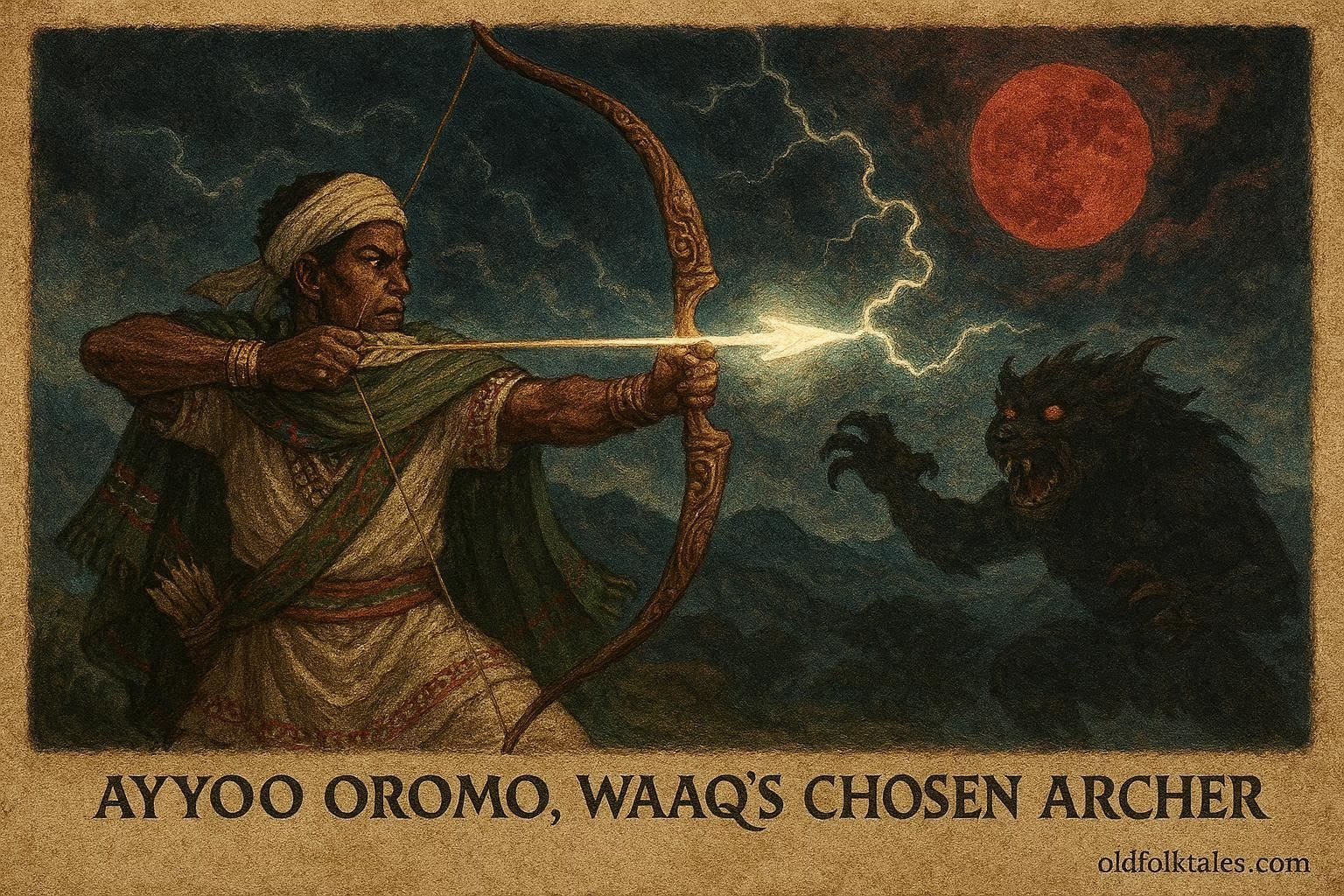
Before the dawn had steadied its first breath, before cattle lowed along the plains and before the Gadaa councils carved the laws of harmony, Waaq, the eternal Sky, the Breath Above All, sent a whisper down to Earth. It drifted across the highlands of Oromia, into the cradle of an unborn child. In that moment the winds hushed, for they felt the rising of a destiny that would bend the arc of the world. That child was Ayyoo Oromo, the one whom Waaq had chosen before the grass first caught the light.
Ayyoo was born during a night when the sky shimmered with an unfamiliar aurora, curtains of blue and gold that rippled like celestial banners. Elders murmured omens; cattle refused their pasture; birds circled as if saluting a hidden king. When the baby cried, thunder answered gently, as if acknowledging an ancient pact renewed.
From childhood, Ayyoo moved like someone listening to voices beyond mortal reach. He could sense the tremor of footsteps from great distances and read the language of the wind. But it was his archery that marked him unmistakably as Waaq’s own. At ten years old he could strike a fig seed tossed into the air; at twelve he could split a falling leaf; at fifteen he crafted his sacred bow, Ilkee Waaqaa, from a tree struck by lightning but left miraculously unburnt.
And yet, even with these gifts, Ayyoo carried himself with humility. He tended cattle, learned proverbs from elders, and sat quietly beside the sacred Odaa tree. “Strength,” he often murmured, “is safest in the hands of those who fear misusing it.”
The Rising Darkness
In those days, monstrous beings roamed the borderlands: Warra Bineensa, shapeshifting creatures born from shadows and hunger. Legends said they were once guardians of the earth, corrupted by jealousy of humankind’s growing harmony with Waaq. They hunted at dusk, stealing cattle, shattering villages, and drinking the courage of warriors who dared oppose them.
When the beasts began encroaching deeper into Oromo lands, the Gadaa council called for a champion. Diviners cast stones and bones; each sign pointed to the same name.
Ayyoo.
Though he accepted the calling, a murmur of doubt fluttered inside him like a trapped bird. “Am I chosen because I am strong,” he wondered, “or am I strong only because I was chosen?” This question would haunt him.
The Heroic Challenge
Ayyoo set out alone toward the borderlands, his bow slung across his back, his quiver heavy with arrows fletched from the feathers of sacred birds. For three days he traveled through forests where no fire stayed lit and valleys where echoes refused to speak. At night he dreamt of Waaq’s whisper, urging him forward.
On the fourth night, beneath a moon veiled in red dust, the Warra Bineensa appeared.
Their bodies twisted between hyena, serpent, and half-man forms; their eyes burned like coals in a devouring forge. Their leader, Gurratti, towered above the rest, horned, clawed, draped in shadows that writhed like living smoke.
“Ayyoo, child of the sky,” Gurratti growled, “we have awaited you. Why defend those who forget the old pacts? Why serve a god who gave mortals dominion over beasts? Join us, and we shall rule the night together.”
Ayyoo’s heart shuddered, not from fear but from the temptation to release the constant burden of his destiny. For a moment he saw himself free, unbound by expectation, his strength serving only his own will.
But then he remembered the elders’ teachings, the songs of cattle-herders, the laughter of children, and the quiet, steady presence of Waaq above all things.
“No,” he said. “Power without harmony is decay. I will not stand with you.”
Gurratti roared, shaking the hills.
The Battle of the Pregnant Moon
The creatures charged. Ayyoo moved with the precision of a falling star. His arrows sang through the night, each bearing Waaq’s guiding breath. One arrow struck a monster’s heart, turning it to dust. Another pinned a serpent-limbed creature to a tree. Yet more surged, shrieking.
Gurratti lunged, swinging claws that could fell an ox. Ayyoo rolled beneath them, unleashing an arrow at point-blank range, but the beast’s ribcage hardened to stone. The arrow snapped.
The archer stumbled. Doubt surged again. What if destiny had chosen wrongly? What if his strength was never enough?
Then lightning tore across the sky.
From the heavens descended a beam of pale blue fire, illuminating Ayyoo’s bow. Waaq’s whisper filled his chest:
“Do not shoot with your arms, shoot with your purpose.”
Ayyoo rose, steadied his breath, and nocked his final arrow, the one he had crafted from the lightning-struck tree’s heartwood.
Gurratti charged.
Ayyoo released.
The arrow streaked like a shard of sky, piercing the beast’s chest. Gurratti roared once more, then burst into a plume of ash that the winds carried away.
The remaining monsters fled into cracks beneath the earth, where they would trouble humankind no more.
Symbolic Outcome
With the last breath of night, the red-veiled moon brightened into white. Dawn rose. The land exhaled. Ayyoo returned to his people not as a conqueror, but as a beacon.
He declared that harmony, not dominance, is the bond between Earth and Sky. His bow was enshrined beneath the Odaa tree, and from that day forth, arrows in Oromo tales came to symbolize moral clarity: the straightness of truth, the direction of destiny, and the courage to choose what is right even when doubt echoes louder than faith.
AUTHOR’S NOTE
Ayyoo Oromo stands as one of the great heroic archetypes of the Horn of Africa, a figure who embodies moral responsibility as much as physical prowess. His story reflects Oromo cosmology, where Waaq’s blessings come with ethical purpose, and where harmony between nature, humanity, and the divine is sacred. Heroes are not flawless; they struggle, doubt, and rise. In Ayyoo’s legacy, we see a model of courage rooted not in power, but in principle.
KNOWLEDGE CHECK
-
What divine sign marked Ayyoo’s birth as extraordinary?
-
What is the name of Ayyoo’s sacred bow?
-
Who were the Warra Bineensa, and why did they threaten Oromo lands?
-
What moral temptation did Gurratti offer Ayyoo?
-
What celestial message empowered Ayyoo’s final arrow?
-
What symbolic meaning do arrows take on in Oromo tradition after Ayyoo’s victory?
CULTURAL ORIGIN: Oromo People, Horn of Africa, rooted in Waaqeffanna spiritual tradition and Gadaa cultural philosophy.
SOURCE: Inspired by Oromo oral traditions and mythic cycles as documented in Oromo Oral Traditions by Asafa Jalata (1996).