Walpurgis Night, known in German as Walpurgisnacht and in Scandinavia as Valborg, is celebrated on the eve of Saint Walpurga’s feast day, 30 April into 1 May. While named after the 8th-century English missionary nun Saint Walpurga, the festival overlays much older pre-Christian spring rituals, echoing Beltane-type customs intended to ward off evil spirits, bless livestock, and ensure fertility for the coming season.
The festival reflects a fusion of Christian commemoration and ancient folklore, where bonfires symbolized purification and the triumph of light over lingering winter darkness. Over centuries, local legends, especially in Germany and the Czech lands, associated the night with witches’ gatherings on mountaintops, blending myth, cautionary tales, and seasonal celebration into a richly layered tradition.
Description of the Festival
Customs surrounding Walpurgis Night vary significantly across Central and Northern Europe.
-
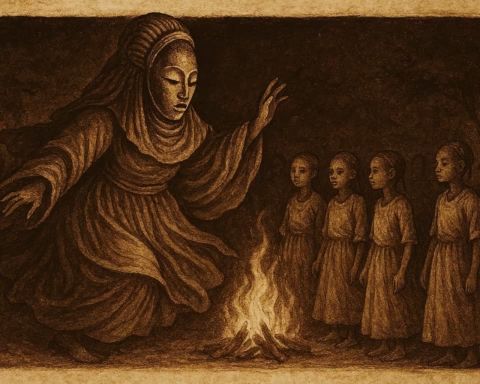
Germany and Czech Lands: Bonfires are central. Communities gather on hillsides to light towering fires, sing seasonal songs, and dance around the flames. Folk narratives often tell of witches who ride on broomsticks or gather atop the Brocken mountain, a mythic site in the Harz region. While contemporary celebrations are mainly festive, the imagery of mystical gatherings persists in storytelling and cultural memory.
-
Scandinavia (Sweden, Finland): The festival emphasizes springtime renewal and student traditions. University towns, particularly in Sweden, celebrate with large-scale bonfires, choral singing, and open-air parties. Choirs perform traditional songs welcoming warmer days, while students may dress in symbolic attire and partake in organized festivities lasting late into the evening.
-
Ritual Practices: Across regions, lighting bonfires served practical and symbolic purposes: purifying the air, deterring disease, protecting livestock, and marking the transition from winter to summer. Singing and dancing reinforced communal bonds, while folklore provided narrative frameworks linking human life to seasonal and supernatural cycles.
Modern celebrations maintain these motifs but often emphasize music, community, and cultural heritage rather than superstition, turning the night into a vibrant public festival that simultaneously honors history, myth, and natural rhythms.
Mythic Connection and Symbolism
Walpurgis Night embodies a duality of spiritual and folkloric meaning. Christian observers commemorate Saint Walpurga, whose relics were believed to protect against disease and witchcraft. Pre-Christian layers, however, highlight fire as purification, spring fertility, and the liminal threshold between seasons.
Folkloric narratives, witches’ sabbaths, mountain gatherings, and magical rites, illustrate the human need to interpret nature’s power and unpredictability, personifying unseen forces as supernatural beings. The fires of Walpurgis symbolize light, renewal, and protection, while communal dances and songs express joy, fertility, and continuity. In Scandinavia, student choirs and civic participation reinforce cultural transmission, linking generations to the ancient rhythms of nature and communal life.
Thus, Walpurgis Night is not merely a festival but a ritual interplay between human society, divine oversight, and the unseen natural world, demonstrating how mythology, religion, and folk belief intertwine to mark cosmic and seasonal transitions.
Author’s Note
Walpurgis Night exemplifies the dynamic layering of culture over centuries, where Christian devotion, seasonal rites, and folklore merge into a living tradition. From the mystical narratives of witches on mountaintops to student choirs singing beneath spring bonfires, the festival reminds us of humanity’s desire to celebrate renewal, invoke protection, and connect with nature’s cycles. Today, it serves as both a festive spectacle and a symbolic bridge between the old world of myth and the modern celebration of community, light, and seasonal change.
Knowledge Check
1. What is the origin of Walpurgis Night?
It merges the Christian feast of Saint Walpurga with pre-Christian spring rites for protection and fertility.
2. When is Walpurgis Night celebrated?
On the eve of Saint Walpurga’s feast day, 30 April to 1 May.
3. What activities are typical during the festival?
Lighting bonfires, singing seasonal songs, dancing, and student or community gatherings.
4. How is Walpurgis Night interpreted in folklore?
As a night when witches gather and supernatural activity is at its peak, requiring protective rituals.
5. How do Scandinavian celebrations differ from Central European ones?
They emphasize springtime renewal, student choirs, and civic festivity, less focused on supernatural fear.
6. What do the bonfires symbolize?
They represent purification, protection, seasonal transition, and the triumph of light over winter darkness.