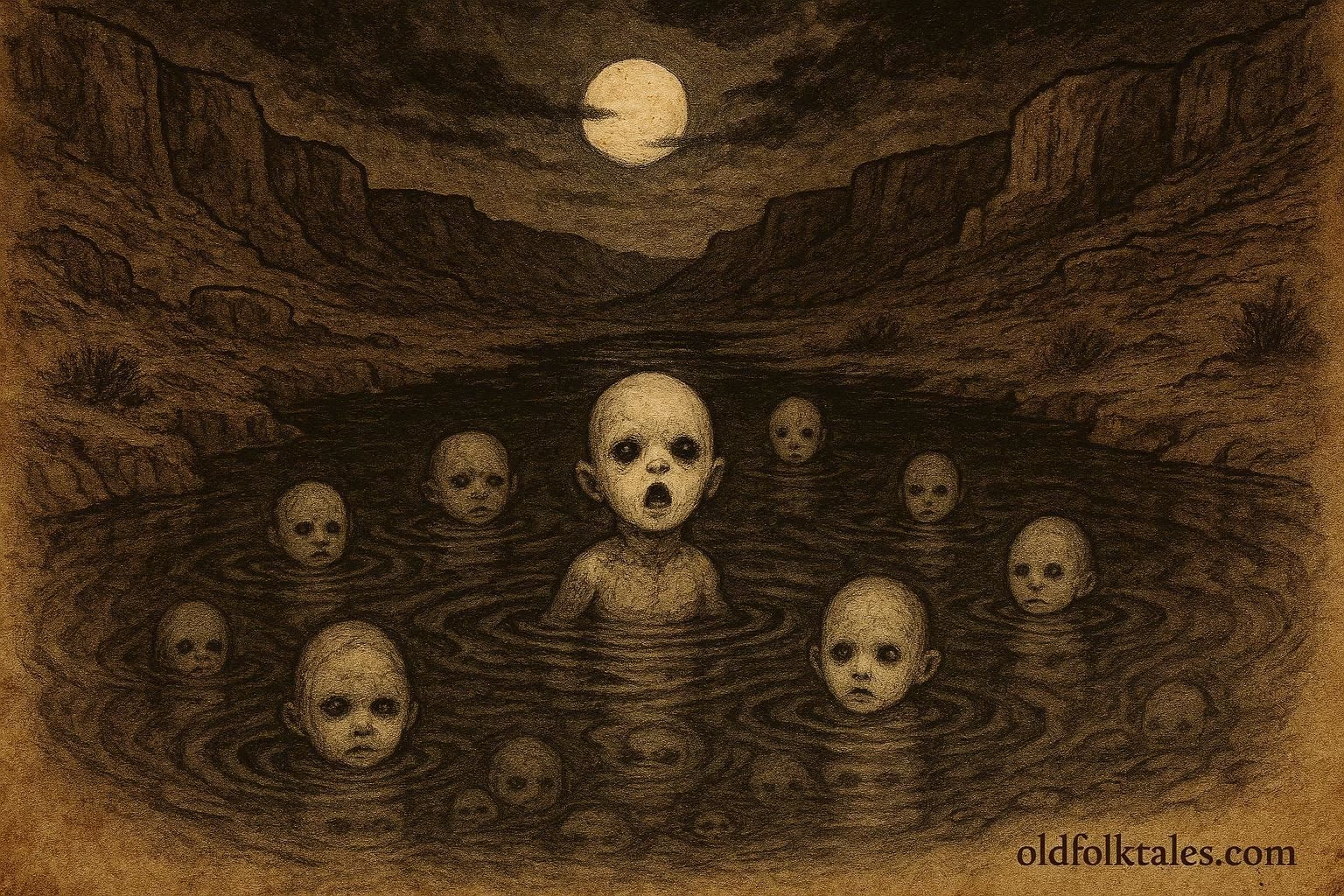
Across the vast, arid expanse of the Great Basin, where mountains cradle isolated valleys and still pools shimmer under high desert sky, stories circulate about beings known as Water Babies, or Pawapicts in some Northern Paiute traditions. These spirits dwell not in the open rivers of lush climates, but in the rare, powerful sources of water that sustained life in a desert region. Springs, lakes, hidden streams, and deep pools, especially those without visible bottoms, are said to be inhabited by these mysterious beings.
Although they are called “babies,” Water Babies are far from human children. Their most defining characteristic is their cry: a haunting, unmistakably infant-like wail that echoes across water at dusk or night. This supernatural mimicry draws adults or children toward the edge, where the spirit may seize them, overturn the water beneath their feet, or lure them into depths from which they never return. In many tribal traditions, hearing a baby cry near water is considered a dire omen; it is rarely, if ever, a real infant.
Journey through the world’s most powerful legends, where gods, mortals, and destiny intertwine
Appearance
Descriptions vary between groups, partly due to the secretive and sacred nature of water-related spirits, but recurring motifs appear across Northern Paiute, Shoshone, and Washoe accounts:
- Infant-like Form: Some stories describe Water Babies as small human infants with large, dark eyes, wet black hair, and pale or slippery skin. Their bodies may be distorted or elongated once one sees them closely, revealing their true nature only after it is too late.
- Aquatic Features: Other traditions portray them as human-fish hybrids, with fins, gills, scaly skin, or long eel-like tails. In these accounts, the crying baby voice is a trick; the creature itself is not child-like at all.
- Spirit-Like Appearance: In many versions, the Water Baby is not fully physical. It may be seen only as ripples, shadows, or a fleeting shape below the surface.
- Shape-Shifting Spirits: Some tribes believe Water Babies can appear as:
- A baby crying on a rock,
- A small humanoid swimming swiftly under water,
- A drowned child seeking company, or
- A spirit that takes the form most likely to deceive the viewer.
Yet throughout all variations, one theme remains constant: Water Babies are dangerous and are not to be approached.
Behavior and Powers
Water Babies possess several supernatural traits associated with water, death, and the spirit world:
- Luring Through Sound: Their most infamous ability is the mimicry of a crying infant, used to attract humans. Many tribal elders warn children never to follow cries heard near lakes or springs; it is rarely a human child needing help.
- Drowning and Pulling Victims Under: Water Babies are often blamed for mysterious drownings, especially in deep or turbulent waters. They may grab ankles, overturn boats, or simply cause a sudden swell in an otherwise calm pool.
- Eating or “Taking” Children: In some Northern Paiute versions, Water Babies devour children. In other versions, they claim children’s spirits, not their bodies, pulling them into the water to join them eternally.
- Weather and Water Control: Certain Shoshone and Washoe traditions link Water Babies to storms, floods, or the sudden upsurge of springs. They may cause storms when angered or distress bodies of water when disturbed.
- Omen of Death or Misfortune: Hearing a Water Baby’s cry can foretell death, grief, or danger. Sometimes it warns, sometimes it deceives.
- Vengeful Spirits: Some water babies are said to be children who died tragically, especially through drowning or abandonment. Their grief transforms them into predatory or sorrowful spirits.
Cultural Role and Symbolism
Water Babies are not simply monsters; they express deep themes within Great Basin cosmology, ecology, and community life.
- Symbol of Water’s Dual Nature: In the desert, water is life, but it is also peril. Lakes and springs provide food, fish, healing, and spiritual power, but they also kill swiftly. Water Babies embody this paradox: nurturing yet dangerous, life-giving yet capable of taking life without warning.
- Lessons on Safety and Respect: In communities where still water could be deadly, Water Baby stories functioned as protective teachings:
- Do not wander alone near deep pools.
- Do not walk toward mysterious sounds.
- Respect water spirits and avoid disturbing their homes.
These tales have very practical roots in survival.
- Gatekeepers of the Spirit World: For many Great Basin peoples, water is a liminal zone, a boundary between worlds. Water Babies serve as guardians at these thresholds, emphasizing that spirits dwell in natural places, watching and listening.
- Warnings Against Grief and Neglect: Some traditions say Water Babies arise from tragedy, children abandoned or lost. In this sense, they symbolize the consequences of neglect, both literal (parental care) and metaphorical (neglecting natural spaces).
- Cultural Memory and Land Identity: Water Babies help anchor cultural identity to place. Each lake or spring is said to have its own personality and spirit. These stories bind people to their local environment, preserving ecological knowledge and spiritual geography.
- Forces of Balance: In certain stories, Water Babies are not malicious but maintain balance, punishing disrespect and warning those who abuse water sources.
Explore the mysterious creatures of legend, from guardians of the sacred to bringers of chaos
Author’s Note
Water Babies offer a striking example of how Indigenous myth protects people while also expressing deep spiritual philosophies. Their stories are not merely “scary tales”, they encode environmental wisdom, survival strategies, respect for sacred places, and recognition of the spirit world’s presence in the everyday landscape. When treated with respect, Water Babies can be understood not as monsters, but as guardians and reminders of the sacredness and danger inherent in water.
Knowledge Check (Q&A)
Q: What is the primary method Water Babies use to lure humans?
A: Mimicking the cry of an infant.
Q: Which Indigenous groups tell stories of Water Babies?
A: Northern Paiute, Shoshone, Washoe, and other Great Basin tribes.
Q: Why are Water Babies associated with danger?
A: They may drown people or lure them into deep water.
Q: What natural phenomenon do Water Babies symbolize?
A: The dual nature of water, life-giving yet deadly.
Q: What practical lesson do Water Baby stories teach?
A: Avoid wandering alone near deep or isolated bodies of water.
Q: In some traditions, what are Water Babies believed to be?
A: Spirits of drowned or lost children.
Source: Great Basin Indigenous Oral Traditions
Origin: Northern Paiute, Shoshone, Washoe, and other Great Basin tribes