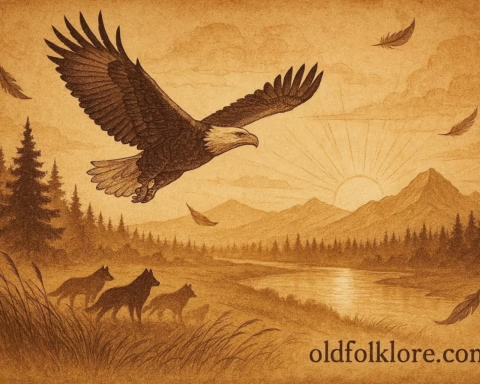
Native American proverbs are whispers of the wind carrying centuries of spiritual insight, ecological wisdom, and moral guidance. Rooted in the oral traditions of tribes from the Great Plains to the Pacific Northwest, from the deserts of the Southwest to the forests of the Northeast, these sayings reveal the sacred relationship between humans and the natural world. They teach that every living being, animal, plant, or human, is interconnected, and that balance, patience, and respect are the keys to a harmonious life.
In this collection of over a hundred proverbs, you will discover the philosophy of harmony with the earth, lessons from the behavior of animals, and guidance on listening to the subtle voices of nature. Whether you are a student of Indigenous cultures, a nature enthusiast, or a seeker of spiritual wisdom, these sayings offer timeless insights on how to live peacefully and sustainably within the web of life.
Proverbs and Meanings
- “We do not inherit the earth from our ancestors; we borrow it from our children.”
Responsibility for the land is a trust, not ownership. - “All things are connected like the blood that unites one family.”
Every part of the ecosystem affects the whole. - “Listen to the wind, it talks; listen to the silence, it speaks.”
Nature communicates through subtle signs; patience and attention reveal wisdom. - “Do not kill the snake unless it harms you.”
Respect all creatures and intervene only when necessary. - “The frog does not drink up the pond in which it lives.”
Take only what you need to maintain balance. - “When the roots are deep, there is no reason to fear the wind.”
Strong foundations, in nature or spirit, provide resilience. - “The soul would have no rainbow if the eyes had no tears.”
Beauty and growth often arise from hardship. - “Walk lightly on the earth, for it is sacred.”
Treat the land with care and reverence. - “The bird who dares to fall is the one who learns to fly.”
Courage is needed to thrive and evolve. - “Do not judge your neighbor until you have walked two moons in their moccasins.”
Empathy and understanding foster harmony. - “Teach your children what you have learned from the land.”
Knowledge of nature ensures cultural continuity. - “The fire is our brother; it gives warmth but can destroy if not respected.”
Harness power with responsibility. - “Do not speak for the wolf; let it howl in its own voice.”
Respect the autonomy of all living beings. - “Even the earth has a heartbeat; listen to it.”
Nature’s rhythms guide human life. - “Rain does not fall on one roof alone.”
Hardship and blessings are shared across communities. - “The ant does not lie down in the summer, nor lie down in the winter.”
Hard work and perseverance sustain life. - “The land does not belong to us; we belong to the land.”
Humanity is a part of nature, not its master. - “When the buffalo sleeps, the earth is calm.”
Observing natural cycles brings peace and understanding. - “Do not be afraid to go slow; the river carves the canyon in time.”
Patience yields enduring results. - “The wind that shakes the leaves also whispers secrets.”
Nature’s subtle movements carry wisdom. - “Listen to the coyote; it teaches cunning and survival.”
Animals provide lessons for life when observed attentively. - “The trees do not compete; they grow where the earth allows.”
True harmony does not require domination or rivalry. - “One finger cannot lift a pebble alone.”
Cooperation strengthens communities. - “The eagle does not catch flies.”
Focus on what is important, ignore distractions. - “The moon does not fight the sun; they share the sky.”
Harmony comes from balance, not conflict. - “Even the smallest leaf has a purpose in the forest.”
Every life contributes to the ecosystem. - “Speak only when your words are more beautiful than the silence.”
Thoughtful speech maintains respect and harmony. - “The river carves the canyon by persistence, not force.”
Steady effort achieves what brute strength cannot. - “The owl teaches patience and observation in the night.”
Quiet reflection reveals truth. - “The bear sleeps in winter but awakens with wisdom in spring.”
Rest and renewal are part of natural cycles. - “Do not take more than you need; leave plenty for others.”
Sustainable living respects all beings. - “The wolf does not ask for permission to hunt, yet it takes only what is needed.”
Self-sufficiency respects natural balance. - “The sun shines for both the rich and the poor.”
Nature’s blessings are universal. - “The stars are our ancestors watching over us.”
The natural world carries spiritual meaning and guidance. - “Do not step on a frog to reach your goal.”
Avoid harming others in pursuit of personal gain. - “The fireflies remind us that even small lights can pierce the darkness.”
Every action, however small, matters. - “The tree that stands alone is exposed to every storm.”
Community and connection provide protection. - “The clouds move on, leaving rain behind for the thirsty earth.”
Challenges bring growth and renewal. - “The salmon knows the way home, even against the current.”
Persistence and instinct guide life’s journey. - “The wolf teaches loyalty to the pack.”
Cooperation and trust sustain communities. - “The wind does not ask for permission to enter your home.”
Nature is free and cannot be controlled. - “The earth does not hurry, yet everything is accomplished.”
Patience aligns human action with natural rhythms. - “Do not quarrel with the rain; it nurtures all alike.”
Accept what cannot be controlled. - “The spider teaches careful planning and persistence.”
Small, deliberate actions create lasting results. - “The butterfly shows that change can be beautiful.”
Transformation is natural and positive. - “Do not speak ill of the river; it will remember.”
Respect and mindfulness preserve relationships. - “The deer teaches gentleness and attentiveness.”
Observing quietly ensures survival and harmony. - “The earth will forgive those who tread lightly upon it.”
Sustainable practices restore balance. - “The eagle flies alone to see far; the wolf travels in the pack to survive.”
Wisdom lies in knowing when to act independently and when to rely on community. - “The mountain does not boast; it stands firm through ages.”
True strength is quiet and enduring.
Author’s Note
Native American proverbs remind us that wisdom is inseparable from the natural world. The land, the animals, the rivers, and the winds are teachers, guiding us toward patience, respect, and interconnectedness. In listening carefully to these whispers of the wind, we learn that peace and harmony are cultivated, not imposed, that true prosperity is measured in balance, not in possessions. These sayings encourage us to honor our shared responsibility to the earth and to each other, leaving a legacy of care and reverence for future generations.
Knowledge Check
- What does “We do not inherit the earth from our ancestors; we borrow it from our children” teach?
That humans have a responsibility to care for the environment for future generations. - Why are animals frequently referenced in these proverbs?
They offer lessons in survival, cooperation, and the natural balance of life. - What lesson is conveyed by “Even the smallest leaf has a purpose in the forest”?
Every element in nature has value and contributes to the whole. - How does patience appear in Native American wisdom?
Steady, careful action aligns human life with the rhythms of nature. - Why is listening emphasized in many sayings?
Attentive observation reveals knowledge, guidance, and hidden truths in nature. - What is the main idea behind “The earth does not hurry, yet everything is accomplished”?
Life unfolds in its own time; patience and respect for natural processes are essential.
Origin: Native American Tribes across North America