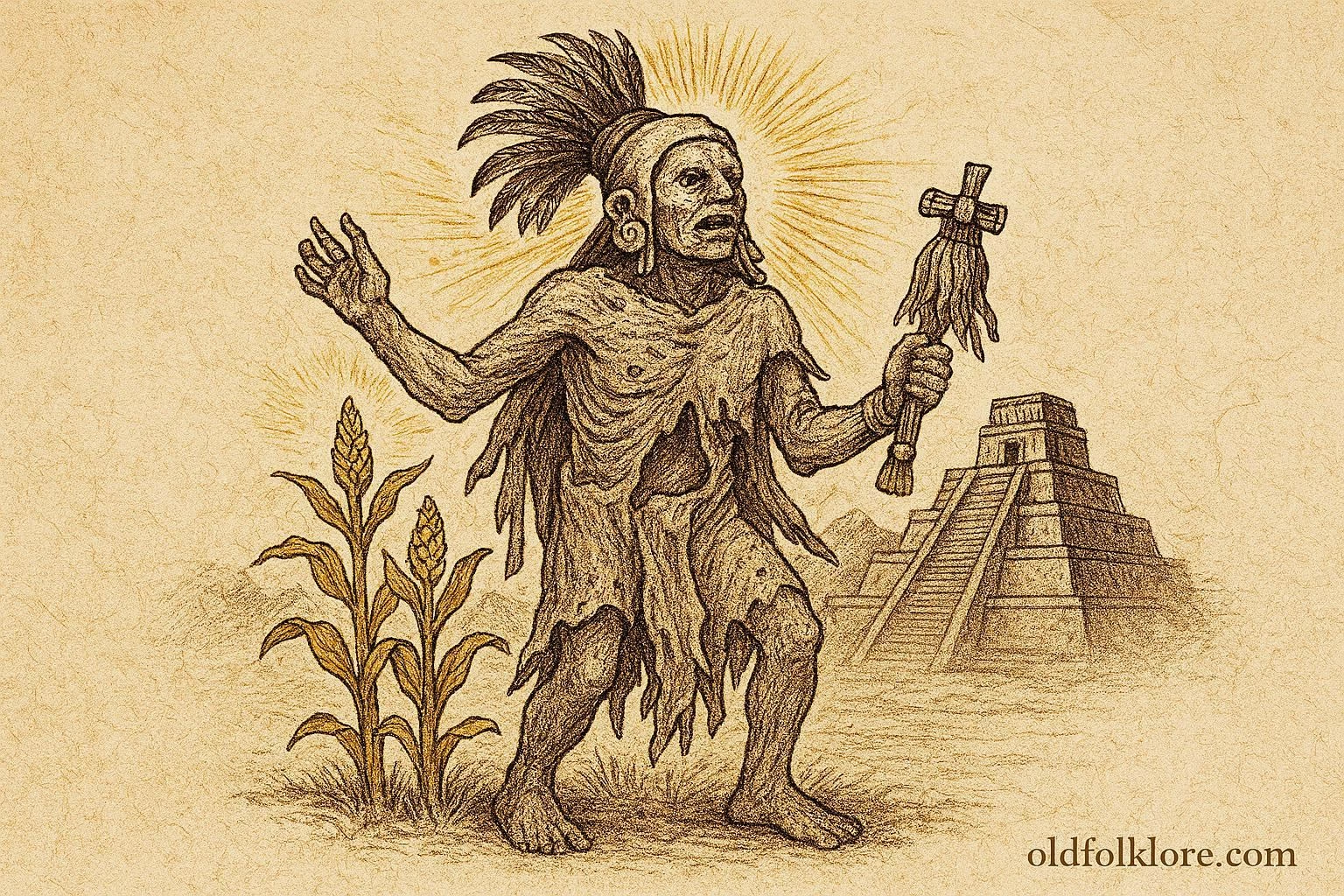
Xipe Totec: Xīpē Totēc in Classical Nahuatl, meaning “Our Lord the Flayed One”, is one of the most profound and symbolically dense deities of the Aztec pantheon. He is the god of agricultural renewal, rebirth, suffering, liberation, goldsmiths, and the cyclical shedding of life. Iconographically, he is known for wearing the flayed skin of a sacrificed victim, which symbolized the earth’s dry husk being shed so that new vegetation could emerge.
In codices, he appears with a second face beneath the hanging skin mask, representing life beneath death, newness beneath decay. His domain is deeply tied to the planting cycle: just as seeds must be stripped of their husks and buried before sprouting, so Xipe Totec embodies the painful yet sacred transformation required for growth. His sacred animals include the eagle, and his worship was most visible during the festival of Tlacaxipehualiztli, when priests donned ritual skins for twenty days to embody the god’s renewal of the cosmos.
He stands alongside Tezcatlipoca and Huitzilopochtli as a central divine force linked to struggle, sacrifice, and the regeneration of life.
Mythic Story
In the ancient valley of Anahuac, where the rains carved lifelines into the soil and maize stood at the center of existence, the Aztecs spoke with reverence of Xipe Totec, the god who gives life by surrendering his own flesh. His myth is not one of conquest or cosmic battle, but of transformation, a divine truth carved into the very structure of the seasons.
According to the old stories preserved in the Codex Borbonicus, Xipe Totec once gazed upon the earth during a season of deep barrenness. The crops had withered, the husks clung stubbornly to the unyielding seeds, and the people faced the looming shadow of famine. He saw that life had wrapped itself too tightly in its old skins. Renewal required sacrifice.
Thus the god performed the ultimate act of divine generosity: he flayed himself, peeling away his outer skin so that the world might be clothed in new life. As the skin fell, the earth awakened. The rains softened the soil, the dormant seeds cracked open, and the first green shoots pierced through the dust like small flames of hope.
The people believed that the golden maize kernels were the god’s own flesh, offered freely to nourish humanity. Beneath the hanging skin, Xipe Totec appeared radiant and new, his true face shining like fresh dawn. In this transformation, terrible and beautiful, he revealed the sacred rhythm of existence: to be reborn, one must first shed what no longer serves.
It is said that during his festival, Tlacaxipehualiztli, the priests reenacted this divine act. For twenty days, they wore the flayed skins of sacrificial victims, not as symbols of cruelty, but as embodiments of cosmic truth. These ritual skins, known as tlacatetehuitl, were treated with reverence. As they aged, dried, and loosened, the priests eventually stepped free of them, echoing Xipe Totec’s liberation from the old husk of the world.
During these ceremonies, the people offered prayers, maize dough, flowers, and incense. Warriors engaged in ritual battles in the god’s honor, their hearts lifted by the belief that struggle, like shedding, leads to renewal. The air flickered with the warmth of torches and the scent of copal resin, creating a bridge between earth and divinity.
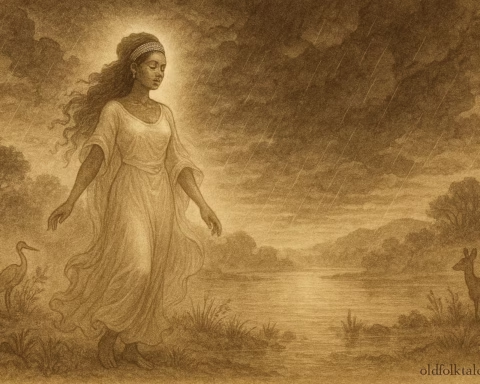
One legend tells that a wandering farmer once doubted the necessity of these rites. He questioned why life should require suffering, why renewal should demand a price. That night he dreamt of Xipe Totec walking across a barren field, his flayed skin trailing behind him like the husk of a seed. The god touched the soil, and golden maize sprouted in great abundance, covering the field in a shimmering wave of yellow.
“Nothing that grows is born without struggle,” the god told him. “Even the seed must break to reach the sunlight.”
When the farmer awoke, he found his barren plot transformed, brimming with maize where none had grown before. Humbled, he joined the rituals, understanding that the festival honored not suffering itself, but the sacrifice that makes flourishing possible.
Throughout the Aztec empire, Xipe Totec’s presence echoed in every field, every seed, every harvest. Farmers prayed to him when planting maize; artisans invoked him when gilding metals, for he was also the patron of goldsmiths, who stripped impurities from ore just as the god stripped the world of its stagnant husks.
Though some codices emphasize the more severe aspects of his worship, others highlight the deeply spiritual symbolism: the shedding of skin mirrored the shedding of illness, guilt, stagnation, and the burdens that weighed upon the community. By honoring Xipe Totec, the Aztecs reaffirmed the universal truth that life only thrives through cycles, death and rebirth, loss and renewal, rupture and awakening.
In the end, Xipe Totec’s myth is a reminder written into the maize fields themselves: beneath every dry crust waits a seed of radiant life, and beneath every ending waits the promise of becoming.
Discover the gods, goddesses, and divine spirits who ruled the heavens and shaped human fate
Author’s Note
Xipe Totec challenges us to see renewal not as an easy gift, but as a transformative journey requiring the shedding of old layers. His myth teaches that growth is born from courage, the courage to release what is broken, stagnant, or outworn so that new life may emerge.
Knowledge Check
Q1: What does Xipe Totec’s name mean?
A: “Our Lord the Flayed One.”
Q2: What natural cycle is he associated with?
A: Agricultural renewal and the sprouting of maize.
Q3: Which festival is dedicated to him?
A: Tlacaxipehualiztli, a 20-day renewal ceremony.
Q4: Why is he shown wearing flayed skin?
A: It symbolizes shedding old layers so new life can emerge.
Q5: What craft is Xipe Totec also patron of?
A: Goldsmithing.
Q6: Which primary codex depicts his rituals?
A: The Codex Borbonicus.
Source: Aztec Mythology (Codex Borbonicus), Central Mexico.
Source Origin: Aztec (Mexica), Central Mexico