The Yara-ma-yha-who is one of the most distinctive beings in southeastern Aboriginal oral tradition, a small, red, frog-like forest spirit that hides among large fig trees, waiting for wanderers who neglect proper conduct in the bush. Though frequently reduced in modern retellings to a “bush vampire” or “proto-drop-bear,” authentic accounts collected from Aboriginal storytellers, especially those preserved by David Unaipon, a Ngarrindjeri author and recorder of oral traditions, present a being whose behavior encodes complex lessons about land, caution, ritual propriety, and safe movement through Country.
Appearance
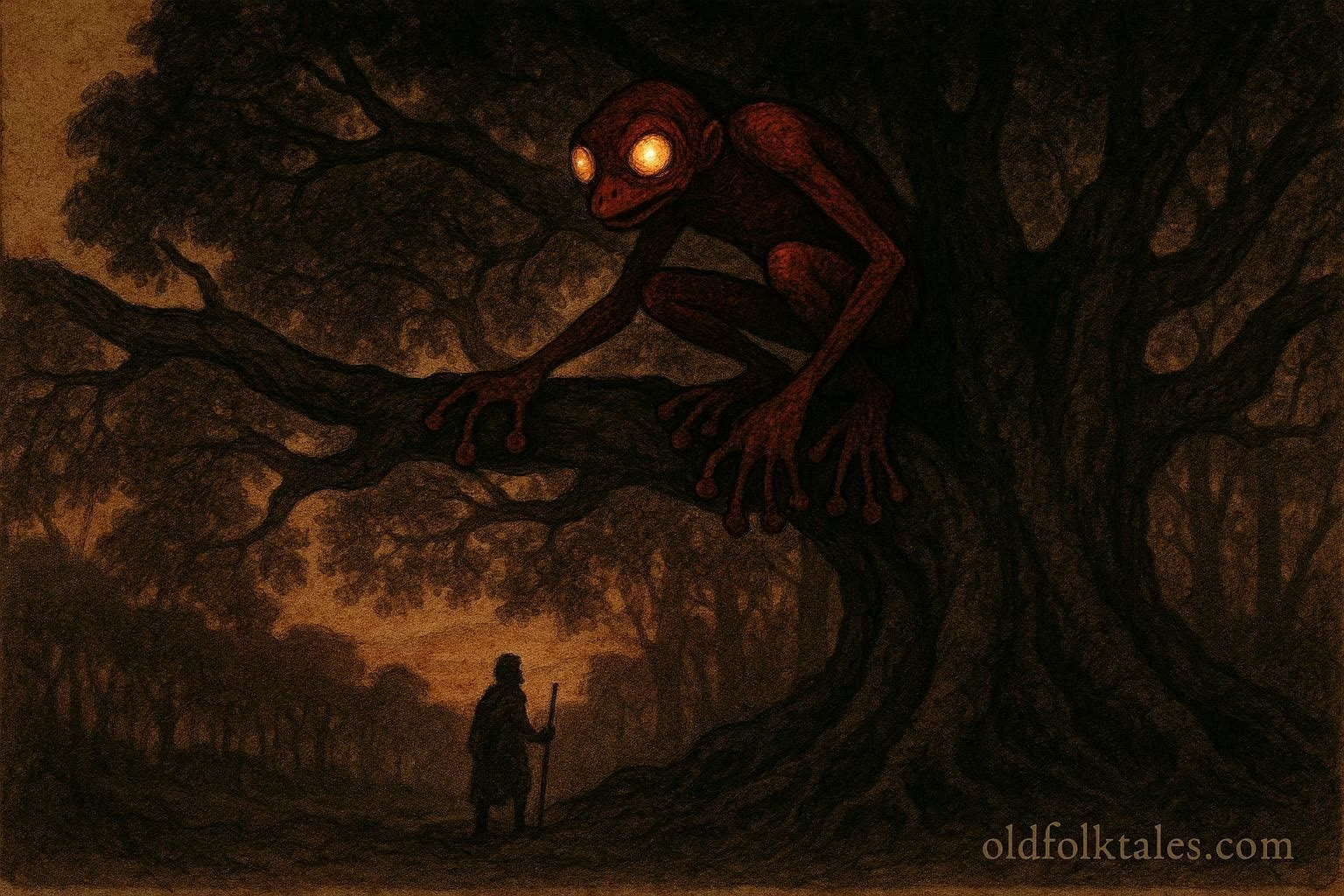
Descriptions vary slightly by teller but follow a core pattern. The Yara-ma-yha-who is:
- Small, about the size of a child
- Bright red, with skin described as smooth or subtly textured like that of a frog
- Long-limbed, and able to cling to trees with ease
- Equipped with large, circular suckers on its hands and feet
- Capable of widening its mouth enormously, wide enough to swallow a person whole
Follow the paths of legendary warriors, kings, and demigods who defined ancient honor
Its combination of frog-like traits and human-like cunning gives it an unsettling air of predatory deceptiveness, blending the natural features of the forest with an uncanny intelligence. Unlike many Aboriginal spiritual beings that appear shapeless or mist-like, the Yara-ma-yha-who is emphatically corporeal, rooted in the natural world yet operating with supernatural intention.
Behavior and Methods
The creature’s predatory strategy is consistent and memorable. It clings to the branches of fig trees, especially those whose roots twist down into hollows or creeks. When an unsuspecting traveler rests beneath such a tree, an action that oral teachings warn against unless one has properly announced oneself to Country, the Yara-ma-yha-who drops from above.
Its attack is:
- Sudden and silent, relying on ambush rather than pursuit
- Non-lethal at first, it stuns its victim through weight and surprise
- Followed by blood-drinking through suckers, draining vitality slowly and rhythmically
Once weakened, the victim is swallowed whole. But the creature does not digest its prey in the way of animals. Instead, after a period of rest, it regurgitates the person, leaving them changed. In some stories the victim rises:
- Shorter
- Redder of skin
- More spry, and increasingly frog-like
- Less resistant to the creature’s next attack
If this cycle repeats, the victim eventually becomes another Yara-ma-yha-who, joining the monstrous population of fig-tree dwellers.
Myths and Cultural Logic
As frightening as the creature seems in isolation, its narrative function is deeply educational. The Yara-ma-yha-who is not simply a monster but a warning symbol whose story encodes:
- Spatial knowledge: Figs often grow in areas that can be unstable, waterlogged, or spiritually restricted.
- Behavioral protocol: Travelers must announce themselves, avoid wandering alone, and keep to known paths.
- Cultural taboo: Certain trees or sites may be connected with ancestral presences or dreaming tracks.
In many Aboriginal cultures, landscape is alive with spirits, each needing to be respected. The Yara-ma-yha-who serves as a memorable narrative enforcer of such protocols. Young listeners learn that:
- Resting under unknown fig trees is unsafe
- Traveling alone invites spiritual danger
- Disrespect for place can lead to transformation, loss of identity, or removal from human community
Its blood-drinking is not metaphorical vampirism but a symbolic draining of cultural grounding. The transformation of the victim into a new creature represents the loss of social belonging and return.
Symbolism
The Yara-ma-yha-who symbolizes several intertwined Aboriginal concepts:
- Danger in the Bush: A constant reminder that Country is powerful and requires awareness, respect, and ritual mindfulness.
- Unseen Watchers: Trees, especially fig trees, are spiritually potent in many Aboriginal groups. Their roots, hollows, and shadows are believed to attract powerful beings.
- Gradual Loss of Identity: Being regurgitated changed mirrors the idea that people who ignore ancestral law may lose their cultural grounding and sense of self.
- Agency of Place: The creature is not “evil” in a European sense; rather, it enforces the cosmological order. The forest protects itself, corrects disrespect, and returns balance.
Variants and Parallels
The Yara-ma-yha-who shares motifs with other Australian beings that drop from trees or ambush travelers. Some of these parallels include:
- Garkain of Arnhem Land
- Tree-lurker beings in north-coastal traditions
- Modern folklore “drop bear” (a parodic descendant of older motifs)
But the Yara-ma-yha-who is distinct in its blood-sucking, swallowing, and transformational cycle, as well as its specific association with fig trees and Ngarrindjeri regions.
Authenticity
The being is well-attested in:
- David Unaipon’s collected oral tales(primary)
- Early 20th-century folklore compilations
- Repeated ethnographic summaries
Unaipon’s material, drawing directly from Aboriginal storytellers, confirms that the creature is not an invented colonial fantasy but a genuine pre-contact narrative with deep ecological and spiritual roots.
Cultural Role
The Yara-ma-yha-who is fundamentally a guardian myth, teaching:
- Bush safety
- Respect for trees and sacred sites
- Humility when entering another being’s domain
- Awareness of transformation as a spiritual risk
Through fear, humor, and vivid imagery, it instills proper behavior in young and old. It also serves as a cultural reminder that the world is enchanted, alert, responsive, and that the bush is neither empty nor passive, it is a living network of agencies.
Author’s Note
This entry prioritizes Ngarrindjeri oral material and Unaipon’s documented patterns over later sensational retellings. Western summaries often emphasize its vampiric qualities, but these features are secondary to the deeper Aboriginal lessons about safe movement, spiritual caution, and respecting the living land. As with all Aboriginal stories, the Yara-ma-yha-who is explicitly tied to place, and local custodians maintain the most authoritative versions.
Knowledge Check
- Where does the Yara-ma-yha-who hide?
In large fig trees, waiting to drop on unsuspecting travelers. - What does it use to drain blood?
Suckers on its hands and feet. - What happens to victims after being swallowed and regurgitated?
They become shorter, redder, frog-like, and increasingly transformed. - What cultural lesson does the tale teach?
Respect for Country, avoidance of dangerous places, and cautious travel. - What is the being’s cultural origin?
Southeastern Aboriginal groups, including Ngarrindjeri traditions. - Is the Yara-ma-yha-who considered evil?
No, its role is as a spiritual enforcer of landscape laws, not a demon in the Western sense.
Source: David Unaipon’s collected oral material; early 20th-century Aboriginal storytelling archives; ethnographic summaries
Origin: Ngarrindjeri and neighboring southeastern Australian Aboriginal groups