Yule, known in Old Norse as jǫ́l and Old English as geol, was a central festival in the ancient Germanic calendar, observed around the winter solstice, the longest night and darkest time of the year. It served as both a communal and cosmological ritual, designed to sustain hope, strengthen community bonds, and honor ancestral spirits.
During Yule, families and communities held feasts featuring meat, ale, and seasonal grains, emphasizing abundance and solidarity in a period of scarcity. Sacrificial offerings, often of livestock, mead, or symbolic tokens, were conducted to invoke the favor of the gods, particularly Odin, whose many names included Jólnir, linking him directly to the festival. Ritual remembrance of the dead was central; hearths were kept alive to welcome ancestral spirits and ensure continuity of family and communal life.
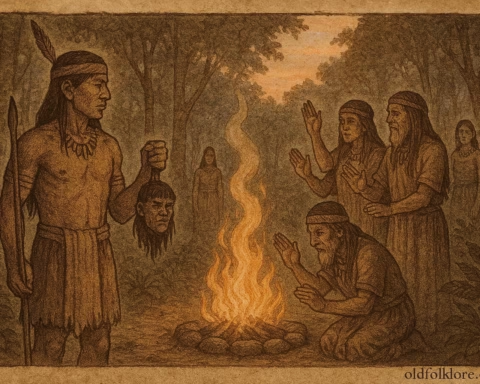
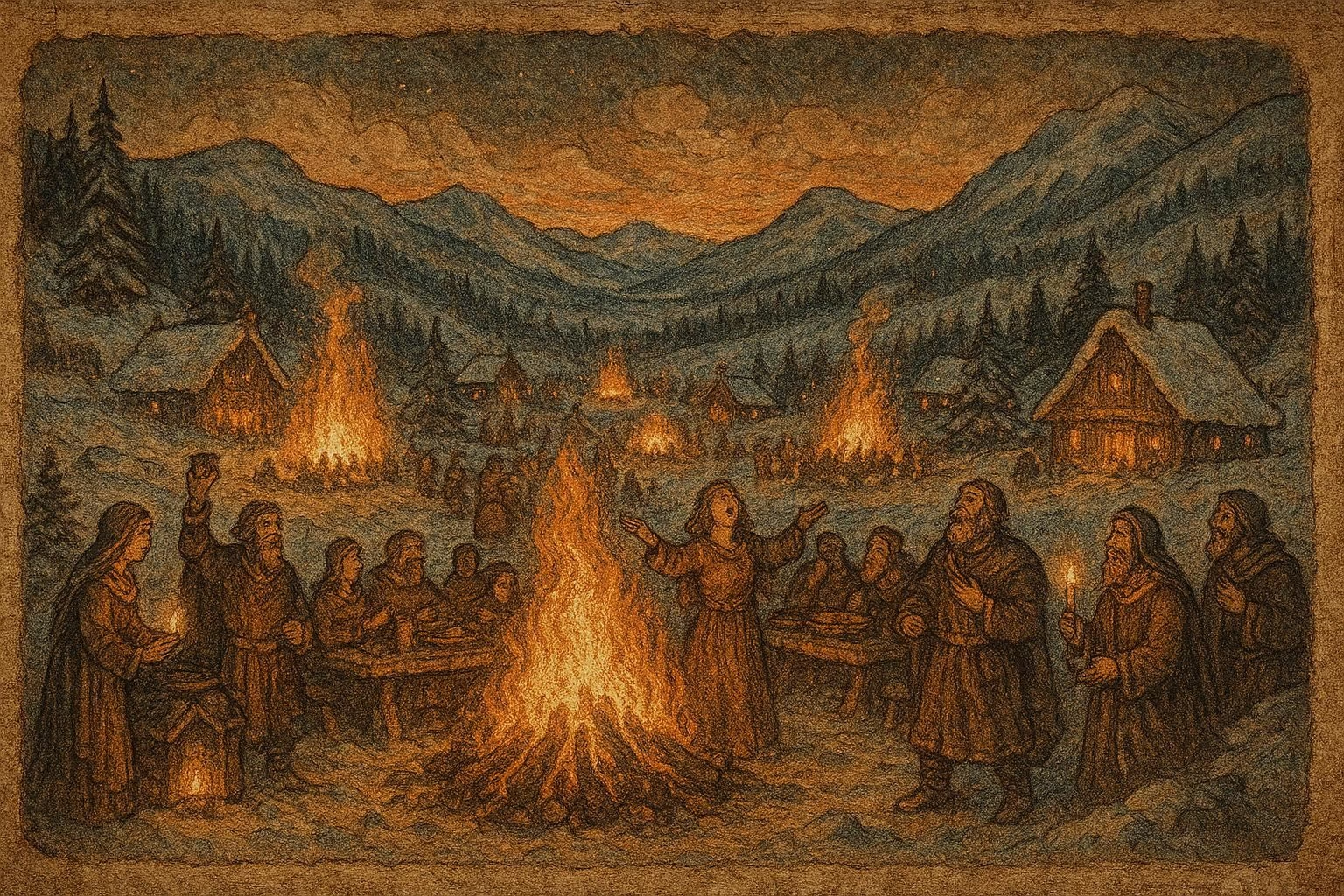
Fire was a critical symbol: bonfires illuminated the long winter nights, representing the gradual return of the sun. These flames also served a protective function, warding off malevolent spirits and ensuring the fertility and prosperity of both people and livestock. Storytelling, song, and communal celebration accompanied the feasts, weaving together myth, memory, and practical ritual to align human life with the rhythms of nature.
Mythic Connection
Yule is deeply intertwined with Norse cosmology. The festival embodies the liminality of the solstice, a turning point when the sun is weakest yet on the cusp of rebirth. Odin’s association with Yule highlights the convergence of death, wisdom, and transformation; he was believed to lead the Wild Hunt, a spectral procession of spirits traversing the winter skies. Participating in Yule rituals and feasts, communities both honored and placated supernatural forces, acknowledging the thin boundary between the living and the dead during the solstice.
The symbolic focus on fire, feasting, and remembrance reflects the broader Norse understanding of cyclical time and cosmic order. Just as the sun is reborn after the longest night, communities reaffirmed their connection to divine forces, ancestral wisdom, and the natural cycles that governed survival. The lighting of hearths and sacred fires not only illuminated physical darkness but also reinforced spiritual and social cohesion, echoing a worldview in which human and divine realms were intertwined.
Ritual Practice
Yule celebrations varied across regions but consistently involved key practices. Bonfires and hearth fires were lit to protect households and signal the rebirth of the sun. Feasts included roasted meats, seasonal grains, and fermented beverages, fostering communal solidarity. Sacrifices, animal or symbolic, were sometimes offered to ensure divine favor, particularly for Odin, Thor, and Freyr, deities associated with protection, fertility, and prosperity.
Remembrance of ancestors was central. Some sources describe leaving portions of the feast on the hearth or outdoor altars for deceased family members, inviting their presence and blessings. Storytelling, poetry, and song, often recounting heroic sagas or divine myths, strengthened cultural memory and transmitted moral and spiritual values. These practices combined pragmatic needs (survival through winter) with symbolic action, reinforcing the bond between humans, gods, and natural cycles.
Over time, Yule traditions were absorbed into Christian practices, forming the basis for modern Christmas celebrations. Yet in early pagan sources, the festival’s focus remained on seasonal transition, solar rebirth, and the maintenance of cosmic and communal order. Contemporary revivalist pagan and Heathen groups continue to observe Yule, often including bonfires, feasting, and ancestral remembrance to preserve its ancient spiritual essence.
Author’s Note
Yule illustrates the Norse and Germanic integration of cosmology, ritual, and communal life. Through fire, feasting, and ancestral remembrance, early practitioners aligned themselves with the rhythms of the cosmos, honored divine and ancestral forces, and reinforced social cohesion. Its enduring legacy, visible in both Christianized winter festivals and modern pagan observances, demonstrates the potency of seasonal rites in sustaining cultural identity and spiritual continuity. Yule remains a living testament to humanity’s enduring desire to celebrate light amid darkness and to honor the intertwined fates of the living, the dead, and the divine.
Knowledge Check
Q1: What time of year does Yule celebrate?
A1: Around the winter solstice, the longest night of the year.
Q2: Which deity is most associated with Yule in Norse tradition?
A2: Odin, also called Jólnir in connection to the festival.
Q3: What was the purpose of Yule bonfires?
A3: To symbolize the return of the sun, protect against evil spirits, and provide communal warmth.
Q4: How did Yule honor the dead?
A4: By leaving offerings on hearths or altars, inviting ancestral spirits to join the feast.
Q5: What is the significance of feasting during Yule?
A5: Feasting reinforced community bonds, ensured nourishment, and symbolized abundance and fertility.
Q6: How has Yule influenced modern celebrations?
A6: It was syncretized into Christmas and other winter festivals, preserving themes of light, feasting, and remembrance.