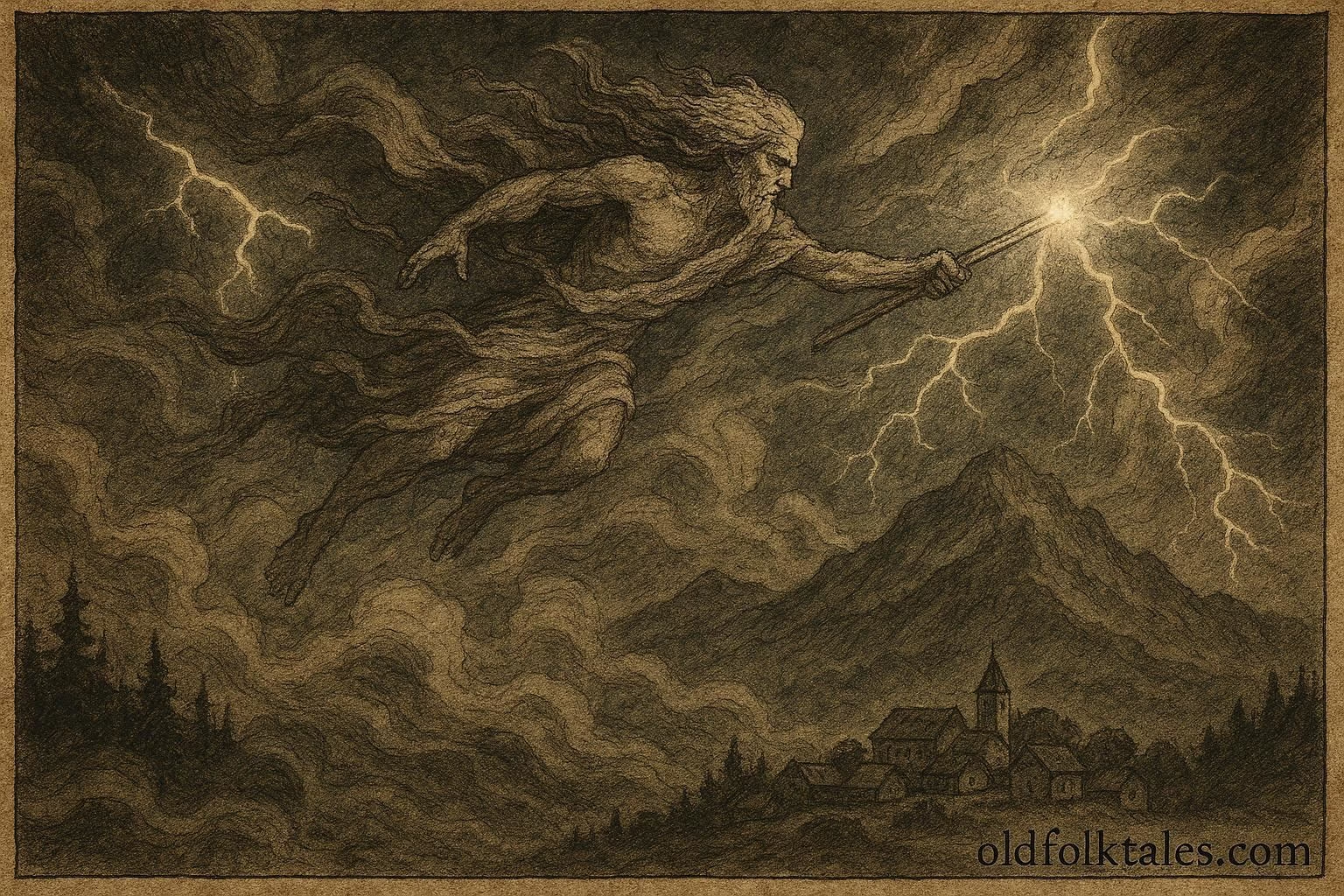
The Zduhać (plural Zduhači) are unique human-born spirit-warriors in South Slavic folk belief, whose principal role is to battle in dream or spirit form to protect villages and crops from destructive weather, particularly hailstorms and violent storms. This belief represents a highly localized and ethnographically attested form of meteorological folk magic, combining spiritual warfare, communal protection, and shamanic trance practices.
Appearance and Form
Zduhači are primarily human in physical form, often ordinary villagers in daily life. Their extraordinary abilities manifest spiritually or in trance, rather than through visible superhuman traits:
- In dream form, a Zduhać is said to fly or ride clouds, wind, or ethereal mounts, carrying symbolic weapons such as iron rods, magical clubs, or bundles of reeds.
- Some accounts describe flames, mist, or ethereal aurasurrounding the Zduhać while battling in the sky.
- Regional variation exists: in certain Montenegrin villages, Zduhači are thought to assume the form of birds or small storms, symbolically embodying the weather they fight.
Learn the ancient stories behind deities of light, storm, and shadow from cultures across the world
Physical hereditary traits or marks sometimes distinguish them: scholars note that Zduhači are occasionally born with unusual physical signs, such as a tuft of hair, a birthmark, or a “sparkling” appearance in their eyes, perceived as omens of their meteorological potential.
Powers and Abilities
The primary power of a Zduhać is spiritual combat against destructive weather. These abilities are exercised in trance or dream form, often while the person is sleeping, meditating, or in altered consciousness:
- Weather-fighting:
- They travel spiritually into storm cloudsto engage malevolent weather-spirit entities.
- Success ensures rain for crops or hail diverted, protecting villages and fields.
- Failure can result in local crop damage or violent storms, interpreted as a reflection of the Zduhać’s skill or strength.
- Dream and trance projection:
- Some Zduhači achieve abilities hereditarily, while others gain power through ritual, meditation, or trance induction.
- The phenomenon often resembles shamanic “soul flight”, connecting Zduhači to a wider Indo-European magical tradition.
- Protective and intercessory role:
- Beyond storm combat, Zduhači sometimes act as guardians against disease, misfortune, and supernatural threats, leveraging their connection to the spiritual realm.
- Signs of activity:
- Villagers report sudden changes in wind, clouds, or local weather when a Zduhać engages in spirit combat.
- Some traditions describe audible thunder or ethereal voices as indicators of Zduhaći at work.
Behavior and Social Role
Zduhači occupy a highly respected position within the communities where belief persists:
- They are often modest individuals, blending into village life, while secretly exercising their abilities.
- Communities recognize them through omens, dreams, or inherited familial knowledge.
- They may perform rituals or fast before storm seasonto enhance their spiritual potency.
- Their battles are seen as interdependent with natural cycles, reflecting agricultural priorities and cosmic balance.
Ethnographic accounts stress that Zduhaći do not seek personal gain; their role is altruistic and communal, contrasting with witch or sorcerer figures in local folklore.
Myths and Narrative Traditions
Key ethnographic records from Vuk Karadžić and early 20th-century Serbian, Montenegrin, and Macedonian studies outline various narrative motifs:
- Inherited power: Some Zduhači are born into families with a line of weather-fighters; this inheritance is marked by dreams, birth signs, or early abilities to perceive storms.
- Initiation through trance: Individuals outside hereditary lines may discover latent powers during illness, near-death experiences, or through ritualized trance practices.
- Battles in the sky: Stories depict Zduhači meeting “storm demons” or rival spirit-warriors in ethereal combat, sometimes resolved symbolically through thunder, lightning, or wind.
- Connection to moral order: The efficacy of a Zduhać may depend on personal virtue, courage, and humility, linking meteorological prowess with ethical conduct.
Scholars note that these tales blend pragmatic agricultural concerns (hail prevention) with metaphysical beliefs, forming a folklore category unique to the Balkans.
Cultural Symbolism
The Zduhać embodies key Balkan folk concepts:
- Human-spiritual interconnection: They represent the capacity of humans to influence natural forces through moral and spiritual discipline.
- Agricultural guardianship: By battling destructive weather, they symbolically safeguard life and sustenance, emphasizing the centrality of farming communities.
- Communal ethics: Zduhači reinforce norms of humility, courage, and service, reflecting how supernatural roles integrate into social cohesion.
- Shamanic cosmology: Their “spirit battles” echo a pre-Christian or syncretic shamanic worldview, connecting humans, spirits, and natural forces.
Variant Notes
- Regional variation: Serbia, Montenegro, and Macedonia have slightly different motifs, including local names and the appearance of spirit enemies.
- Transmission: Some Zduhaći are hereditary; others attain powers later through dreams or trance.
- Visual motifs: Ethnographers describe some Zduhaći as resembling birds, small clouds, or flashes of lightning, symbolizing the elemental nature of their combat.
Authenticity Assessment
- Ethnographically solid: Vuk Karadžić and early 20th-century ethnographers provide direct, field-based attestations.
- Unique meteorological-spirit tradition: Unlike other Balkan fairy or spirit traditions, Zduhaći specifically intervene in weather for communal benefit.
- Multiple attestations: Documented across several Balkan regions, confirming regional continuity and folkloric consistency.
Transcription / Translation Notes
- Original Serbian: Zduhać (plural Zduhači); transliteration preserves phonetics.
- Local dialects may include subtle spelling or pronunciation variants; some texts use Zduhač, particularly in Montenegrin and Macedonian studies.
Explore the mysterious creatures of legend, from guardians of the sacred to bringers of chaos
Author’s Note
Zduhaći represent a rare and fascinating intersection of shamanic practice, folk magic, and agricultural ethics. Unlike purely malevolent spirits, they are protective and morally anchored, illustrating how Balkan communities used myth, ritual, and storytelling to negotiate environmental risk. Their enduring presence in ethnography highlights the practical and symbolic functions of folk belief in daily life.
Knowledge Check
- Who are the Zduhaći?
Human-born spirit-warriors who battle in dream or spirit form to protect villages from storms.
- Which folklorist first documented Zduhaći systematically?
Vuk Karadžić in his 19th-century Serbian collections.
- How do Zduhaći perform their protective role?
Spiritually or in trance, engaging destructive weather or evil forces.
- Are Zduhaći always born with their powers?
Not always; some inherit abilities, others acquire them through trance or spiritual awakening.
- What do Zduhaći symbolize in Balkan culture?
Human connection to nature, agricultural protection, moral courage, and cosmic balance.
- In which regions are Zduhaći primarily attested?
Serbia, Montenegro, Bosnia, and Macedonia.
Source: Vuk Karadžić, Srpske Narodne Priče i Običaji (19th c.); Early 20th-century Balkan ethnographic studies (e.g., Stefanović, Pantelić)
Origin: South Slavic regions (Serbia, Montenegro, Bosnia, Macedonia); traditional oral belief documented from 18th–20th centuries