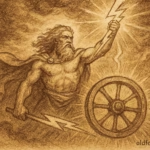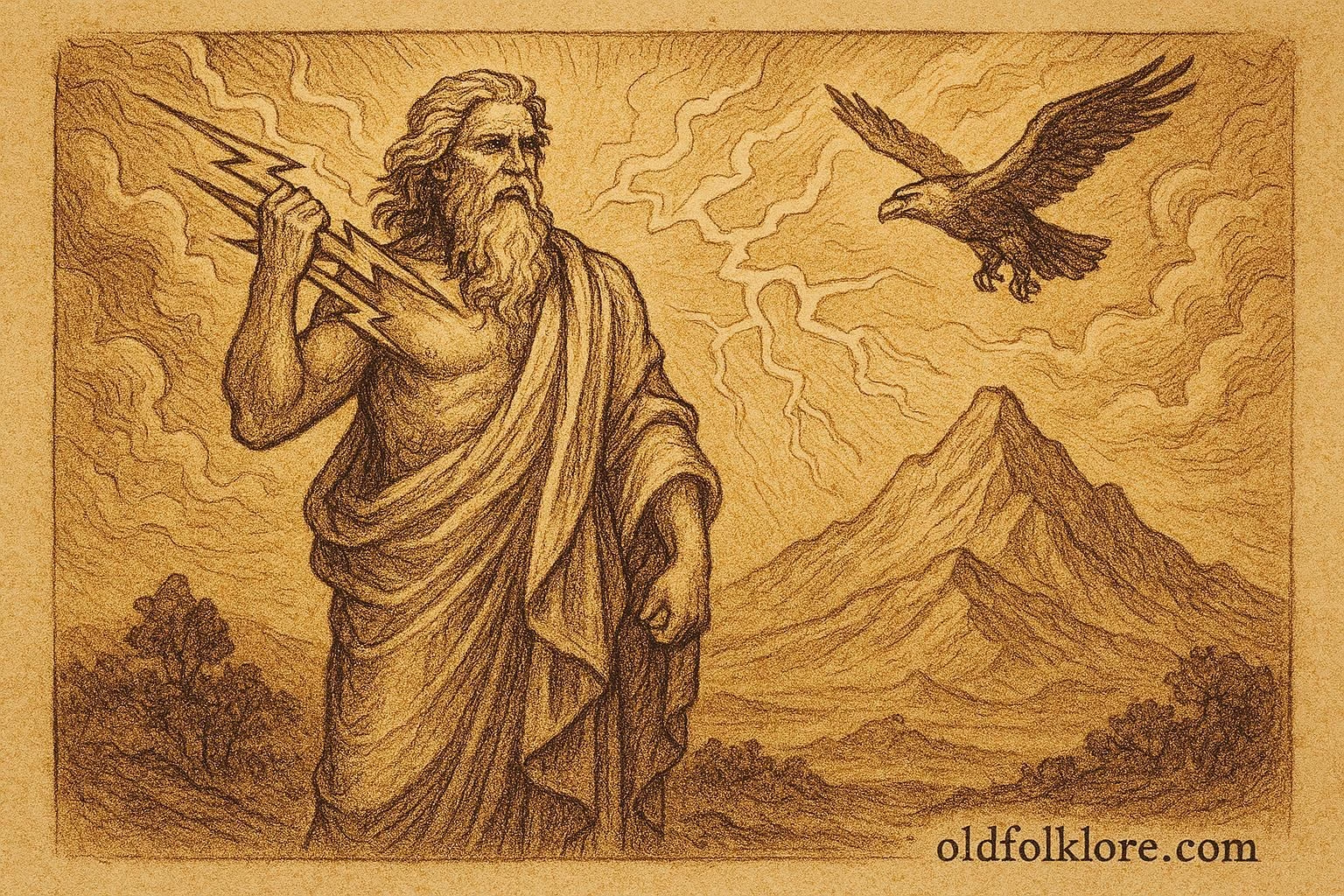
Zeus (Greek: Ζεύς) is the supreme deity of the ancient Greek pantheon, god of the sky, thunder, kingship, and divine justice. Seated upon Mount Olympus, he rules over gods and mortals alike, maintaining the cosmic balance between chaos and order. His symbols are the lightning bolt, the eagle, and the oak tree; his sacred throne stands amid thunderclouds, radiant with power.
Born the youngest son of the Titan Cronus and the earth-mother Rhea, Zeus rose to prominence through rebellion, cunning, and the will of fate. He is the patron of oaths and hospitality (Zeus Xenios), protector of kings (Zeus Basileus), and upholder of justice (Zeus Dikēphoros). Though feared for his storms, he is also revered for mercy and wisdom. In temples across Greece, from Dodona’s whispering oaks to Olympia’s marble altars, sacrifices of bulls, honey, and incense rose to honor his reign.
Mythic Story: The Rise of Zeus and the Rule of Olympus
Before Zeus’ dominion, the world was shadowed by the rule of the Titans, mighty beings born of Gaia (Earth) and Uranus (Sky). Among them reigned Cronus, who seized power by overthrowing his father. Yet prophecy warned him that his own offspring would one day do the same.
To thwart fate, Cronus devoured each newborn child born to Rhea. First Hestia, then Demeter, Hera, Hades, and Poseidon vanished into his belly. But when Rhea bore her sixth child, she fled to the island of Crete. There, in a hidden cave upon Mount Dicte, she gave birth to Zeus, a child destined to bring balance to heaven and earth.
Rhea swaddled a stone in cloth and gave it to Cronus, who swallowed it whole, believing it his son. Meanwhile, the infant Zeus was nursed by the goat Amalthea, whose milk made him strong. The Curetes, armed warriors devoted to the goddess, danced and clashed their shields to mask his cries from the Titan’s ears.
As Zeus grew, his mind sharpened with divine cunning. From the nymph Metis he learned the arts of wisdom and strategy. When the time came, he returned to confront his father. With a potion crafted by Metis, Zeus forced Cronus to disgorge his swallowed children, now fully grown gods and goddesses. Together, the six siblings rose against the Titans in the epic war known as the Titanomachy.
For ten years, thunder and fire split the sky, shaking mountains and churning the seas. The Titans hurled boulders and molten rock from Mount Othrys; the young gods answered with lightning and flame. At last, Gaia counseled Zeus to free the Cyclopes and Hecatoncheires (hundred-handed giants) from Tartarus, promising their aid.
The Cyclopes, in gratitude, forged gifts for the Olympians: thunderbolts for Zeus, a trident for Poseidon, and a helm of invisibility for Hades. With these divine weapons, the balance turned. Zeus hurled his bolts with blazing fury, casting the Titans into the abyss of Tartarus, where they were chained beneath the earth, guarded by the giants.
The heavens grew still. Thunder echoed no more. Zeus, victorious, established the new order, the reign of the Olympians.
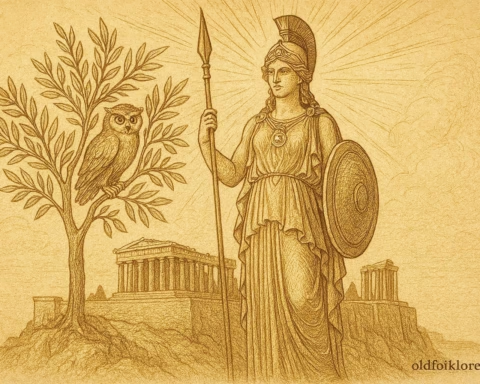
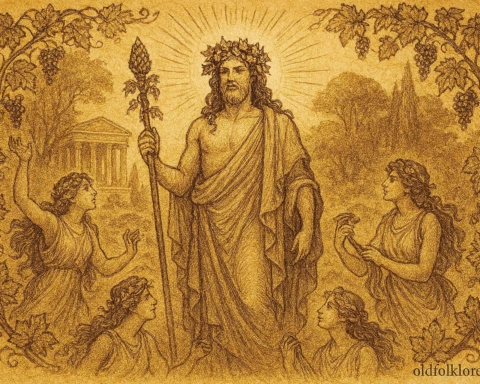
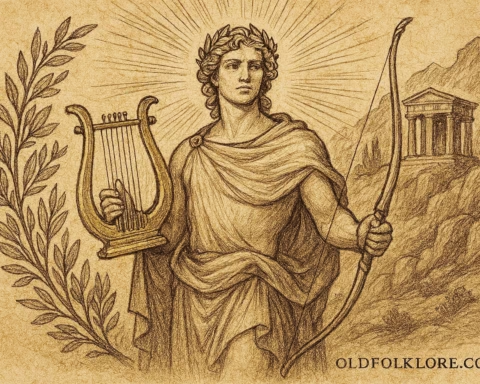
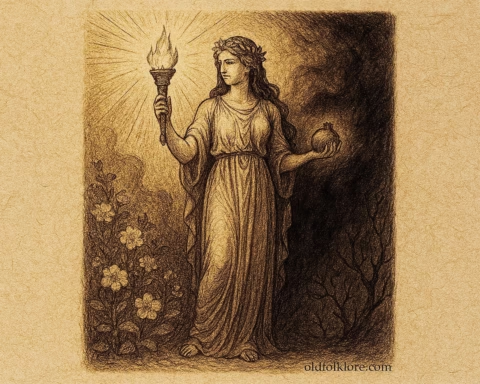
He divided dominion among his brothers: the sea to Poseidon, the underworld to Hades, and the heavens to himself. Yet he alone would watch over mortals and the sacred laws of fate. Upon the summit of Olympus, Zeus built his throne and summoned the other gods to dwell beside him, Hera, Athena, Apollo, Artemis, Ares, Aphrodite, Hermes, Hephaestus, Demeter, and Hestia.
But Zeus’ story did not end in triumph alone. His rule was often tested by passion and by rebellion. Hera, his wife and queen, raged against his infidelities; mortals both loved and feared his unpredictable favor. At times, even the gods conspired against him, Hera, Poseidon, and Athena once bound him in chains until Thetis, the sea goddess, freed him with the help of the giant Briareus.
Still, Zeus remained supreme. His judgments shaped both the destinies of heroes and the rise and fall of empires. He watched over oaths sworn by kings, the wanderers who sought hospitality, and the warriors who prayed before battle. When mortals grew proud, he struck them with lightning as a warning; when they honored the laws of the gods, he granted them prosperity.
In Homer’s Iliad, Zeus is portrayed as both majestic and sorrowful, all-seeing, yet bound by fate. Even he cannot change what the Moirai, the Fates, decree. Thus, when Achilles’ doom is sealed, Zeus weeps for him, knowing that divine power cannot overturn destiny. His thunder, then, is not only wrath but the sound of divine justice echoing through the heavens, the balance that holds gods and men in their appointed place.
Through all his deeds, Zeus embodies the eternal tension between power and wisdom, the ruler who must conquer his own desires to maintain order. His reign reminds humankind that even in divine realms, justice is the highest thunder.
Author’s Note
The myth of Zeus is not only a tale of power but a meditation on responsibility. His rise from rebellion to rulership mirrors humanity’s struggle to harness strength with justice. Zeus’ thunderbolt is both weapon and symbol, a reminder that true authority must illuminate as well as destroy. From the temples of ancient Greece to the stories that endure today, Zeus remains the divine embodiment of balance, order, and the will to rule wisely.
Knowledge Check
Q1. What were Zeus’ primary symbols?
A: The lightning bolt, eagle, and oak tree.
Q2. Who were Zeus’ parents?
A: The Titans Cronus and Rhea.
Q3. What was the Titanomachy?
A: The ten-year war between the Olympian gods, led by Zeus, and the Titans.
Q4. What gifts did the Cyclopes give Zeus and his brothers?
A: Thunderbolts for Zeus, a trident for Poseidon, and a helm of invisibility for Hades.
Q5. What quality does Zeus represent beyond power?
A: Divine justice and the balance between order and chaos.
Q6. Where did Zeus establish his throne after the war?
A: On Mount Olympus, the dwelling place of the gods.
Source: Hesiod, Theogony; Homeric Epics (Iliad, Odyssey), Greece.
Origin: Greece