Among the coastal communities of the Swahili coast, stretching from northern Tanzania to southern Kenya, the Zimwi is one of the most notorious figures in traditional folklore. Depicted as an ogre-like, cannibalistic being, the Zimwi embodies the dangers of the unknown and the moral lessons necessary to protect children from predation. Tales of the Zimwi were collected extensively in the early 20th century by Swahili storytellers and colonial ethnographers, preserving its role as a cautionary figure in community pedagogy.
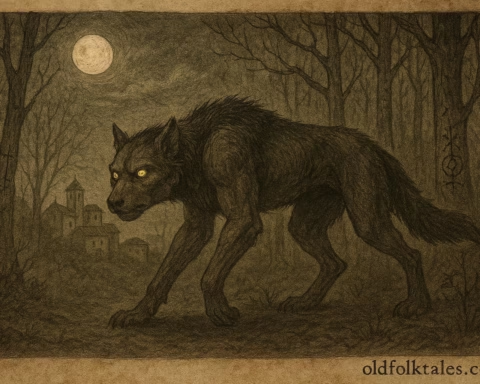
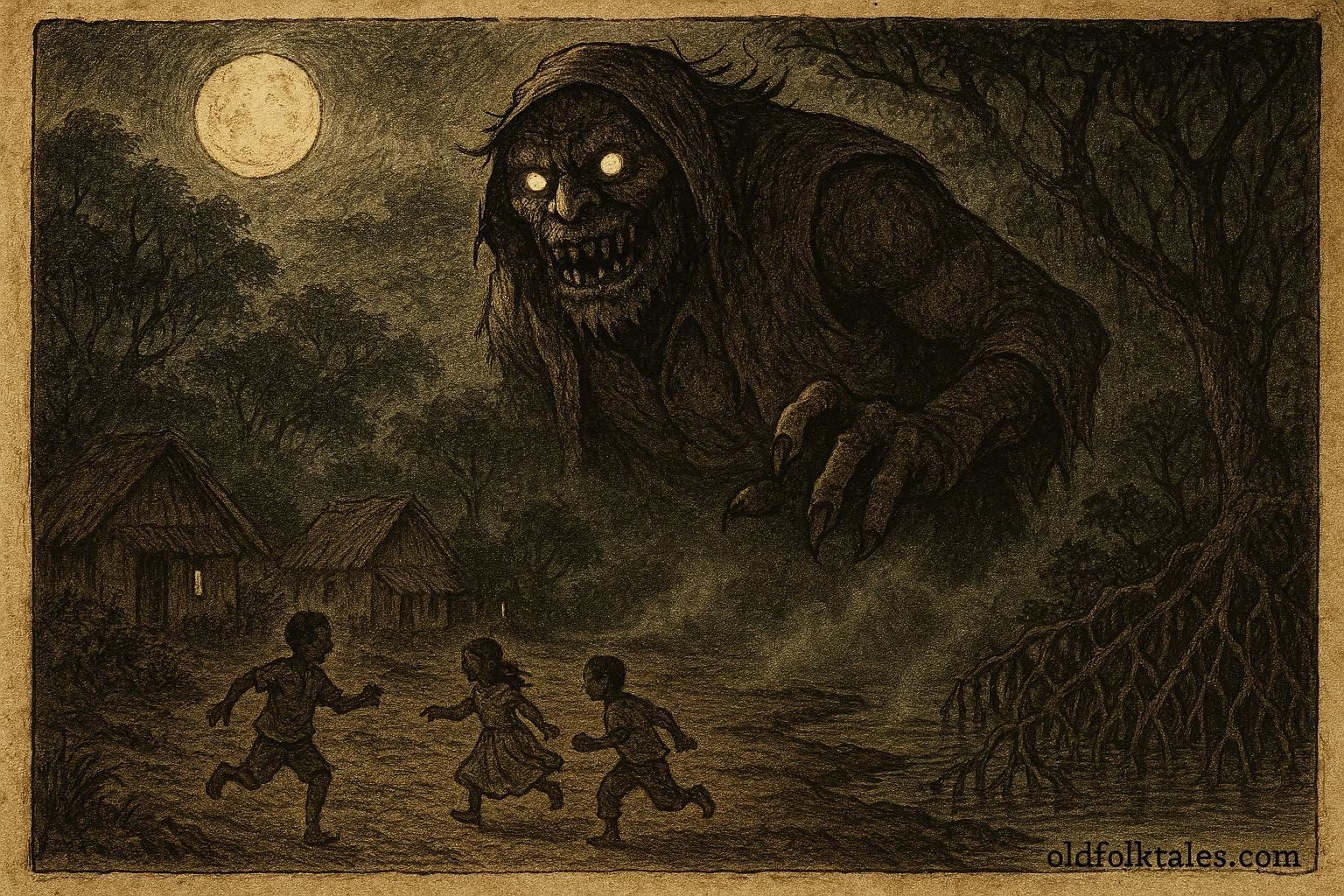
Physically, the Zimwi is described as large and grotesque, often combining human and monstrous traits. Early folktales depict it as:
-
Towering over ordinary humans, with thick, muscular limbs
-
Skin dark or mottled, sometimes with coarse hair
-
Long claws and jagged teeth, capable of tearing flesh
-
Eyes glowing faintly in darkness, betraying its predatory intelligence
-
A mouth often wide enough to swallow a child whole
Despite its terrifying appearance, the Zimwi is also notoriously cunning. Its most defining feature is its ability to disguise itself. Some tales describe it dressing in human garments, hiding among market crowds, or assuming the guise of a familiar villager to lure children away. This shapeshifting or disguise ability marks it as not just physically dangerous, but morally and socially insidious, highlighting the risk of deception in everyday life.
Behaviorally, the Zimwi is nocturnal and opportunistic. It hunts primarily at night, using both stealth and trickery. Folktales often begin with children venturing too far from home or ignoring elders’ instructions, only to encounter a Zimwi disguised as a friendly figure offering food, sweets, or toys. Once the child is isolated, the Zimwi reveals its true form, instilling terror before capturing or devouring its prey. In some stories, it also preys on the unwary adult, particularly those who break social taboos or show greed or disobedience.
A central element of Zimwi tales is moral instruction. They emphasize:
-
Obedience to parents and elders
-
Awareness of strangers and unknown places
-
The importance of communal vigilance
For instance, one common story describes a Zimwi who disguises itself as a grandmother offering a child a sweet. The child hesitates, recognizing that the grandmother’s voice is slightly wrong, and escapes, demonstrating the importance of discernment and caution. In this way, the Zimwi functions as both villain and educator, enforcing cultural norms through fear and narrative.
Zimwi stories also reflect environmental and social concerns. Coastal villages historically faced threats from wild animals, pirates, and human traffickers. By personifying danger in a single monstrous figure, storytellers provided a memorable and emotionally resonant way to teach risk awareness, especially to children.
Some variations depict the Zimwi as semi-spiritual, linked to ancestral misdeeds or curses. In these accounts, Zimwi may inhabit forests, abandoned homesteads, or hidden caves. Its presence can signal disruption in social order, suggesting that when communities stray from ethical and communal rules, the natural and supernatural worlds become unsafe. In this sense, Zimwi embodies both physical danger and moral chaos.
Despite its fearsome nature, some Swahili tales emphasize the possibility of outwitting the Zimwi. Children and adults who rely on cleverness, communal cooperation, and knowledge of rituals can escape its grasp. These elements reinforce the values of intelligence, attentiveness, and collective responsibility within the community. Rituals, protective charms, or invoking the names of ancestors are sometimes employed in stories to ward off Zimwi attacks.
The Zimwi’s significance goes beyond mere fear. It represents a cultural tool for socialization, moral education, and communal cohesion. Its tales warn of the consequences of carelessness and teach the importance of observing boundaries, both literal, like village perimeters and forests, and ethical, like respect for elders and social norms. Through this lens, the Zimwi is not merely a monster, but an embodiment of human vulnerability, deception, and ethical responsibility.
Modern interpretations, including literature and oral retellings, often highlight the psychological and symbolic aspects of the Zimwi. It embodies the tension between the known and unknown, childhood innocence and adult responsibility, and the constant need for vigilance in a world where danger is sometimes hidden in familiar forms. The Zimwi is thus a multifaceted figure, simultaneously a cautionary monster, a moral agent, and a symbol of community awareness.
Cultural Role & Symbolism
-
Moral Symbol: Teaches obedience, discernment, and vigilance in children.
-
Social Symbol: Enforces communal norms and respect for elders.
-
Environmental Symbol: Represents real dangers lurking outside safe spaces.
-
Psychological Symbol: Embodies the fear of deception, stranger danger, and unseen threats.
Author’s Note
The Zimwi is emblematic of how Swahili communities used narrative to educate, protect, and transmit social norms. While superficially a frightening monster, it serves a functional purpose: to reinforce safe behavior, moral reasoning, and respect for both communal boundaries and ethical conduct. Its dual nature, as both predator and teacher, demonstrates the sophistication of African folklore in integrating practical, moral, and psychological lessons into memorable stories.
Knowledge Check
-
Q: What is the defining ability of the Zimwi?
A: It can disguise itself as humans or familiar figures to lure victims. -
Q: Who are the primary targets of Zimwi?
A: Children, though adults may be affected if they break taboos. -
Q: What lesson does the Zimwi teach?
A: Obedience, caution, discernment, and communal vigilance. -
Q: Where does Zimwi typically reside?
A: Forests, caves, abandoned homesteads, or near villages at night. -
Q: How can humans escape or defend against a Zimwi?
A: Through cleverness, community cooperation, or protective rituals. -
Q: What broader human concept does the Zimwi symbolize?
A: The danger of deception, moral negligence, and the unknown.
Source: Early 20th-century Swahili folktale collections; colonial ethnographic records
Origin: Swahili-speaking regions of Kenya and Tanzania