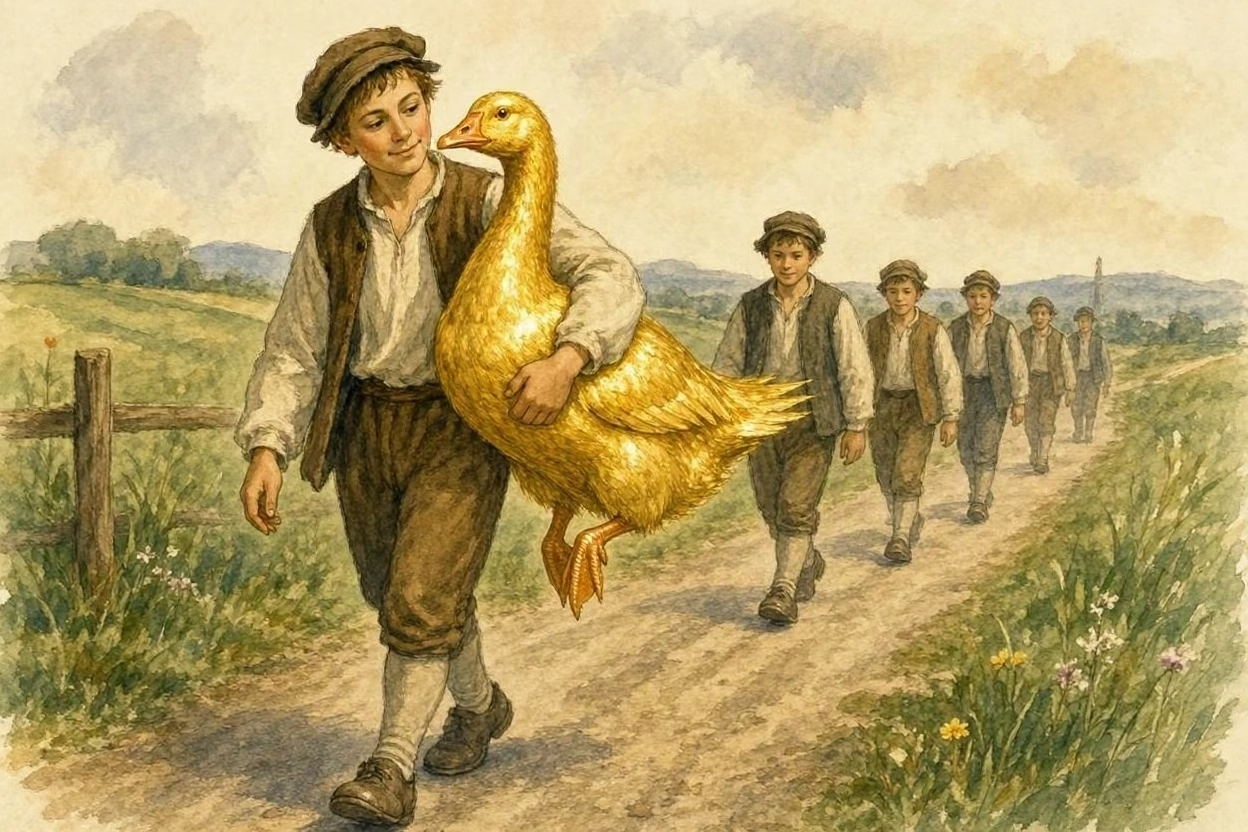
The Golden Goose is a traditional fairy tale collected by German brothers Jacob and Wilhelm Grimm. It tells the story of a young man called Dummling, the youngest of three sons, who is constantly mocked and underestimated by his family. Although others consider him foolish, Dummling displays a kindness that his older brothers lack. His willingness to share his humble meal with a hungry stranger leads him to a magical discovery that changes his life.
At the heart of the story is a remarkable goose whose feathers are made of pure gold. The bird attracts the attention of three sisters, a parson, a sexton and two laborers, drawing them into a strange procession from which none can escape. When Dummling finally arrives before a princess who has never laughed, the unusual sight brings about an unexpected ending.
The tale combines magic, humor and a lesson about generosity. It also challenges the assumption that a person who appears foolish or ordinary has little to offer.
The Youngest Son and the Mysterious Stranger
There was once a man who had three sons. The youngest was called Dummling, and his family treated him with contempt. His brothers were regarded as more capable, while Dummling was mocked and put down whenever the opportunity arose.
One day, the eldest son prepared to enter the forest to cut wood. Before he left, his mother gave him a fine, sweet cake and a bottle of wine. She wanted him to have enough food and drink to sustain him while he worked.
As the young man made his way into the forest, he met a little grey haired man. The stranger greeted him and explained that he was hungry and thirsty. He asked the young man to give him a piece of cake and a drink of wine.
The eldest son refused. He reasoned that sharing his provisions would leave him with less for himself. He told the stranger to go away and continued on his journey without offering him anything.
When he began cutting down a tree, however, he made a wrong stroke with his axe and injured his arm. The injury forced him to abandon his work and return home so that his arm could be bound.
Afterwards, the second son decided to enter the forest and cut wood as well. His mother prepared the same provisions for him, giving him a sweet cake and a bottle of wine.
The little grey haired man appeared again and made the same request. Like his older brother, the second son refused to share. He believed that giving away his food and drink would leave him with too little for himself.
He continued into the forest, but his misfortune soon followed. While cutting wood, he struck himself in the leg with his axe. His injury was so serious that he had to be carried home.
When Dummling saw what had happened to his brothers, he asked his father for permission to go into the forest himself.
His father was unwilling to allow it. Since both older sons had injured themselves, he believed Dummling would fare even worse. He told his youngest son that he did not understand the work.
Dummling continued asking until his father finally agreed. His father told him to go, suggesting that perhaps he would become wiser through experience.
His mother gave him a cake made with water and baked in the cinders, together with a bottle of sour beer. Unlike the fine cake and wine given to his brothers, Dummling’s provisions were humble.
Nevertheless, he set out for the forest.
Fascinated by this tale? Discover more North African folktales
Dummling Shares His Humble Meal
When Dummling reached the forest, the little grey haired man met him again. The stranger greeted him and asked for a piece of his cake and a drink from his bottle, explaining that he was hungry and thirsty.
Dummling did not turn him away. He honestly explained that he had only a cake baked in the cinders and some sour beer. If the stranger was willing to accept such simple provisions, Dummling was happy to sit down and share his meal.
The two sat together to eat and drink.
When Dummling took out his cake, it had become a fine, sweet cake. The sour beer had also changed into good wine.
After they had eaten, the little man told Dummling that he had a good heart and was willing to divide what he possessed. For this reason, the stranger promised to bring him good luck.
He pointed out an old tree and instructed Dummling to cut it down. He explained that something valuable could be found among its roots.
Having given this instruction, the little grey haired man took his leave.
Dummling went to the tree and began cutting it down. When it finally fell, he discovered a goose sitting among the roots. It was no ordinary bird, for its feathers were made of pure gold.
Dummling lifted the goose and carried it away with him. He had entered the forest with a humble meal and no expectation of receiving anything extraordinary. Now he possessed a magical bird that would soon attract far more attention than he could have imagined.
The Three Sisters and the Golden Feathers
Dummling carried the golden goose to an inn, where he intended to stay for the night. The innkeeper had three daughters, and all three became curious when they saw the remarkable bird.
Its golden feathers were unlike anything they had encountered. Each sister wanted to possess one of them.
The eldest daughter began thinking about how she might take a feather without Dummling noticing. When he went out, she approached the goose and seized it by the wing.
She intended to pull out a golden feather, but something unexpected happened. Her finger and hand became stuck to the bird.
Soon afterwards, the second sister approached with the same intention. She too wanted one of the precious feathers. However, as soon as she touched her older sister, she became stuck to her.
The youngest sister arrived last. Her sisters called out to her, warning her to stay away. They knew that something was wrong, but they could not free themselves.
The youngest sister did not understand why she should remain apart from them. Seeing her sisters together, she reasoned that she might as well join them.
The moment she touched her sister, she too became stuck.
All three sisters were now attached to the golden goose and to one another. They could not separate themselves from the bird, and they had to spend the night in that predicament.
The next morning, Dummling picked up the goose and continued on his journey. He did not trouble himself about the three girls hanging from it.
They had no choice but to follow him. As Dummling changed direction along the road, the sisters were forced to run after him, moving from side to side as he went.
What began as an attempt to take a single golden feather had turned into a strange and increasingly noticeable procession.
As Dummling travelled across the fields, a parson encountered the unusual group.
He saw the three sisters running behind the young man and considered their behaviour improper. He questioned why they were chasing him across the fields and decided that he should intervene.
The parson seized the youngest sister by the hand, intending to pull her away from the procession.
His attempt failed. As soon as he touched her, he became stuck too. He could no longer separate himself from the girl and was forced to run behind her.
Before long, the sexton came along and saw his master running behind the three sisters. Surprised by what he witnessed, he called out to the parson and reminded him that there was a christening that day.
The sexton hurried towards him and took hold of his sleeve. As soon as he did so, he too became stuck.
The strange procession continued through the fields. The parson and sexton were now attached to the three sisters, who remained attached to the golden goose.
Two laborers then approached, carrying their hoes as they came from the fields. Seeing the predicament, the parson called out to them and begged them to help free him and the sexton.
The laborers tried to help. Yet when they touched the sexton, they became stuck as well.
There were now seven people following Dummling and the golden goose. The three sisters, the parson, the sexton and the two laborers were all bound together in one long procession.
None of them could free themselves, and they had to keep running wherever Dummling went.
The Princess Who Had Never Laughed
Dummling eventually arrived at a city ruled by a king. The king had a daughter who was so serious that nobody had ever succeeded in making her laugh.
The king had issued a decree promising that whoever could make his daughter laugh would be allowed to marry her.
This promise gave Dummling an opportunity. When he heard about the princess, he went before her with his golden goose and the seven people following behind him.
The princess saw the strange procession approaching. The sight of seven people running one behind another, unable to separate themselves, struck her as so amusing that she began to laugh loudly.
She laughed as though she would never stop.
At last, someone had achieved what others had failed to do. Dummling had made the princess laugh, not through an elaborate performance or a display of cleverness, but through the extraordinary sight of the procession accompanying his golden goose.
Dummling then asked to have the princess as his wife. The king’s promise was fulfilled, and the wedding was celebrated.
After the king died, Dummling inherited the kingdom. The young man who had been despised and mocked by his family lived contentedly with his wife for a long time.
His good fortune began with a simple act of generosity. By sharing what little he had with a hungry stranger, he received a gift that led him towards a future nobody would have expected for him.
Love this story? Discover our full Southern African folktales collection
Moral Lesson
The Golden Goose teaches that kindness and generosity can bring unexpected rewards. Dummling shares his humble meal with a stranger even though he has very little, while his brothers refuse because they are concerned about their own comfort. The story also warns against greed, as the sisters’ desire to take the golden feathers leads them into an embarrassing predicament. Above all, it reminds readers not to judge people by appearances or underestimate someone simply because others consider them foolish.
Knowledge Check
1. Who was Dummling in The Golden Goose?
Dummling was the youngest of three sons. His family mocked and despised him, but he showed kindness by sharing his food with a hungry stranger.
2. Who was the little grey haired man?
He was the mysterious stranger Dummling met in the forest. After Dummling shared his meal with him, the stranger rewarded his generosity by directing him to the tree where the golden goose was found.
3. Why did the three sisters become stuck to the golden goose?
Each sister tried to take one of the goose’s golden feathers. When the eldest touched the bird, she became stuck. The second became stuck when she touched her sister, and the youngest suffered the same fate when she joined them.
4. How did the parson, sexton and two laborers become part of the procession?
The parson tried to pull the youngest sister away, the sexton took hold of the parson, and the laborers tried to help them. Each became stuck after touching someone already attached to the procession.
5. How did Dummling win the princess’s hand in marriage?
The king had promised that whoever made his daughter laugh could marry her. When Dummling brought the golden goose and the seven people following behind it before the princess, she laughed at the unusual sight.
6. What is the main lesson of the German fairy tale The Golden Goose?
The tale highlights the value of generosity and warns against greed. Dummling’s willingness to share brings him good fortune, while the sisters’ desire to take the golden feathers causes their predicament.
Source: Jacob Grimm and Wilhelm Grimm, Household Tales, translated by Margaret Hunt, 1884. Tale 64, “The Golden Goose” (Die golden Gans).
Explore More African Folktales
- The Enchanted Doe: A Tale of Friendship, Loyalty, and Courage
- PrinceHyacinth and the Dear Little Princess: A Fairy Tale About Pride and Self-Knowledge
- East of the Sun and West of the Moon: The Search for a Lost Prince
- The Horned Women: An Irish Folktale of Twelve Witches
- The Three Little Pigs: The Tale of Cleverness and Survival
- The Consequences of a Broken Promise
- The Cost of Selfishness in Marriage
- The Hunter’s Twins and the Mystery Behind Their Family