The house was quiet, and everyone had gone to sleep except the mistress of a wealthy household, who sat by the fire carding wool and preparing it for spinning. Suddenly, a knock broke the silence, followed by a strange voice calling, “Open! Open!” Little did she know that a witch stood outside her door, and that before the night was over, eleven more witches would join her.
“Open! Open!”
The woman stopped working. Who would come calling at such an hour?
“Who is there?” she asked.
“I am the Witch of One Horn,” answered a voice from outside.
Thinking that perhaps a neighbour needed help, the mistress rose and opened the door.
Love this story? Discover our full Southern African folktales collection
A strange woman entered. A single horn projected from her forehead, and she carried a pair of wool-carders in her hands. Without offering an explanation, she settled beside the fire and began carding wool at a furious pace.
For a while, she worked in silence. Then she stopped and spoke impatiently.
“Where are the women? They are taking too long.”
Before the mistress could ask what she meant, another knock sounded at the door.
“Open! Open!”
The call seemed impossible to ignore. The mistress rose again and opened the door.
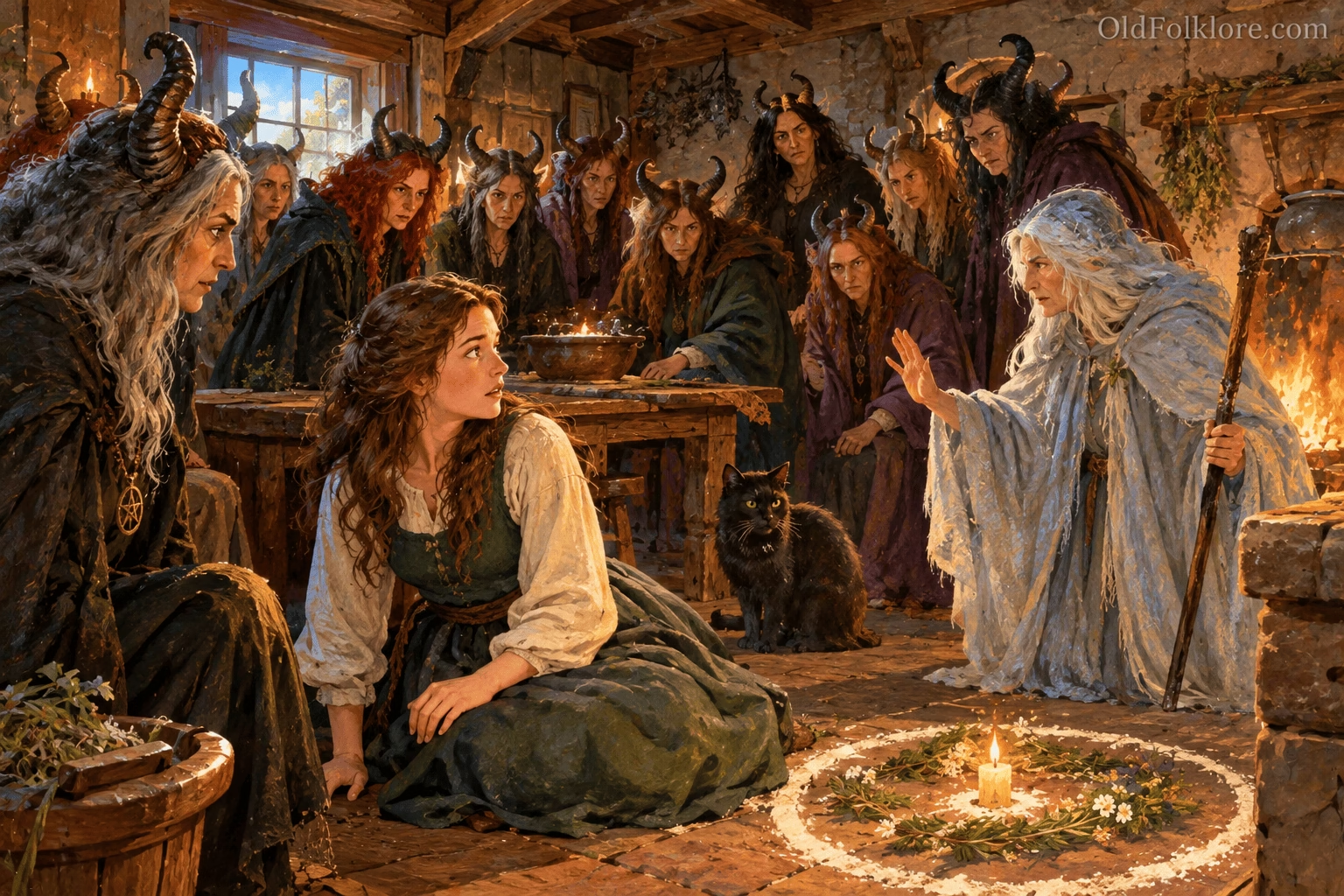
A second strange woman stepped inside. Two horns grew from her forehead, and she carried a spinning wheel.
“Make room for me,” she demanded. “I am the Witch of Two Horns.”
She sat down and began spinning so swiftly that her wheel seemed to fly.
Then came another knock, followed by another commanding voice. One by one, the women arrived. Each carried a tool for working wool, and each bore more horns than the woman who had entered before her.
At last, twelve witches sat around the fire. The first had one horn, while the last had twelve.
They carded, spun, wound, and wove the wool together. As they worked, they sang an ancient rhyme in unison. Their voices filled the room, but none spoke to the mistress, who watched them in mounting terror.
Their horns and strange movements were frightening enough. Worse still, the woman discovered that she could neither stand nor cry out for help. Her body would not obey her, and no sound escaped her lips. The witches had placed her under a spell.
She was helpless in her own home, surrounded by twelve supernatural strangers who worked as though they had every right to be there.
Then one of the witches turned towards her and spoke in Irish.
“Get up, woman, and make us a cake.”
The command released her enough to move. She went looking for a vessel with which to fetch water from the well, intending to mix it with meal and prepare the cake. But she could find nothing suitable.
When the witches saw her difficulty, they gave her another instruction.
“Take a sieve and bring us water in it.”
The mistress knew how impossible the task was. A sieve was full of holes, and water could not be carried in it. Nevertheless, she obeyed.
She went to the well and tried to fill the sieve. The water slipped through as quickly as she poured it in. Again and again, she attempted to carry water back to the house, but every effort failed.
Finally, exhausted and frightened, she sat beside the well and wept.
It was then that a voice spoke to her.
“Take yellow clay and moss. Bind them together and plaster the sieve. Then it will hold water.”
The woman followed the advice. She gathered the clay and moss, pressed them into the holes, and sealed the sieve as instructed. When she returned to the well, the vessel held the water.
But the mysterious voice had not finished helping her.
“Go back to the house,” it told her. “When you reach its northern corner, cry out three times: ‘The mountain of the Fenian women and the sky above it are all on fire!’”
The mistress did not question the strange warning. She returned home and, when she reached the northern corner, shouted the words three times.
Inside, the witches heard her cry.
Their reaction was immediate. A terrible outcry erupted from the room. Abandoning their work, they rushed from the house with shrieks and lamentations, fleeing through the darkness towards Slievenamon, the mountain identified in the tale as their chief abode.
For a moment, the household was free of their presence. Yet the woman understood that the danger might not be over.
The voice at the well revealed itself as the Spirit of the Well and instructed her to prepare the house against the witches’ return. Their enchantments could still threaten her family unless she acted carefully.
The woman hurried inside and began her work.
First, she took the water in which her child’s feet had been washed. She sprinkled this water across the threshold outside the door.
Next, she examined the cake the witches had made while she was away. It was not an ordinary cake of meal. The witches had mixed blood drawn from the sleeping members of the household into it.
She broke the cake into pieces and placed a piece in the mouth of each sleeper. By doing so, she restored those whose blood had been taken.
Then she took the cloth the witches had woven and placed it partly inside and partly outside the chest secured with a padlock.
Finally, she strengthened the doorway with a great crossbeam fixed firmly into the jambs. The entrance was now secured, and the household was prepared for the witches’ return.
The woman waited.
It was not long before the twelve witches came back. They approached the house in fury, their voices ringing through the darkness.
“Open! Open!” they screamed.
They called first upon the water scattered across the threshold.
“Open, feet-water!”
But the water refused.
“I cannot,” it answered. “I have been scattered upon the ground, and my path leads down to the lake.”
The witches turned towards the door and its wooden defences.
“Open, wood and trees and beam!”
The door answered that it could not move. The great beam was fixed securely in the jambs, leaving it powerless to obey their command.
Frustrated, the witches tried another approach.
“Open, cake that we made and mixed with blood!”
But the cake, now broken into pieces, answered that it could not help them. It had been bruised and divided, and the blood it contained was upon the lips of the sleeping children.
Every attempt failed. The protections prepared by the mistress had defeated the witches’ demands, leaving them unable to enter the house or continue their enchantment.
With furious cries, the witches rose into the air and fled once more towards Slievenamon. As they departed, they uttered strange curses against the Spirit of the Well, whom they blamed for bringing about their defeat.
The mistress and her family were left in peace.
In the confusion of their flight, one of the witches had dropped her mantle. The woman kept it as a reminder of the extraordinary night when twelve horned strangers had entered her home and nearly brought disaster upon everyone within it.
According to the tale, the mantle remained in the same family, passed down from one generation to the next for five hundred years.
And so the story of the horned women endured: a night of strange visitors, an impossible task, a mysterious helper, and a household saved through knowledge and preparation.
If you enjoyed this story, explore our full West African folktales collection
Moral
Fear can leave us feeling powerless, but courage, careful thinking, and timely help can turn a desperate situation around. The woman’s survival depends not on physical strength but on listening, acting wisely, and preparing for danger before it returns.
Knowledge Check
1. Why did the twelve witches enter the woman’s house?
They arrived one after another, carrying wool-working tools, and demanded entry. Once inside, they enchanted the household and compelled the mistress to prepare a cake.
2. How did the woman manage to carry water in a sieve?
She followed the Spirit of the Well’s instructions and sealed the holes with yellow clay and moss.
3. What made the witches flee the first time?
The woman shouted the warning that the mountain of the Fenian women and the sky above it were on fire.
4. How did she protect her family when the witches returned?
She sprinkled the child’s foot-washing water across the threshold, fed pieces of the blood-mixed cake to the sleeping family, positioned the woven cloth partly outside a locked chest, and secured the door with a crossbeam.
5. What happened to the witches’ mantle?
The mistress kept it as a reminder of the encounter. According to the tale, it remained with her family for five hundred years.
Source
Adapted from Lady Jane Francesca Wilde, Ancient Legends, Mystic Charms, and Superstitions of Ireland, “The Horned Women,” p. 10 onward, 1888 edition.
Explore More African Folktales
- The Dangerous Gift of Witchcraft
- The Farmer’s Last Sweet Potato
- The Secret Behind the Forbidden Room
- The Three Little Pigs: The Tale of Cleverness and Survival
- The Farmer Who Traded His Horse for Rotten Apples: A Tale of Love and Trust
- Bluebeard: The Forbidden Room That Revealed a Terrible Secret
- The Bremen Town Musicians: The Grimm Brothers’ Tale of Four Animals Who Found a New Home
- The Secret of the Little Iron House