Long ago, a merchant and his two brothers inherited three thousand gold pieces from their father. Each brother received a share and established a shop, hoping to build a prosperous life through trade.
The youngest brother soon distinguished himself through patience and careful business management. His elder brother, however, became restless. He sold his merchandise, bought goods for a journey, and joined a travelling caravan to distant lands.
A year passed before he returned. One day, while the youngest brother was attending to his shop, a poorly dressed beggar approached him asking for assistance.
Explore more stories from our The Arabian Nights collection.
The merchant looked at the stranger and offered him a few words of encouragement, but the beggar began to weep.
“Have I changed so much that you cannot recognise your own brother?”
The merchant examined his face more closely and immediately recognised him. His brother had lost everything during his travels and returned home with nothing.
Rather than shame him for his misfortune, the merchant welcomed him warmly. He took him to a bathhouse, provided him with fresh clothes and gave him a place to stay. After examining his business accounts, he discovered that his original capital and the profits from his trade amounted to three thousand gold pieces. He divided the entire sum equally between himself and his unfortunate brother.
With his share, the elder brother opened another shop and began trading again.
Some time later, the second brother also became attracted to the idea of travelling abroad. Despite repeated warnings from his younger brother, he sold his merchandise and departed with a group of travellers.
After another year, he returned in an equally miserable condition. Like his elder brother, he had squandered his wealth and found himself reduced to begging.
Once again, the youngest brother showed compassion. He took him to the bathhouse, clothed him in fresh garments and provided him with food and shelter.
He then examined his business accounts and discovered that he had earned two thousand gold pieces in profit. Without hesitation, he divided the earnings equally with his second brother, allowing him to establish a shop of his own.
For a while, the three brothers continued their separate businesses. However, the two elder brothers eventually began urging the youngest to accompany them on a trading expedition.
He repeatedly refused, remembering how their previous journeys had ended. Their persuasion continued for six years before he finally agreed to travel with them.
When he asked how much money they had saved for the expedition, he discovered that both brothers had squandered their fortunes on expensive food, drinking and worldly pleasures.
He did not rebuke them. Instead, he examined his own accounts, sold his merchandise and found that he possessed six thousand gold pieces.
He divided the money into two equal portions. Three thousand gold pieces would finance their trading expedition, while the remaining three thousand would be buried in a safe place as an emergency reserve. Each brother received one thousand gold pieces for the journey, including the youngest.
The brothers agreed to this arrangement, and soon they had purchased merchandise and hired a ship.
After sailing for a month, they reached a prosperous city where they sold their goods. Their venture proved remarkably successful, bringing them ten gold pieces for every one they had invested.
With their fortunes greatly increased, they resumed their voyage.
One day, while travelling along the seashore, they encountered a young woman dressed in worn and ragged clothing. She approached the youngest brother, kissed his hand and asked whether he possessed kindness and charity.
She promised that if he helped her, she would repay his generosity.
The merchant replied that he was willing to show kindness without expecting anything in return.
The woman then asked him to marry her and take her back to his city. Although her appearance suggested poverty and hardship, he felt compassion for her and agreed.
He provided her with suitable clothing, arranged a comfortable place for her aboard the ship and treated her with respect.
As the journey continued, the merchant became deeply attached to his new wife. He spent nearly all his time with her and gave her more attention than he gave his brothers.
This change awakened jealousy in the two men. They resented the affection he showed his wife and became increasingly envious of his wealth and growing prosperity.
Eventually, their jealousy turned into a murderous plan.
They agreed that if they killed their brother, they could take possession of his entire fortune.
One night, while the merchant slept beside his wife, the brothers seized them both and threw them into the sea.
The woman awoke as they struck the water. Instantly, she transformed into a powerful female jinni, known as an Ifritah. She caught her husband before he could drown and carried him safely to an island.
After leaving him briefly, she returned the following morning and revealed the truth about herself.
She explained that she was a jinniyah, a female spirit, and that she had fallen in love with him through the will of Allah. She was also a believer in Allah and His Messenger. Her human appearance had been a deliberate disguise, and she had married him because of her affection for him.
She reminded him that she had promised to repay his kindness and had now saved his life.
However, she was furious with his brothers and intended to punish them by killing them.
The merchant was astonished by everything he had heard, but he was grateful for his wife’s intervention. He begged her not to harm his brothers.
He explained their history, describing how he had repeatedly rescued them from poverty, shared his wealth with them and helped them rebuild their lives. Despite their betrayal, he still regarded them as his family.
His wife remained determined to take revenge. She threatened to fly over their ship that very night, sink it and destroy both men.
But the merchant continued pleading for their lives. He reminded her that they were still his brothers and urged her to leave them to their own wrongdoing rather than become an instrument of their destruction.
At last, his persistent appeals softened her anger. Instead of killing the brothers, she carried her husband through the air until they reached the roof of his own house.
The merchant descended, opened his doors and retrieved the money he had buried before the expedition. After greeting his household, he reopened his shop and returned to business.
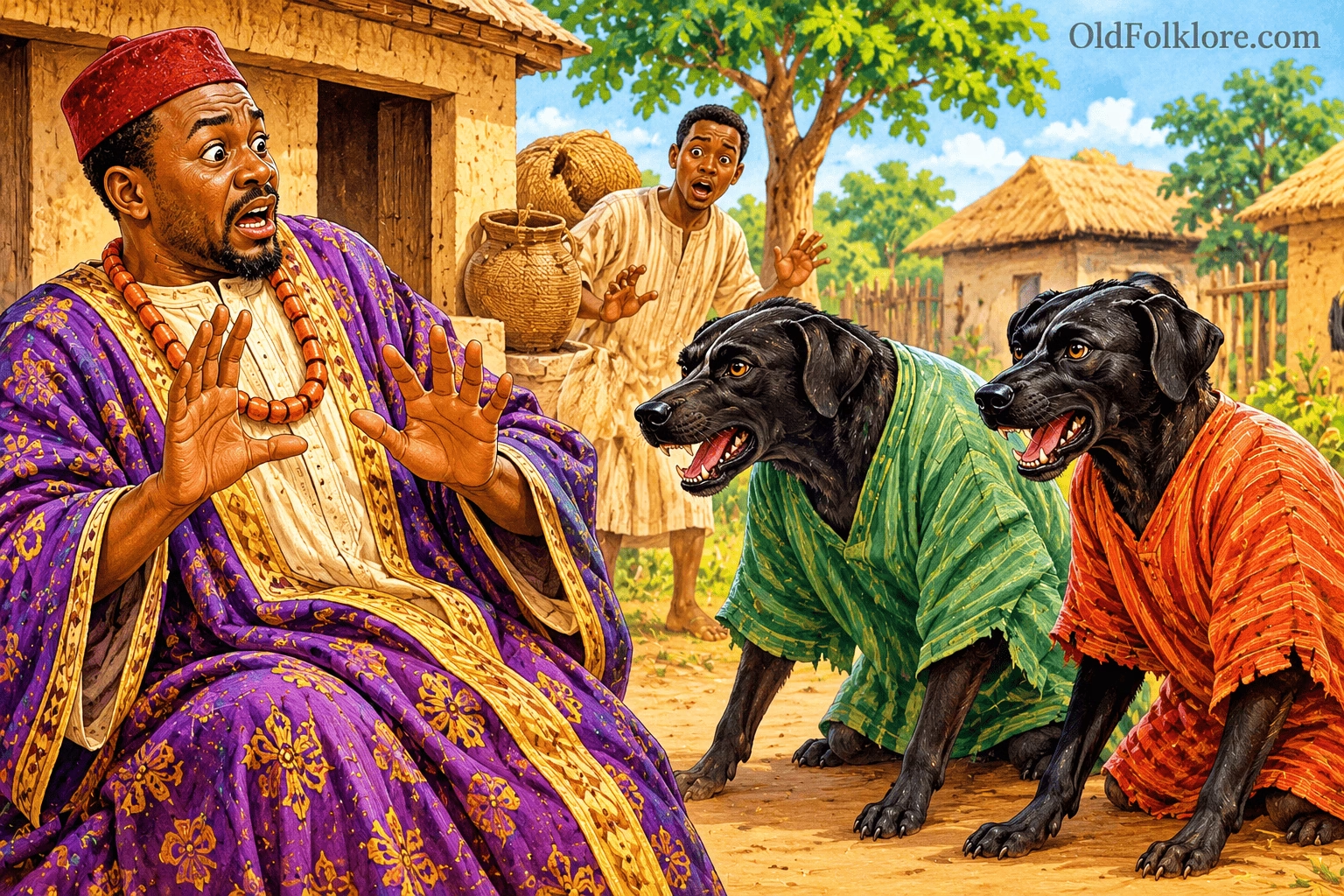
That evening, when he entered his house, he noticed two black hounds tied up nearby. As soon as they recognised him, they began whining and wagging their tails, approaching him with obvious affection.
His wife then revealed a startling truth.
The two hounds were his elder brothers.
She explained that she had sent word to her sister, another female jinni, who had transformed the brothers into dogs as punishment for their attempt to murder him. They would remain in that condition for ten years.
The merchant was deeply affected by their fate. He did not abandon them, however. Instead, he took responsibility for seeking their release.
He explained that he was now travelling to visit his wife’s sister, hoping that she would reverse the enchantment after the brothers had endured their punishment for the full ten years.
During this journey, he encountered the young merchant whose troubles had brought him before the jinni. After hearing the young man’s story, the Second Shaykh decided to remain and discover what would happen between him and the supernatural being.
Having finished his account, the Second Shaykh appealed to the jinni for mercy towards the young merchant.
The jinni was astonished by the extraordinary adventure and granted him a third of the young man’s blood-debt.
Encouraged by this success, the Third Shaykh, who owned a mare mule, stepped forward. He offered to tell an even more astonishing story in exchange for the remaining portion of the young merchant’s punishment.
The jinni agreed, and the Third Shaykh began his tale.
Explore our complete Historic Folklore & Fairy-Tale Collections archive.
Moral
True generosity is demonstrated through kindness without expectation of repayment. However, the story also warns against greed, envy and betrayal, showing how the desire to possess another person’s wealth can destroy family relationships.
It further presents forgiveness as an act of compassion, even when the person who has caused the harm has not deserved it.
Knowledge Check
1. Why did the two elder brothers become poor?
They travelled abroad in search of wealth but squandered their fortunes and returned home penniless.
2. How did their youngest brother help them?
He provided them with clothing, shelter, food and money, allowing each to establish a business again.
3. Who was the woman the youngest brother married?
She was a female jinniyah who had disguised herself as a poor human woman and fallen in love with him.
4. Why did the brothers throw him and his wife into the sea?
They were jealous of his growing wealth and his affection for his wife, and wanted to take possession of his fortune.
5. How did the merchant survive?
His wife revealed her supernatural identity, transformed into an Ifritah and rescued him from drowning.
6. Why were the brothers transformed into dogs?
The merchant’s wife asked her jinniyah sister to punish them for attempting to murder their brother and steal his wealth.
7. Why was the merchant travelling to visit his wife’s sister?
He hoped she would reverse the enchantment and restore his brothers to their human forms after ten years.
8. What happened after the Second Shaykh finished his story?
The jinni granted him a third of the young merchant’s blood-debt, after which the Third Shaykh offered to tell his own story.
Source
Richard Francis Burton (translator), The Book of the Thousand Nights and a Night, reprinted from the original edition and edited by Leonard C. Smithers, Volume I (London: H. S. Nichols & Co., 1894), “The Second Shaykh’s Story,” pp. 29–32.
Explore More The Arabian Nights Tales