In the first dawnless age, when time lay curled like an unborn fern frond and silence filled the vastness, there existed only two beings: Rangi-nui, the Sky-Father, and Papa-tū-ā-nuku, the Earth-Mother. They were not born, for they were the origins, two halves of a cosmic whole, joined in eternal embrace. Locked together, sky pressed lovingly against earth, they formed a cradle of darkness from which the first generation of gods emerged.
Between Rangi and Papa, the children of creation, Tāne, Tū, Tangaroa, Rongo, Haumia, Tāwhirimātea, and others, grew in the narrow world of shadows. They were divine yet confined, hearing only the heartbeat of their mother below and the cool breath of their father above. Love bound Rangi and Papa; darkness bound all else.
For an age, the children endured the night, whispering among themselves, dreaming of what might lie beyond their prison of flesh and sky. Is there light? Is there space? they wondered. And from this longing, a bold question rose: should they separate their parents to set themselves free?
Many trembled at the thought, for such an act felt like sacrilege, an assault upon the very beings who had given them life. Yet many more felt the weight of eternal night upon their spirits.
At last, the gods gathered in deep council.
Tū-mata-uenga, fierce god of war and humankind, thundered first. “Let us strike them apart! Let us sever them, that we may breathe and rule the spaces between!” His voice rang with violence and certainty.
But Tāne-mahuta, god of forests and creator of humankind, spoke gently: “Not with blades, brother. Let us lift them apart, Rangi to the heavens, Papa to the earth. Let them not die for our freedom.”
Others murmured their assent, though Tāwhirimātea, lord of storms and winds, rose trembling with grief. “No!” he cried. “You would tear our parents from one another? You would break their love to satisfy your hunger for space? I will never stand with this treachery.”
But the council had begun its turning, and destiny had already placed its weight upon their decision.
One by one the brothers attempted the sundering. Rongo strove and failed, bringing only rustling murmurs. Tangaroa strained and failed, sending waves of frustration through the dark. Haumia tried next, but could not break the sacred bond.
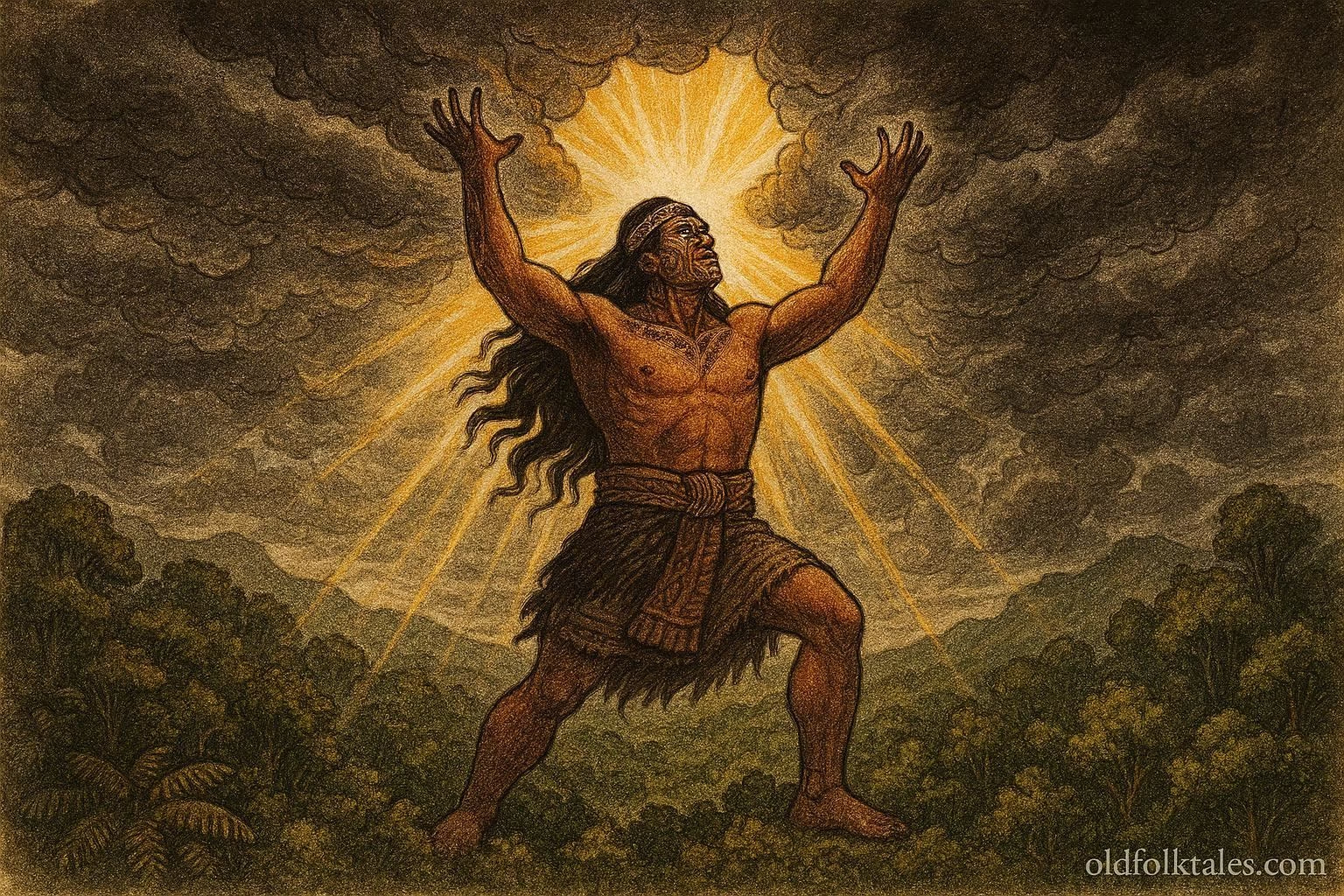
At last, Tāne stepped forward. Tall and patient, crowned with the potential of every tree he would one day raise, he placed his shoulders against Papa and his feet against Rangi. He braced himself, drawing strength from love rather than anger.
With a deep and shuddering breath, Tāne pushed.
Rangi wept upon Papa, his tears falling warm and heavy. Papa’s sighs trembled like breaking earth. Their children held their breath.
Tāne pushed again, slow, immense, compassionate.
Then, with a long cry echoing through the void, light burst forth. A great wind rolled in. Space widened. The world opened.
Rangi rose bleeding with sorrow, lifted high into the heavens. Papa lay spread beneath, receiving her children into her soil. And as their separation settled into eternity, the first dawn spilled across the newborn world.
Yet all was not peace.
Tāwhirimātea, heart broken by the sundered embrace, raged against his brothers. With storms wild and terrible, he struck them: forests bent beneath his winds, seas roared with fury, earth trembled under his grief. His anger was righteous, for he fought for love, not power.
The brothers endured, each learning strength, resilience, and balance in the face of his storms. Only Tū-mata-uenga stood unbowed, facing Tāwhirimātea with defiant courage. Their conflict echoed through generations, shaping the world of humans, seasons, tempests, and the courage to withstand them.
Meanwhile, Rangi and Papa mourned. Rangi wept so heavily that lakes and rivers formed; Papa’s sighs created mists and fogs. Even so, they did not curse their children. Their love, stretched across the heavens and earth, continued to nourish all things between them.
From Rangi’s lofty vault came stars, hung by Tāne so that his father might wear adornments of light instead of tears. From Papa’s body sprang every plant and creature; from Rangi’s breath came winds and celestial spirits.
Though separated, they remained forever connected. Rangi leaned low in winter, yearning for Papa; Papa rose in mist to meet him. Their love, though parted for the sake of creation, became the eternal dance that shaped seasons, sky, and the rhythms of life.
Thus the world was born not from simple triumph, but from moral struggle, a sacrifice chosen in sorrow, carried out in hope, and justified only by the fullness of life that followed.
And in the space between Sky-Father and Earth-Mother, their children found purpose, mortals found a home, and the cosmos found balance.
Author’s Note
The tale of Rangi and Papa is one of the great creation epics of the Pacific. They are not heroes through conquest but through cosmic sacrifice, embodying the truth that light and life sometimes arise from painful separation. Their children’s struggle mirrors human moral dilemmas: loyalty vs. freedom, love vs. growth, unity vs. transformation. The world, in this myth, exists between grief and hope, held open by both.
Knowledge Check
-
Why were Rangi and Papa initially inseparable?
-
What was the main reason the children wanted to separate their parents?
-
Which child succeeded in creating space and light?
-
Why did Tāwhirimātea oppose the separation?
-
How did Rangi and Papa express their sorrow after being parted?
-
What symbolic role does the separation play in understanding the world’s balance?
Cultural Origin: Māori (Aotearoa/New Zealand)
Source: Sir George Grey, Polynesian Mythology (1855).