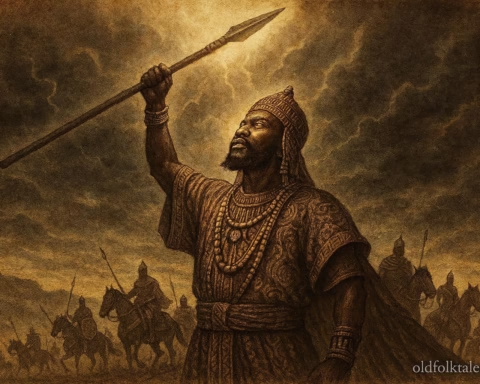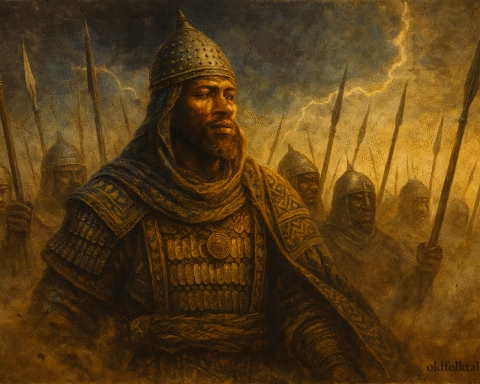
Long before the atolls of Tokelau were cradled by the whispering tides, when the world was young and the sky still leaned close to the earth, there was born a child of both divine insight and mortal courage. Lata, they whispered in awe, for his eyes mirrored the shimmer of the heavens, and his hands moved as if guided by unseen currents. From the moment he first set foot on the coral sands, the ancestors knew that he was no ordinary man; he was a prophet, a seer, and a master of the waves yet unborn.
The elders spoke to him in dreams, carrying messages from the gods of the deep: “A canoe must rise from your hands, a vessel that will bind the islands and honor the ancestors. Through it, the people shall voyage where only the spirits dare to tread.” Lata awoke from these dreams with his heart aflame and his mind alight with designs beyond the ken of ordinary men. He gathered the finest trees, the great palms and the bending breadfruit, and began to carve. Each stroke of his adze was guided by visions of constellations yet unnamed, of winds that whispered secrets of distant reefs and sacred passages.
Yet building a canoe of such celestial purpose was no simple task. The wood resisted him, knots and grain conspiring to break his resolve. The gods tested him: tempests rose without warning, and spirits of the forest hid the tools he most needed. Lata fell to his knees, his body weary, and called upon the heavens: “If I fail, let the seas claim me. But if I succeed, may my people learn the ways of the world, the rhythms of the stars, and the sacred paths of the wind.”
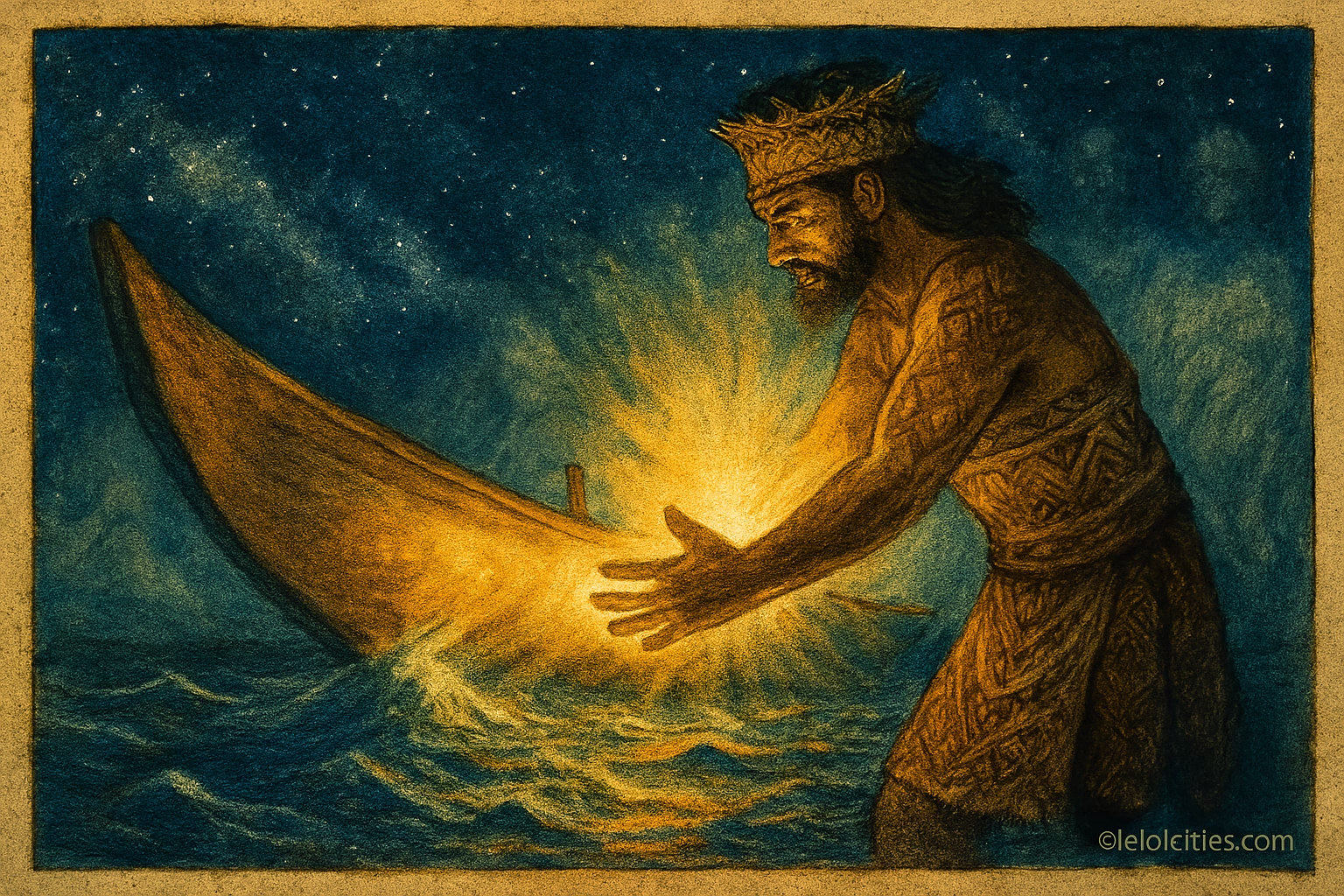
In that hour, divine aid arrived. From the depths of the coral groves, the spirit of the sea brought him the luminous shell of wisdom; from the high heavens, a guiding star descended, embedding itself in the prow of the canoe. Lata’s hands moved with a strength beyond mortal measure, and the canoe grew beneath his touch, strong, elegant, and sacred. The hull sang as it touched the water for the first time, a song that wove past, present, and future into a single chord.
When the day came for the voyage, Lata stood before his people, now gathered along the edge of the reef. “This is no ordinary journey,” he proclaimed. “Through the tides, we shall learn courage. Through the stars, we shall learn wisdom. And through this canoe, we shall honor the gods who shaped our islands.” The villagers followed him aboard the great vessel, their hearts filled with awe and reverence.
The sea, as if recognizing Lata’s sanctity, embraced them. Winds filled the sails as though guided by invisible hands, and waves bent to show the hidden reefs. Yet the voyage was not without moral trials. Strange currents sought to lure them into forgotten whirlpools. Sirens of the deep whispered promises of power and glory. Lata alone, steadfast in spirit, refused temptation, reminding himself and his people that the journey was not for wealth or fame but for the sacred covenant between man, god, and ocean.
Days became nights, and nights became weeks. Lata charted the stars and taught his people to read the whispers of the waves, the flicker of seabirds, and the sway of the palms. He guided them through storms that would have drowned lesser men, and he healed the sick with prayers and blessings from the ancestors. Every challenge he faced, he turned into a lesson: patience, courage, humility, and reverence for the natural and divine worlds.
At last, the canoe brought them to distant shores unseen by any Tokelauan before. Lata stepped onto the sand, lifted his hands to the sky, and offered a prayer of gratitude: “May this land be a place of learning, of unity, and of reverence. May the oceans always guide our children as they guided us.” His people wept with joy, for they knew that the journey had not only carried them across seas but had also carried their spirits into wisdom and harmony.
The great canoe returned to the home islands, and Lata’s teachings spread across the atolls. From that day, Tokelauan navigators would remember: the sea is both a teacher and a test, and only those who honor the gods, the ancestors, and the sacred paths of the stars shall find safe passage. Lata’s voyage became legend, his canoe a symbol of divine guidance, and his name forever etched into the sacred memory of the people.
Author’s Note
Lata the Navigator Prophet is remembered not only for constructing the first great canoe but for embodying the sacred harmony between humans, gods, and the ocean. His story is a testament to the Tokelauan understanding that true mastery is a union of skill, morality, and spiritual insight. The legacy of Lata is a guiding star for generations of navigators, a symbol of courage in the face of cosmic challenge, and an enduring reminder that every journey across the sea is also a journey of the soul.
Knowledge Check
-
Who was Lata, and what made him extraordinary among his people?
-
What divine aid did Lata receive in building the first great canoe?
-
Describe one moral or spiritual challenge Lata faced during his voyage.
-
How did Lata teach his people to navigate the seas?
-
What symbolic meaning does Lata’s canoe hold for the Tokelauan people?
-
How does Lata’s story emphasize the connection between humans and the divine?
Cultural Origin: Tokelau
Source: J.W. Huntsman, “Tokelauan Traditional Navigation” (1970s)