The Cow of the Orphans is a traditional Kabyle folktale from Algeria collected by Taos Amrouche in Le grain magique. The story follows Aicha and her younger brother, Ali, whose lives change after their mother dies. Before her death, their mother makes their father promise to keep her cow, knowing that it will help provide for her children.
After their father remarries, their stepmother grows jealous of the children’s health and happiness. Her cruelty eventually costs them their mother’s precious gift and forces them to leave home. As the siblings face strange transformations and further dangers, they discover that their suffering is not the end of their story.
A Mother’s Last Request
In a village in Kabylia, a woman lived with her husband and their two children, Aicha and Ali. The family owned a cow that provided milk for their household.
One day, the mother became seriously ill. Realising that she might not recover, she called her husband to her side and asked him to promise that he would never sell the cow. She wanted it to remain with the children after her death so that they would continue to have nourishment.
Her husband promised to honour her request.
The woman soon died, leaving Aicha and Ali in their father’s care. Unable to manage the household and look after the children alone, the father eventually remarried.
At first, the new wife did not mistreat her stepchildren. However, after she gave birth to a daughter named Djohra, her attitude changed. She began to resent Aicha and Ali, treating them harshly while giving her own daughter better food and care.
Despite their difficult circumstances, the two children remained healthy. Their stepmother could not understand why her daughter was weak while the orphans grew stronger.
The Cow That Fed the Orphans
The stepmother watched Aicha and Ali closely, determined to discover their secret.
She eventually learned that when the children went out to the fields, they received milk from their mother’s cow. This explained why they remained healthy despite the poor food they were given at home.
Jealous of the children, the stepmother sent her own daughter to approach the cow and drink its milk. The animal rejected Djohra and struck her with a hoof.
Explore more stories from our West African Folk-Tales collection.
The incident made the stepmother even angrier. She demanded that her husband sell the cow, arguing that it had injured their daughter.
The father remembered his promise to his first wife and initially resisted. However, his new wife continued to pressure him until he finally gave in.
He took the cow to the market and announced that he wished to sell it. Whenever someone asked about the animal, he explained that it was the cow belonging to the orphans. People refused to buy it, fearing the consequences of depriving the children of their inheritance.
After several unsuccessful attempts to sell the cow, the stepmother ordered her husband to slaughter it instead.
The father obeyed.
When Aicha and Ali discovered what had happened, they were devastated. Their mother’s last gift had been taken from them, and they had lost the source of nourishment that had sustained them.
A Miracle at Their Mother’s Grave
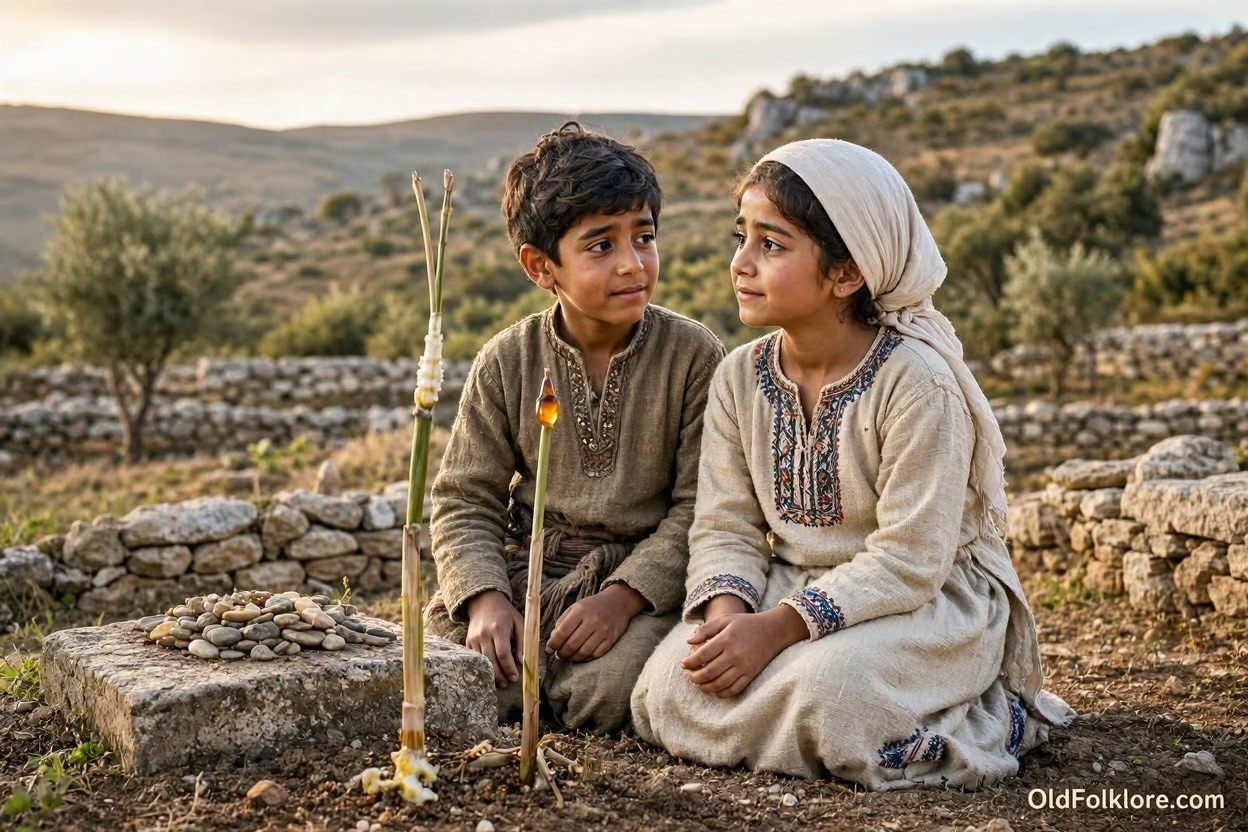
Overwhelmed with grief, Aicha and Ali went to their mother’s grave to mourn.
As they wept, two miraculous reeds grew from the ground. One produced butter, while the other produced honey.
The children found comfort in this unexpected gift. They could once again obtain nourishment, and they gradually regained their strength.
Their stepmother soon discovered the miracle. Still consumed by jealousy, she sent Djohra to the grave to obtain the same food.
But the reeds did not provide butter and honey for her. Instead, they produced bitter substances, including blood and bile.
Furious that the miracle favoured her stepchildren, the stepmother ordered the grave to be burned.
With the reeds destroyed and their home no longer safe, Aicha and Ali had nowhere left to turn. Aicha decided that they must leave the household and seek a better life elsewhere.
Taking her younger brother with her, she set out into the wilderness.
Ali Becomes a Gazelle
The siblings travelled for several days until they reached a forest. Exhausted, they found shelter in a tree for the night.
The following day, Ali became thirsty. When he drank from a nearby source of water, he was transformed into a gazelle.
Aicha was frightened by what had happened to her brother, but she refused to abandon him.
The pair continued through the forest until a sultan encountered them. Fascinated by Aicha and the gazelle, he ordered his attendants to capture them.
Aicha climbed into the branches of a large palm tree to escape. The sultan’s men considered cutting the tree down, but an old woman named Settoute intervened.
Settoute pretended that she could not prepare food properly over the fire beneath the tree. From her hiding place above, Aicha watched her struggle. Believing that she could help, Aicha climbed down.
Settoute immediately seized her, and the sultan’s attendants took the young woman to the palace.
Aicha’s Life at the Palace
The sultan was captivated by Aicha’s beauty and eventually married her. For a time, she lived at the palace and hoped that her troubles were finally behind her.
However, the other women in the royal household grew jealous of her position.
One of them devised a cruel plan. She pushed Aicha into an old well, leaving her trapped below. The jealous woman hoped that Aicha would disappear without anyone discovering what had happened.
Ali, still in the form of a gazelle, remained close to the well. He repeatedly circled it and cried out, distressed by his sister’s disappearance.
The jealous woman became alarmed by the animal’s behaviour. She ordered servants to kill the gazelle, but they could not bring themselves to do so. Something in the animal’s eyes made them hesitate.
Meanwhile, Aicha remained trapped in the well. Fortunately, a supernatural helper discovered her and helped her survive. In time, Aicha gave birth to a child.
The Siblings Are Found
Each morning, Ali returned to the well and cried out. From below, Aicha answered him.
Their repeated calls eventually attracted the attention of a religious elder who heard the unusual sounds near the well. Recognising that something extraordinary was happening, he informed the sultan.
The sultan went to investigate. At the well, he discovered Aicha and her child trapped below and ordered them to be rescued.
Once Aicha was safely brought out, she could explain what had happened to her. The deception was uncovered, and the woman responsible for pushing her into the well faced punishment.
Ali’s transformation also came to an end. With the help of the religious elder and a special remedy, the gazelle regained his human form.
The siblings were reunited, and Aicha could finally live without the immediate threat of those who had sought to harm her.
Their journey had begun with the loss of their mother and the destruction of the cow she had left them. Despite the cruelty they endured, the siblings survived their trials and found a way towards a new life.
Explore our complete Algerian Folktales archive.
Moral Lesson
The Cow of the Orphans teaches that jealousy and cruelty can bring suffering to innocent people. Aicha and Ali face repeated hardships after losing their mother’s protection, yet they remain devoted to one another. Their story highlights the importance of sibling loyalty, perseverance, and compassion, while showing that the vulnerable deserve protection rather than exploitation.
Knowledge Check
1. What did Aicha and Ali’s mother ask their father to do before she died?
She asked him never to sell the cow because it would provide nourishment for her children.
2. Why did the stepmother become jealous of Aicha and Ali?
She could not understand why her stepchildren remained healthy while her own daughter was weak, and she later discovered that the cow was providing milk for the orphans.
3. What happened when the father tried to sell the cow?
People refused to buy it after learning that it belonged to the orphans, so the father eventually slaughtered it at his wife’s insistence.
4. What miraculous event occurred at the mother’s grave?
Two reeds grew from the grave. One produced butter, and the other produced honey.
5. How was Ali transformed into a gazelle?
He drank water from a source in the wilderness and was transformed into a gazelle.
6. How were Aicha and Ali eventually reunited in human form?
Aicha was rescued from the well after her repeated calls with Ali attracted attention. Ali later regained his human form with the help of a religious elder and a special remedy.
Source
Adapted from the Kabyle folktale La Vache des orphelins, collected by Taos Amrouche in Le grain magique (1966).
Explore More Algerian Folktales
- The Flute Player’s Dangerous Trick
- The Thief and the Watchful Birds
- The Cadi Learns a Lesson in Wisdom
- Thizourith Imellah’s Long Road Home
- The Shepherd and the Clever Chacal