A young lion cub grows so strong that he believes no creature can defeat him. When his mother warns him that he will one day meet someone stronger, he dismisses her advice and sets out to prove his superiority. His confidence leads him to threaten a woodcutter, but the man uses the lion cub’s pride against him and traps his paws in a tree. To win his freedom, the cub makes a promise that will shape his life. Later, when the woodcutter faces danger from two other lions, the former enemies meet again, and the promise becomes the beginning of an unexpected friendship.
The Lioness and Her Surviving Cub
In the days when animals could speak, a lioness lived in the forest. She was expecting cubs, and when the time came for them to be born, she gave birth to four. The little cubs brought her happiness, and she had reason to be proud of her growing family.
But the family’s good fortune did not last. A few days after the birth, the dominant lion attacked and devoured three of the cubs while their mother was not able to protect them. The lioness was left with only one cub.
With three of her young gone, the lioness devoted her care to the surviving cub. He received all the milk she could provide and benefited from the prey she brought back. With no brothers competing for food, he grew quickly and became remarkably strong.
Within a few months, the cub had grown until he was almost as large as his mother. His strength impressed him, and he began to behave as though his physical power made him superior to every other creature.
The lioness had managed to raise her surviving cub, but his growing strength came with an unwelcome change. He was no longer content simply to eat, grow and learn the ways of the forest. He began to use his strength to dominate others.
A Cub Who Believes Nobody Can Defeat Him
The young lion became a bully among the cubs of his age. He attacked them, bit them and injured them. Rather than use his strength to protect himself or live peacefully alongside other animals, he used it to make them submit.
As his confidence increased, he began challenging other animals too. He fought creatures he encountered and celebrated his victories. Each successful encounter strengthened his belief that he was the strongest animal in the region.
Eventually, he declared his opinion to his mother.
He told her that he was the strongest lion cub in the land and that nobody could resist him. He spoke as though his strength had already settled every possible contest. In his mind, there was no reason to doubt himself because no opponent had yet managed to prove him wrong.
His mother listened to his boastfulness. She understood that he had become too proud of his own power and that his confidence had turned into arrogance.
She warned him that he was being presumptuous. One day, she told him, he would meet someone who could challenge him. No matter how strong a creature became, there could always be another with the ability to overcome it.
The warning was simple, but the young lion did not take it seriously.
He laughed at his mother’s advice and hurried towards the prey she had brought home. Instead of considering her words, he continued behaving as though his strength made him invincible.
The lioness could warn him, but she could not make him learn a lesson he refused to accept.
Explore more stories from our West African Folk-Tales collection.
The Young Lion Goes into the Forest
One day, the young lion asked his mother for permission to go farther into the forest and hunt on his own. He was eager to demonstrate his strength away from her supervision.
Once he was out in the forest, he became even more destructive. He attacked the animals he encountered and killed many of them without eating what he had caught. His actions were not driven simply by hunger. He had begun to kill for the pleasure of demonstrating his power.
Every encounter fed his pride. He behaved as though the forest belonged to him and every creature within it existed beneath him.
He did not stop to consider whether the animals he attacked posed any threat. He did not need a reason beyond the opportunity to overpower them. His confidence had become so great that he treated violence as proof of his superiority.
As he continued through the forest, he eventually came upon a woodcutter working on an oak tree.
The man was cutting into the trunk with his axe. He was concentrating on his work when the young lion approached. The cub saw a human being who did not possess the enormous body, teeth or claws that made lions feared by other animals. He assumed that this man would be an easy victim.
The encounter would prove his mother’s warning correct.
The Woodcutter Faces the Lion
The young lion confronted the woodcutter and declared that the forest belonged to him. He accused the man of being there without permission and threatened to kill and devour him.
The woodcutter understood that the threat was serious. The lion was powerful, and the man could not defeat him in a direct contest of strength.
At that moment, the woodcutter’s axe was stuck in the partly cut oak trunk. Without his tool in hand, he had no immediate means of defending himself against the approaching predator.
Yet he did not simply surrender to the lion’s threat. He recognised that the cub’s greatest weakness was his vanity. The young lion wanted to be regarded as strong, and he was eager to demonstrate his power whenever an opportunity presented itself.
The woodcutter decided to use that pride to protect himself.
He challenged the lion’s claim of strength by asking him to help remove the axe trapped in the tree. If the cub really was as powerful as he claimed, the man suggested, he should be able to complete this simple task before eating him.
The challenge appealed to the lion’s arrogance. He did not suspect that the woodcutter was preparing a trap. Instead, he saw an opportunity to demonstrate that he could do what an ordinary man could not.
The cub accepted.
The Trap in the Oak Tree
The woodcutter explained that the lion needed to force apart the two sides of the cut in the oak. By pushing against the trunk, the cub could create enough space for the trapped axe to be removed.
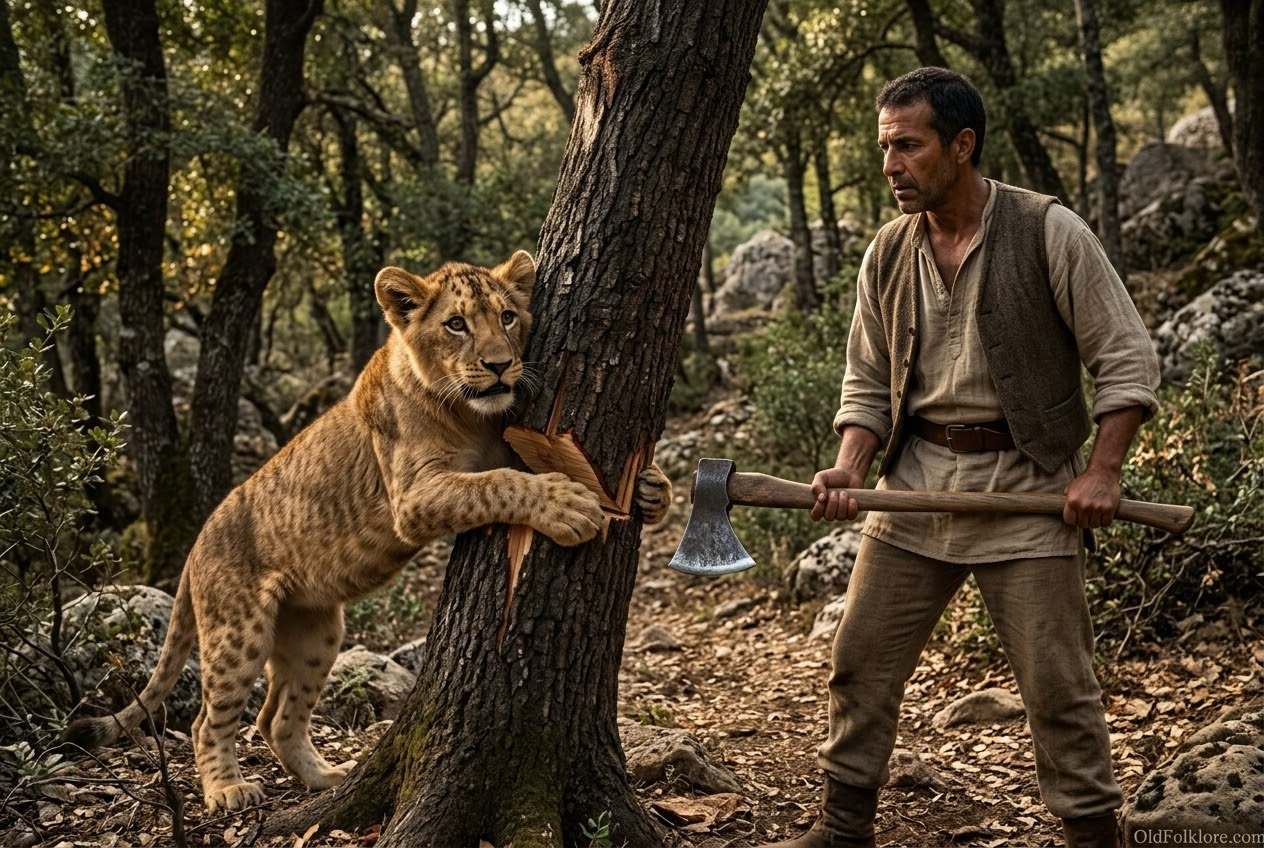
Confident in his strength, the lion approached the tree and placed his front paws against the cut. He pushed the sides apart, using his powerful limbs to hold the wood open.
That was the opportunity the woodcutter needed.
While the lion maintained the pressure, the man pulled his axe free. The tool had been keeping the cut open, and once it was removed, the trunk was able to return towards its original position.
The oak closed around the lion’s paws.
The cub suddenly found himself trapped. His strength had helped create the very situation that now held him prisoner. He pulled and struggled, but the wood gripped his paws tightly enough to prevent him from freeing himself.
The woodcutter retrieved his axe and began striking the trapped lion cub with its handle. The young lion, who had spent his time hurting other animals, was now unable to defend himself.
The man challenged him to prove his strength by freeing himself from the tree. The cub could no longer boast as he had done before. His physical power had not protected him from the consequences of his arrogance.
For the first time, he had encountered an opponent who could defeat him without matching his strength.
The Lion Cub Learns Who the Son of Woman Is
The trapped cub eventually asked the woodcutter who he was.
The man answered that he was the son of woman. In the tale, this expression identifies the human being who has overcome the lion’s strength through intelligence and practical knowledge.
The cub begged the man to release him. He promised that from then on he would never again attack the woodcutter or his fellow human beings.
The woodcutter did not immediately accept the first promise. He continued striking the cub until the young lion made a more specific pledge. He swore that he would not devour a human being while that person was alive, though he would still eat one if he found the person dead.
Only after obtaining this promise did the woodcutter stop beating the cub.
He then took up his axe and continued cutting the oak. After making the necessary cuts, he brought down the tree, releasing the lion’s trapped paws.
The cub was free, but his encounter had changed him. He had discovered that physical strength was not enough to guarantee victory. A human being without claws or enormous muscles had managed to defeat him by understanding how to use the tree and the lion’s own strength against him.
The Cub Returns to His Mother
The young lion struggled back to his mother with his paws bruised and injured. His condition made it clear that something had happened to him.
The lioness immediately asked what had happened to her son.
He explained that he had met someone stronger than himself. When she asked who it was, he identified the man as the son of woman.
His mother was not surprised by the answer. She had warned him that one day he would meet an opponent capable of overcoming him. Now he had experienced exactly what she had predicted.
The cub told her that the human had beaten him and that he had promised not to attack living people.
The encounter had taught him a lesson that his mother’s words alone could not make him understand. He had gone into the forest believing himself unbeatable, but he had returned with a new awareness of his limitations.
As time passed, the cub grew into an adult lion. He remained wary of humans and avoided approaching them. The memory of the oak tree and the woodcutter’s trap stayed with him, and he did not forget the promise he had made to secure his freedom.
The story presents this pledge as the explanation for why lions would not devour living human beings. This is the traditional belief expressed in the tale, rather than a claim about the actual behaviour of lions.
The Lion and the Woodcutter Meet Again
One day, the lion was out hunting when he came upon two other lions attacking a man. They had knocked the woodcutter to the ground and were preparing to devour him.
The man was in serious danger. Unlike the first encounter, when he had managed to trick a young lion into a trap, he now faced two predators and had little opportunity to defend himself.
The observing lion recognised the woodcutter. He remembered the man who had trapped him in the oak tree and forced him to make a promise.
He approached and asked whether the man was the son of woman.
The question connected the present danger with the earlier encounter. The lion had not forgotten who had defeated him, nor had he forgotten the pledge he had made in exchange for his freedom.
Because he had promised not to devour a living human being, he could not simply stand aside while the other lions attacked the woodcutter. He turned against one of the attackers and broke its neck.
He then attempted to defeat the second lion, but this time he could not overcome his opponent. The struggle placed him in danger, and the situation began to turn against him.
The woodcutter, who had once saved himself through cleverness, now had the opportunity to repay the lion for coming to his aid.
He rose and used his axe to kill the remaining attacker, saving the lion’s life.
The two had now rescued one another in different circumstances. The woodcutter had freed the young lion from the oak tree after obtaining his promise, and the lion had later intervened to protect the woodcutter from two predators. When the lion could not defeat the second attacker alone, the woodcutter came to his aid.
From Enemies to Friends
After this encounter, the relationship between the man and the lion changed. Their first meeting had been a contest in which the lion threatened to kill the woodcutter and the man used his intelligence to survive. Their later meeting showed that the lion remembered his promise and was willing to protect the human who had once defeated him.
The woodcutter also demonstrated that he was not simply an enemy of the lion. When the lion faced danger, the man intervened and saved him.
Their friendship grew out of these acts of mutual assistance. The lion had learned to respect the human’s ability to think and act strategically, while the woodcutter had seen that the lion could keep his word and respond to danger with courage.
The tale closes with the two becoming friends. Their relationship is a striking contrast to the lion’s earlier behaviour, when he attacked other animals simply to prove his strength.
His journey began with pride and the belief that no creature could defeat him. It led him to a humiliating trap, a promise that changed how he treated human beings, and a later encounter in which keeping that promise helped him save the very person who had defeated him.
The story’s central lesson is not merely that humans can outwit stronger animals. It also shows that a painful encounter can change behaviour, that promises matter, and that former enemies may become allies when they act with courage and honour.
Explore our complete Algerian Folktales archive.
Moral Lesson
Physical strength does not make anyone invincible. Pride can lead people into danger, while intelligence and patience can help them overcome challenges that seem impossible. The tale also teaches the importance of keeping promises and returning kindness. The lion and the woodcutter begin as enemies, but their later acts of loyalty and courage transform their relationship into friendship.
Knowledge Check
1. How many cubs did the lioness give birth to, and what happened to them?
The lioness gave birth to four cubs, but the dominant lion devoured three of them, leaving one cub for her to raise.
2. Why did the young lion believe that no animal could defeat him?
He grew quickly and became stronger than the other cubs. After repeatedly overpowering other animals, he became boastful and believed himself invincible.
3. How did the woodcutter trap the young lion?
The woodcutter persuaded the lion to push apart the cut in an oak tree so that he could remove his trapped axe. When the axe was removed, the trunk closed around the lion’s paws.
4. What promise did the lion make to secure his freedom?
He promised not to devour a living human being, although the story says he would still eat a person he found dead.
5. Why did the lion help the woodcutter when two other lions attacked him?
The lion recognised the woodcutter and remembered the promise he had made. He intervened to protect the man from the other lions.
6. How did the lion and the woodcutter become friends?
The lion protected the woodcutter from one attacker, and the woodcutter saved the lion from the second. Their mutual assistance transformed their earlier hostility into friendship.
Source
Adapted from “Le lion et le fils de la femme” (“The Lion and the Son of Woman”), a Kabyle tale published in two parts by La Dépêche de Kabylie in August 2005 and attributed to Lounès Benrejdal.
Explore More Algerian Folktales
- The Cow of the Orphans: A Powerful Algerian Folktale
- The Seven Brothers: A Powerful Algerian Folktale
- The Orphan and His Cruel Uncle
- The Mule, the Jackal and the Lion
- Solomon and the House of Eggs
- The Lion and the Son of Woman