In the land of the Geats, where forests whispered of ancient wyrd and the seas bore tales of daring voyagers, there was a warrior named Beowulf, son of Ecgtheow, a man of unmatched strength and steadfast heart. From youth, he bore the fire of courage that neither fear nor death could quench. His fame spread across distant shores, until it reached the great hall of King Hrothgar of the Danes, whose mead-hall, Heorot, lay under siege by a fiendish creature, Grendel.
Grendel, born of Cain’s cursed line, prowled the night, striking terror into the hearts of men, devouring warriors with monstrous appetite. When the Danes despaired, Beowulf set sail with a band of loyal Geatish men, crossing the storm-tossed sea to face the terror that defiled Heorot. Arriving with a calm borne of destiny, he pledged to confront Grendel bare-handed, for no weapon could pierce the monster’s hide.
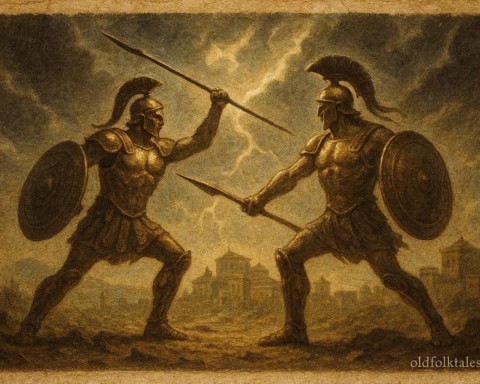
That night, as Grendel came to feed upon Hrothgar’s warriors, Beowulf lay in wait. When the monster’s clawed hand struck, the hero’s grip met its might. A battle of titanic force shook the hall; Beowulf’s strength proved greater than any man’s could be. With a savage pull, he tore Grendel’s arm from its socket, and the monster fled to die in the moors, leaving behind only terror and a severed limb. The hall erupted in joyous cries, and Beowulf’s name became legend among men.
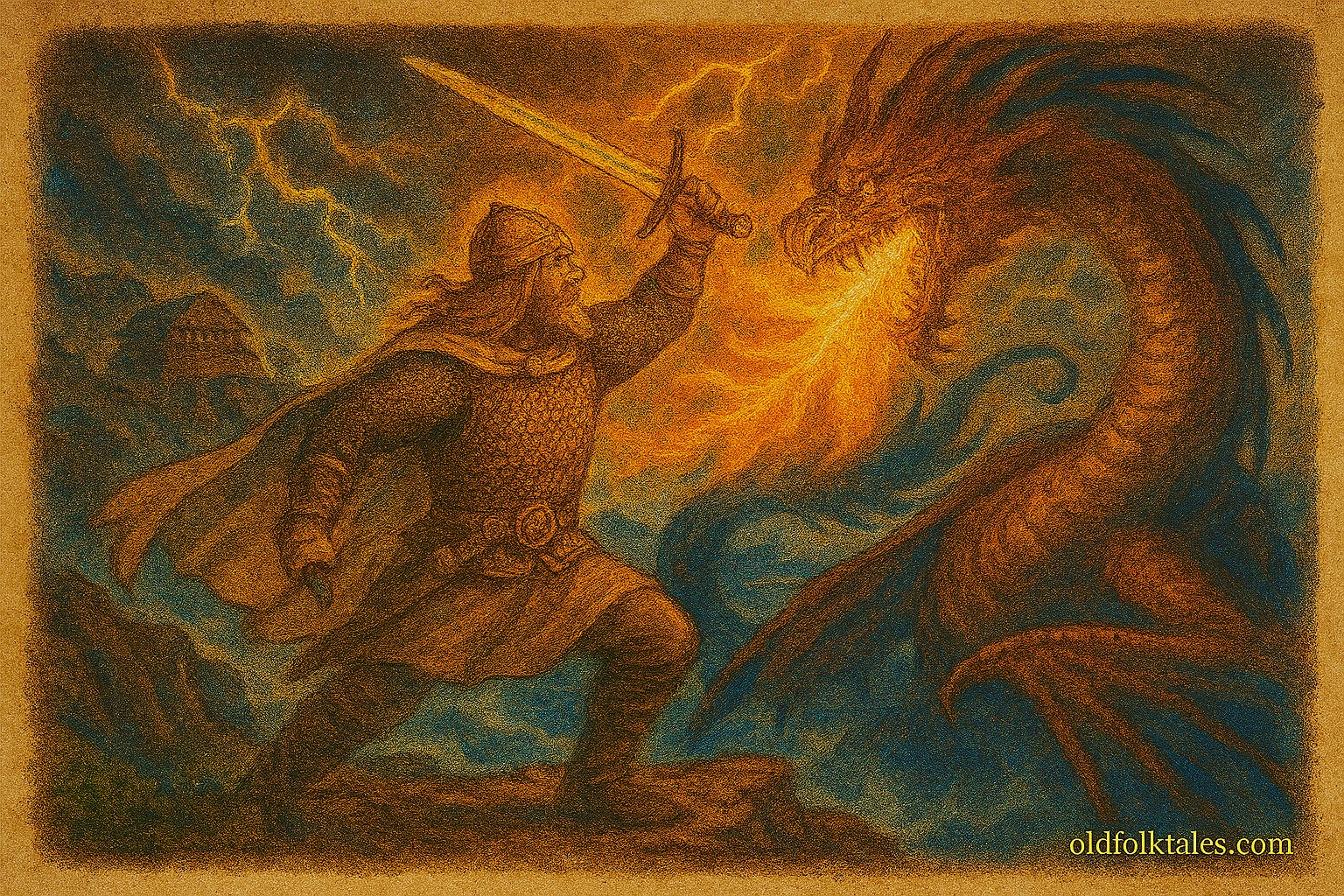
Yet fate’s hand, ever relentless, demanded another trial. For years, Beowulf ruled the Geats with wisdom and honor, until a wyrm, a dragon roused by the theft of a golden cup, awoke in the depths of the land. Its fire scorched the countryside, reducing villages to ash. Despite his age, Beowulf resolved to confront the dragon, knowing well the peril of the quest. He girded himself with sword and shield, and rode to meet the beast, accompanied only by a few loyal thanes.
The dragon’s fury was unmatched; flame licked armor, and steel shattered against scales. Beowulf’s sword, Naegling, struck true but failed to fell the beast. In the final struggle, the aged hero and the dragon mortally wounded one another. Only the courage and loyalty of Wiglaf, a young warrior, allowed Beowulf to strike the fatal blow. Yet even in victory, the hero knew his own end had come. He bequeathed his kingdom to Wiglaf, urged his people to remember deeds over years, and spoke of honor and legacy before succumbing to his wounds.
Beowulf’s funeral was a spectacle of sorrow and reverence: a pyre on the cliff above the sea, the wind carrying smoke and echoes of a life lived in valor. His story endured in song and memory, a beacon of the heroic ideal, a testament to mortal courage against the inexorable currents of fate.
Author’s Note:
Beowulf embodies the ideal of heroic virtue in Anglo-Saxon culture: courage in the face of monstrous evil, loyalty to one’s lord and people, and the acceptance of mortality. His deeds, while supernatural in feat, illuminate human themes of honor, legacy, and the inexorable pull of fate, known to the Anglo-Saxons as wyrd. Through Grendel and the dragon, Beowulf confronts both external and existential adversaries, becoming a symbol of the hero who meets death with dignity.
Knowledge Check:
-
Who was Beowulf’s father, and why is lineage significant in the epic?
-
What motivates Beowulf to confront Grendel without weapons?
-
How does the concept of wyrd influence Beowulf’s actions?
-
Describe the role of Wiglaf in the dragon battle.
-
What is the symbolic significance of Beowulf’s funeral pyre?
-
How do Beowulf’s victories reflect the values of Anglo-Saxon heroism?
Origin: Beowulf (Anglo-Saxon England, c. 700–1000 CE)
Source: Seamus Heaney (trans.), Beowulf (Faber and Faber, 1999)