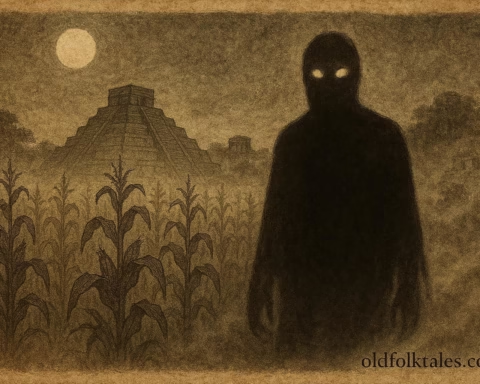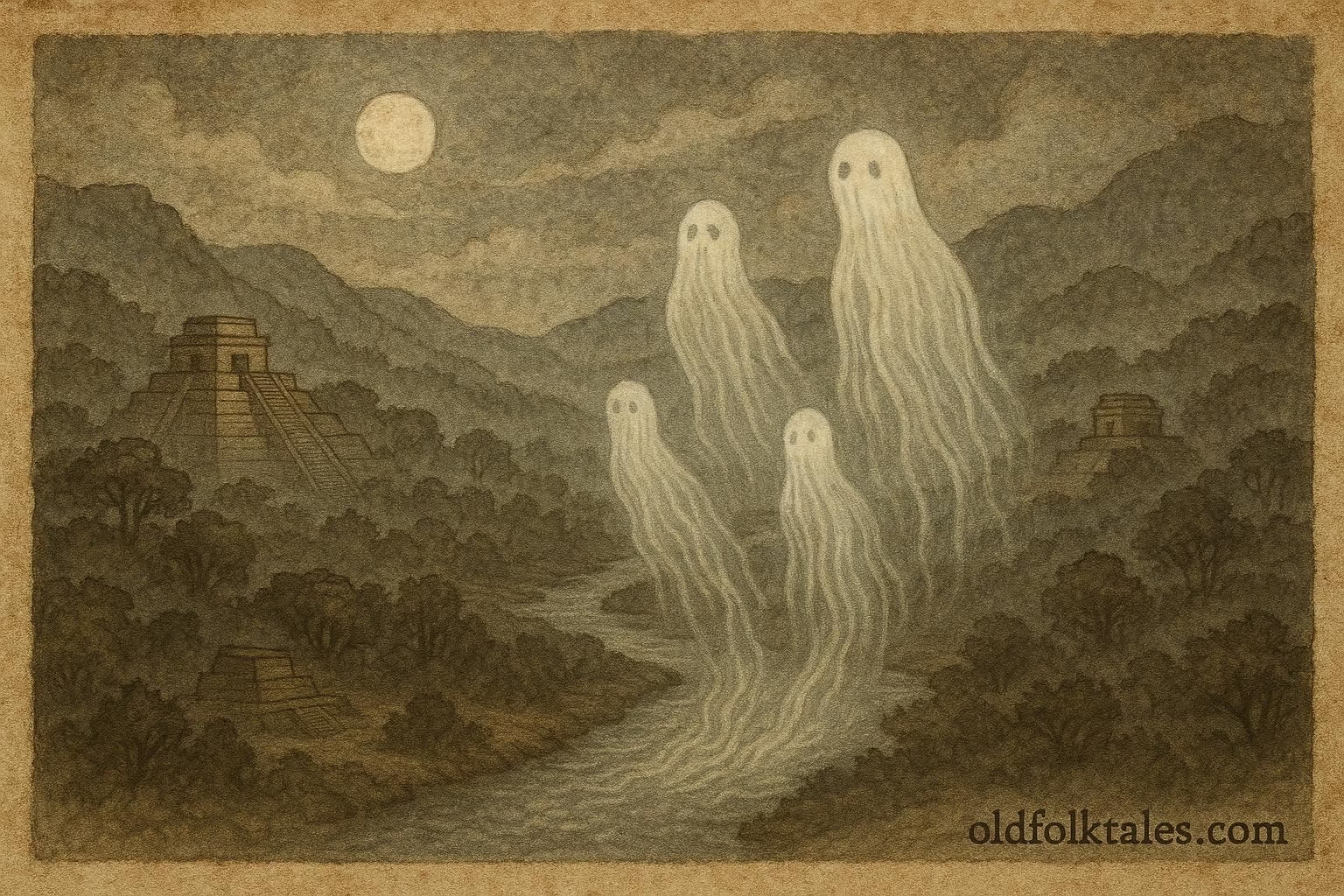
The Tlālocayotl were said to be children of the rain god Tlaloc, born from the first stormcloud that ever drifted over the high valleys of ancient Mexico. They were not fully gods and not quite spirits but something in between, beings of vapor and echo who moved with the breath of the mountains. The Nahua described them as tall, shifting silhouettes made of mist, with eyes like drops of water reflecting the sky.
They emerged only when the world was in motion: when clouds gathered, when rivers surged, or when a mighty wind stirred the treetops. Those who saw them at dawn or dusk often fell to their knees in reverence, for the presence of the Tlālocayotl was considered both a blessing and a warning. Their appearance meant that the balance of water, soil, and sky was being watched closely.
Legends say that the Tlālocayotl traveled in clusters, drifting above rivers like pale guardians. When storms rolled across the valley floor, their forms could be glimpsed riding the thunderheads. Farmers swore that during years of good harvests, the rain specters walked among the fields at night, their footsteps leaving beads of dew on every leaf. But in times of disrespect, when waste, carelessness, or greed harmed the land, the specters withdrew, and the rains followed them.
Discover the gods, goddesses, and divine spirits who ruled the heavens and shaped human fate
One well known tale tells of the village of Cuauhtitlan, which lay beside a sacred river that flowed from the snows of the distant mountains. For generations the people honored the Tlālocayotl with offerings of flowers, maize dough, and carved water jugs placed on river stones. The specters, pleased by the respect, sent steady rains and gentle storms that kept the crops lush and the rivers full.
But with time came a new generation that grew careless. As marketplaces expanded and strangers arrived from far regions, the customs of gratitude faded. Waste was thrown into the river, and fields were overworked without ritual thanks. The old women warned that the Tlālocayotl were watching, but the warnings were ignored. “The rains will always come,” the young ones said, “whether we honor them or not.”
One dusk, as the sky glowed with the last pink of the day, a child fetching water from the river heard a strange whispering in the reeds. She looked up and saw a towering shape in the mist rising from the water’s edge. Its body swirled like vapor and its eyes glimmered like raindrops. She recognized it immediately as one of the Tlālocayotl and ran back to the village to tell the elders.
The people gathered at the riverbank with torches, yet the specter had vanished. Only a cold wind remained. That night the rains stopped abruptly, and for the first time in memory the river’s flow weakened. Fish died along the shoreline. Cracks appeared in the soil. Each dawn the villagers searched the hills for signs of storm clouds, but the sky stayed empty.
Realizing their error, the elders called for a village gathering. They reminded everyone of the ancient obligation: water must be treated with reverence, for it is both life and spirit. Together they cleansed the riverbank, removing the refuse that had been cast aside. They prepared offerings of flowers, cacao beans, and carved wooden bowls. They sang the old rain chants that had not been heard for years.
On the third night of their renewed devotion, mist rose from the river although the air was dry. Figures appeared within it: tall, shimmering shapes that shifted like living clouds. The Tlālocayotl surrounded the village, hovering silently above the fields, their eyes glowing faintly in the moonlight.
Then a low rumble echoed from the mountains. Storm clouds gathered unseen behind the peaks and rolled forward like great dark wings. Thunder cracked, and the villagers lifted their hands in gratitude. Rain poured down in warm, heavy sheets, soaking the earth and washing away the dryness. The Tlālocayotl faded into the storm, their task completed.
From that time forward the people of Cuauhtitlan renewed their vow to protect the waters. Children were taught not to waste even a single drop. Farmers placed tokens of gratitude at the river each season. And whenever mist drifted across the fields under a moonlit sky, the elders would smile and say, “The Tlālocayotl walk with us again.”
The specters remain in stories today as reminders of a truth that transcends time: water does not belong to humans alone. It belongs to the world, and the world has guardians who remember when we forget.
Author’s Note
The story of the Tlālocayotl continues to teach modern readers that gratitude and respect for natural resources are not optional but essential. Water is a sacred element in many cultures, and the rain specters remind us that every river, cloud, and drop is part of a delicate balance that humans must honor.
Knowledge Check
1. Who are the Tlālocayotl in Mesoamerican tradition?
They are misty rain specters connected to storms and rivers.
2. What causes the Tlālocayotl to appear near human communities?
They appear when balance between humans and water is maintained or threatened.
3. Why did the rains stop near Cuauhtitlan?
The villagers disrespected the river and abandoned their rituals of gratitude.
4. How did the villagers restore balance?
They cleansed the river, offered gifts, and revived their traditional rain chants.
5. What does the Tlālocayotl story teach about water?
That water requires respect, gratitude, and careful stewardship.
6. Where do the Tlālocayotl usually appear?
Above rivers, mountains, storm clouds, and mist.