
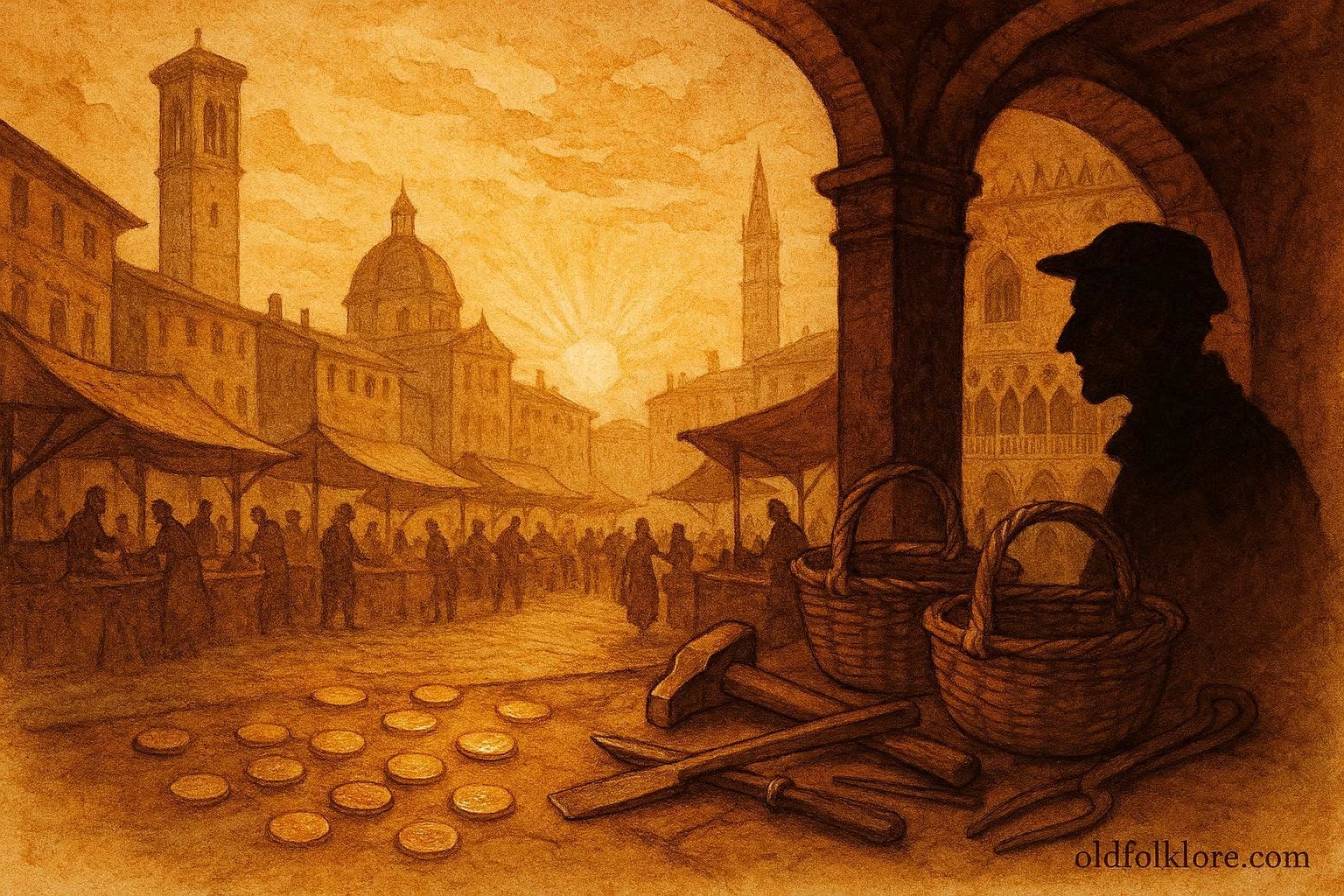
The lively markets of Italy, Florence, Naples, Palermo, Venice, have long been places where merchants, artisans, and townsfolk exchange more than just goods: they exchange lessons in life, cunning, and human nature. Italian culture celebrates cleverness and craft, not as trickery, but as a mark of intelligence and skill. Wisdom in these piazzas emerges from experience, observation, and the subtle art of reading people, measuring value, and knowing when to act. Proverbs passed down through generations reflect these practical truths, encoding the lessons of commerce and daily interaction in memorable, often witty phrases.
Merchant life in Italy’s city-states historically demanded sharp judgment. A skilled artisan knew not only how to create quality goods but also how to navigate social hierarchies, maintain reputation, and negotiate cleverly with both peers and customers. Marketplaces were arenas for testing patience, discernment, and the ability to respond quickly to changing circumstances. Italian proverbs capture the spirit of this dynamic environment, blending humor with practical guidance and emphasizing that success is as much about wisdom as it is about wealth.
These sayings teach that craft and cleverness are inseparable from integrity and observation. A merchant who knows how to price goods, an artisan who perfects their work, and a citizen who understands social nuance all benefit from the same principle: life rewards the attentive, the skillful, and the clever. “Voices from the Market Square” reminds us that wisdom often comes from the everyday interactions of ordinary people, spoken in the vibrant, bustling rhythm of the marketplace.
100 Proverbs and Their Meanings
- “The clever buyer sees the weight before the price.” – Observation prevents loss.
- “A quiet hand wins the loudest bargain.” – Patience in negotiation is powerful.
- “Even gold can be weighed twice.” – Verify value carefully.
- “Skill in craft is the merchant’s true coin.” – Quality work brings lasting reward.
- “He who haggles without knowledge pays the price of pride.” – Ignorance in bargaining is costly.
- “The artisan who rushes spoils the work.” – Patience ensures excellence.
- “A merchant’s reputation is heavier than a sack of silver.” – Character outweighs money.
- “The marketplace rewards the observant more than the loud.” – Awareness is key to advantage.
- “Coins vanish, but skill remains.” – Expertise endures beyond immediate wealth.
- “The eye that counts twice loses nothing.” – Careful measurement prevents mistakes.
- “He who whispers bargains well.” – Subtlety and tact succeed over brashness.
- “The hand that shapes clay shapes its own fate.” – Craftsmanship influences personal destiny.
- “A noisy market hides the quiet opportunity.” – Calm observation finds advantage.
- “Even a fool can spend gold; wisdom decides its use.” – Prudence matters more than wealth.
- “The sharpest knife dulls if used carelessly.” – Talent requires careful application.
- “A skilled tongue can sell salt in Sicily.” – Persuasion is valuable when backed by knowledge.
- “Reputation is a mosaic: hard to build, easy to break.” – Trust is fragile.
- “He who judges by the coin alone loses the craft.” – Value lies beyond money.
- “The cleverest merchant listens first, speaks later.” – Listening reveals opportunity.
- “An empty purse teaches lessons a full one cannot.” – Hardship fosters wisdom.
- “Gold melts, but a good name shines forever.” – Character is lasting wealth.
- “The artisan’s pride is the customer’s delight.” – Quality inspires trust.
- “Even Venice’s canals cannot hide a bad deal.” – Dishonesty is eventually discovered.
- “Coins may pass, but skill is passed down.” – Knowledge is transferable and enduring.
- “A hasty market loses both buyer and seller.” – Rushed decisions harm everyone.
- “The clever hand measures twice, cuts once.” – Precision prevents mistakes.
- “A market full of voices teaches the patient listener.” – Observation trumps noise.
- “The merchant who smiles gains more than he asks.” – Goodwill fosters advantage.
- “A busy artisan hurries less than a careless one.” – Focus improves speed and quality.
- “He who counts his silver before closing the deal counts his losses.” – Premature calculation leads to error.
- “The marketplace remembers those who cheat and those who charm.” – Actions create lasting impressions.
- “Even a single coin must be treated with respect.” – Attention to detail matters.
- “The cleverest bargain leaves room for gratitude.” – Mutual benefit strengthens relations.
- “A knife well made cuts for generations.” – Craftsmanship lasts.
- “He who trusts only in wealth is a poor merchant.” – Wisdom outweighs money.
- “Coins do not teach, experience does.” – Learning comes from practice.
- “A loud mouth scares the quiet buyer.” – Tact wins over force.
- “The hand that hurries drops the finest silk.” – Rushing destroys quality.
- “Cleverness without honesty is like a shop without doors.” – Dishonesty undermines success.
- “A sharp eye spots the hidden gem.” – Attention reveals value.
- “Even in Florence, skill speaks louder than fame.” – Ability surpasses reputation.
- “He who measures carefully gains twice.” – Diligence multiplies results.
- “Coins talk softly, but reputation shouts.” – Character is more visible than wealth.
- “A wise artisan leaves room for learning.” – Continuous improvement is essential.
- “The clever merchant knows when to speak and when to stay silent.” – Timing matters in negotiation.
- “Even a small mistake echoes in a crowded piazza.” – Errors have consequences.
- “The hands that build carefully build forever.” – Craftsmanship endures.
- “A friend in the market is worth more than gold.” – Relationships are valuable.
- “Haste pays its bill in lost coins.” – Speed leads to mistakes.
- “The artisan who listens twice produces once.” – Observation improves output.
- “Even Venice’s bridges teach patience.” – Complex work requires care.
- “Coins follow skill, not the other way around.” – Ability attracts reward.
- “The clever merchant buys with his mind, not just his purse.” – Strategy matters.
- “He who oversells oversleeps in debt.” – Exaggeration brings trouble.
- “A quiet hand and a clever eye are better than silver.” – Skill surpasses money.
- “Even the smallest marketplace offers great lessons.” – Learning comes from all experiences.
- “Coins may vanish, but learning compounds.” – Education endures.
- “A sharp tongue can sell, but a skilled hand builds trust.” – Action reinforces words.
- “Happiness in the market is measured in smiles, not coins.” – Relations matter.
- “Even Palermo’s sun cannot dry a lazy merchant.” – Effort is required.
- “A clever artisan learns from every failure.” – Mistakes teach.
- “The market favors the attentive, not the greedy.” – Observation beats desire.
- “He who decorates poorly loses the eye of the buyer.” – Presentation affects perception.
- “Coins make noise; skill makes history.” – Lasting impact comes from craft.
- “Even Naples’ streets hide sharp lessons.” – Life teaches everywhere.
- “A good trade begins with respect, not haste.” – Courtesy fosters success.
- “The artisan who brags loses orders.” – Humility attracts customers.
- “Even a clever merchant cannot cheat time.” – Patience and timing are vital.
- “A small coin well spent opens doors.” – Thoughtful investment has impact.
- “Skill and honesty are heavier than silver.” – Integrity and ability endure.
- “The loudest bargain is often the least profitable.” – Bragging harms outcome.
- “Even Venice’s merchants learn from the tide.” – Adaptation is key.
- “Coins are tools; skill is art.” – Money is secondary to mastery.
- “He who crafts well is remembered long after the coins vanish.” – Legacy outlasts wealth.
- “The clever buyer tests the measure twice.” – Verification prevents loss.
- “A market without order teaches chaos.” – Organization matters.
- “Even the poorest artisan can earn respect with skill.” – Talent transcends wealth.
- “Coins may tempt, but honesty satisfies.” – Integrity is fulfilling.
- “The hands that give well learn twice.” – Generosity teaches.
- “Even a silent piazza has lessons for the listening ear.” – Observation is critical.
- “Haste turns silk to rags.” – Rushing destroys quality.
- “Coins follow preparation, not luck.” – Planning ensures success.
- “A skilled hand can mend both goods and hearts.” – Craft fosters goodwill.
- “Even a small market holds wisdom.” – Lessons are everywhere.
- “The clever artisan sees the unseen flaw.” – Attention prevents mistakes.
- “Coins tell stories; skill writes history.” – Talent endures beyond money.
- “The busy market rewards sharp eyes.” – Awareness leads to advantage.
- “Even Florence’s masters began as apprentices.” – Learning starts small.
- “The loudest merchant loses the subtle bargain.” – Brashness harms negotiation.
- “Coins are fleeting; reputation is eternal.” – Character outlasts wealth.
- “Skill without care is a sword without edge.” – Precision matters.
- “Even Venice’s fog cannot hide the clever merchant.” – Intelligence reveals itself.
- “A small gift can earn a great trade.” – Thoughtful gestures pay off.
- “Coins should be counted; words even more so.” – Communication affects outcome.
- “He who hurries loses the silk and the sale.” – Patience is profitable.
- “Craft, wit, and honesty are the three pillars of the piazza.” – Success requires balance.
- “Even the quietest artisan leaves a loud mark.” – Quality speaks for itself.
- “Coins are servants; skill is master.” – Ability dictates results.
- “The marketplace teaches what books cannot.” – Experience conveys lessons.
- “Voices in the piazza echo long after the coins are gone.” – Lessons endure beyond trade.
Author’s Note
Italian marketplaces are classrooms where wit, skill, and observation are as valuable as coins. These proverbs remind us that commerce is not only about trade but also about understanding human nature, mastering one’s craft, and balancing cleverness with integrity. In listening to the “voices from the market square,” we hear lessons that transcend time, teaching both prudence and ingenuity.
Knowledge Check
- Q: Why is skill often valued above coins in Italian proverbs?
A: Because craftsmanship and expertise create lasting success beyond money. - Q: What lesson does “The clever buyer sees the weight before the price” teach?
A: Observation and careful evaluation prevent loss. - Q: How do these proverbs link honesty to commerce?
A: Integrity ensures trust, reputation, and long-term profit. - Q: Why are marketplaces described as teachers?
A: Real-world experience provides lessons books cannot. - Q: What role does patience play in these sayings?
A: Waiting and careful action often lead to better results.
Q: How is cleverness balanced with craft in Italian market wisdom?
A: Smart negotiation is most effective when combined with skill and integrity.