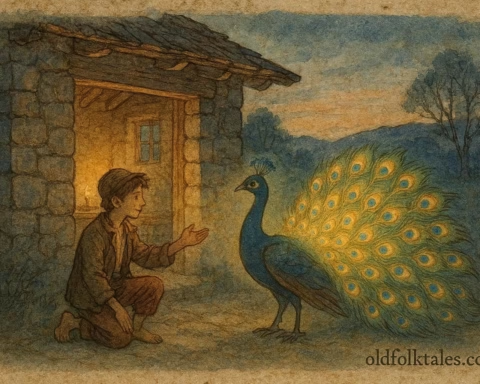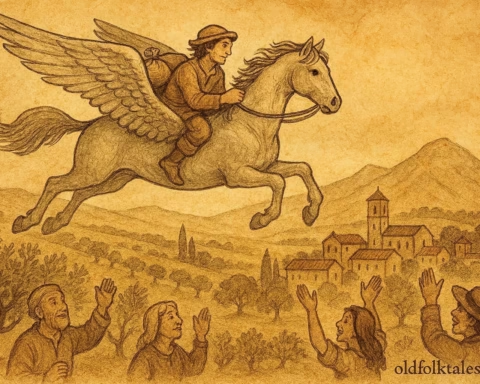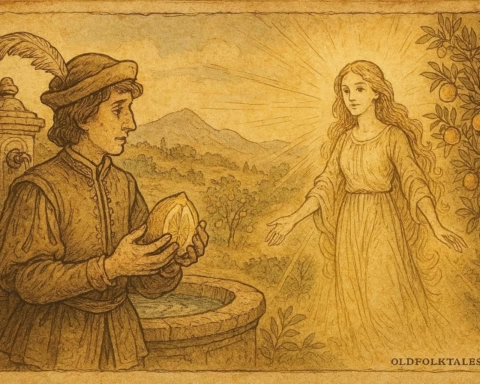
The Language of Animals, recorded in Thomas Frederick Crane’s Italian Popular Tales, is a traditional narrative associated with Monferrato, a region of northwestern Italy. This Italian folktale follows a young man whose unusual ability to understand dogs, frogs, and birds brings him ridicule, places his life in danger, and ultimately leads him towards a destiny no one could have imagined.
A Son Whose Education Was Mocked
Once upon a time, a father sent his son away to school, hoping that years of learning would prepare the boy for a successful future. The young man studied for ten years, until his teacher finally wrote to his father, explaining that he had taught the boy everything he could.
Delighted by the news, the father brought his son home and organised a grand banquet in his honour. He invited the most distinguished gentlemen in the country, eager to celebrate his son’s education before such an important gathering.
The feast was filled with speeches and congratulations. Eventually, one of the guests turned to the young man and asked him to share something remarkable he had learned during his years at school.
Explore more stories from our Italian Popular Tales collection.
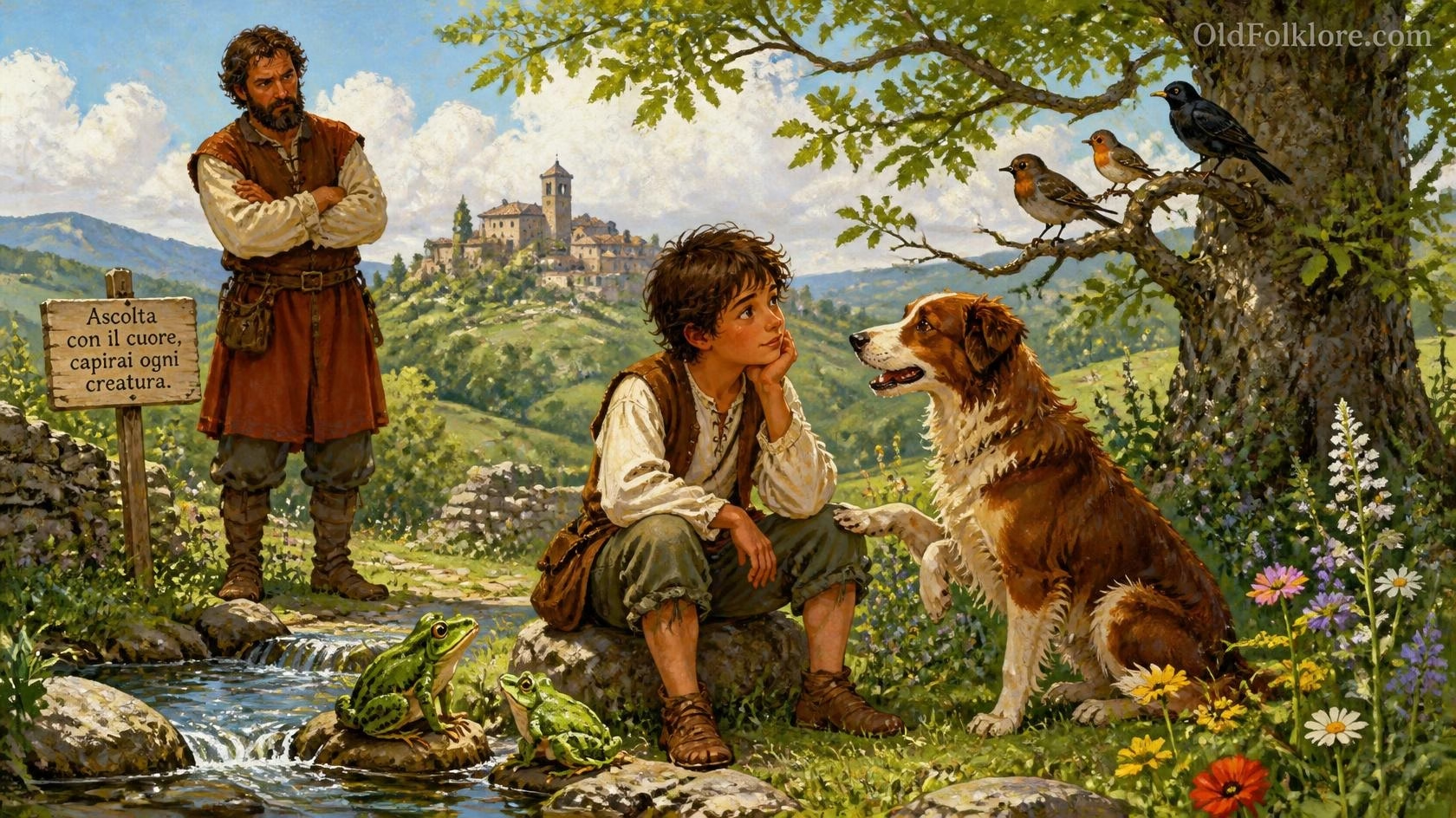
Without hesitation, the young man replied that he had learned to understand the languages of dogs, frogs, and birds.
For a moment, the guests were astonished. Then laughter spread throughout the gathering. They mocked the young man, treating his unusual knowledge as foolishness rather than an accomplishment. As the guests departed, they ridiculed both the son and the father who had been so proud of him.
The father was overwhelmed with shame. Instead of defending his son, he became furious with him. In his anger, he ordered two servants to take the young man into a forest, kill him, and return with his heart as proof that the deed had been done.
The servants were horrified by the command. They could not bring themselves to murder the innocent young man. Instead, they killed a dog, took its heart to their master, and allowed the boy to escape with his life.
The young man fled his homeland, leaving behind the father who had rejected him and setting out towards an uncertain future.
The Dogs That Warned of an Attack
After travelling a great distance, the young man arrived at a castle where the prince’s treasurer lived. The treasurer was a wealthy and influential man who guarded immense riches.
The young traveller asked for accommodation and was given a place to stay. But soon after he arrived, something unusual happened: a large number of dogs gathered around the castle.
Their barking and restless movements caught the treasurer’s attention. Curious about their behaviour, he asked his guest why so many dogs had assembled.
Because the young man understood their language, he listened carefully and discovered the reason for their alarm. The dogs were warning that one hundred assassins planned to attack the castle that very evening.
Recognising the danger, he immediately informed the treasurer and advised him to prepare for an assault.
The treasurer did not dismiss the warning. He ordered two hundred soldiers to conceal themselves around the castle, ready to catch the attackers by surprise.
That night, the assassins arrived as expected. Before they could carry out their plan, the waiting soldiers sprang into action and arrested them.
The treasurer was astonished and deeply grateful. The young man’s extraordinary knowledge had saved his household and protected his treasures. In appreciation, he offered the traveller his daughter’s hand in marriage.
However, the young man declined to settle down just yet. He promised that he would return within a year and three days before continuing his journey.
The Frogs and the Sick Princess
Leaving the treasurer’s castle, the young man travelled until he reached another city, where the king’s daughter was gravely troubled by the constant croaking of frogs in a fountain near the palace.
Their cries seemed relentless, disturbing the princess so severely that she had become ill. The king and those around him could not understand why the frogs were making such a terrible noise or how to bring the princess relief.
The young traveller listened to the frogs and discovered what lay behind their disturbance. The princess had thrown a cross into the fountain, and its presence was the reason the frogs would not stop croaking.
Once the young man explained the matter, the cross was removed from the water. As soon as it was taken out, the frogs became quiet, and the princess recovered.
The king was delighted that his daughter had regained her health. Grateful for the young man’s help, he offered him the princess’s hand in marriage.
Yet the traveller gave the same answer he had given the treasurer. He would not remain in the city just then, but promised to return within a year and three days.
With that promise made, he continued towards Rome.
The Birds’ Prophecy Beneath the Oak Tree
On the road to Rome, the young man met three other young travellers. They became companions and continued their journey together.
One day, the weather grew very hot, and the travellers stopped to rest beneath a large oak tree. They lay down to sleep, hoping to escape the heat.
Before long, a great flock of birds flew into the branches. Their loud, joyful singing disturbed the travellers’ rest and caused them to wake.
One of the young men wondered aloud why the birds seemed so happy.
The young man who understood their language listened to their song and discovered the reason for their excitement. Turning to his companions, he explained that the birds were celebrating the arrival of a new Pope, who would be one of the three travellers resting beneath the tree.
His companions could scarcely have known what to make of such a statement. Yet before long, a dove suddenly descended and settled upon the young man’s head.
The sign seemed to confirm what the birds had foretold.
Soon afterwards, the young man was chosen to become Pope. The traveller who had once been mocked for his unusual learning had risen to one of the highest positions in the Christian world.
The Pope Calls Those Who Wronged Him
After becoming Pope, the young man sent for three important visitors: his father, the prince’s treasurer, and the king whose daughter he had helped.
When the three arrived, they were trembling with apprehension. Each feared that the Pope had summoned them because of some wrongdoing for which they would have to answer.
The Pope asked them to recount their deeds. Once they had spoken, he turned his attention to his father.
He revealed that he was the son his father had ordered killed simply because he claimed to understand the languages of dogs, frogs, and birds.
The father was confronted with the terrible injustice he had committed. The very knowledge he had once considered shameful had saved the treasurer’s castle, restored the princess’s health, and helped lead his son to the papacy.
The Pope pointed out the contrast between his father’s cruelty and the gratitude shown by the treasurer and the king. While his own father had rejected him, strangers had recognised the value of his gift and rewarded him for using it to help others.
Overcome by regret, the father wept bitterly. He recognised the wrong he had done and repented of his cruelty.
But the Pope did not seek revenge. He forgave his father and welcomed him to remain by his side for the rest of his life.
Thus, the young man whose unusual ability had once brought him shame found honour, fulfilment, and reconciliation. His journey ended not with punishment for the father who had betrayed him, but with forgiveness and the restoration of their relationship.
Explore more stories from our Yei Theodora Ozaki’s Japanese Fairy Tales collection.
Moral
Never judge a person’s knowledge or ability simply because it seems unusual. Wisdom can appear in unexpected forms, and what others ridicule today may become valuable tomorrow.
The story also teaches that pride and anger can destroy relationships, while humility, sincere repentance, and forgiveness can help restore them.
Knowledge Check
1. What unusual ability did the young man learn at school?
He learned to understand the languages of dogs, frogs, and birds.
2. Why did his father order him to be killed?
His father was ashamed and angry after the guests mocked the young man’s claim about understanding animals.
3. How did the young man save the treasurer’s castle?
He understood the dogs’ warning that one hundred assassins would attack that night and advised the treasurer to prepare an ambush.
4. What caused the frogs to disturb the princess?
According to the tale, the princess had thrown a cross into the fountain, and removing it ended the frogs’ disturbance.
5. What did the birds predict beneath the oak tree?
They announced that one of the three travelling companions would become the new Pope.
6. How did the young man respond when he met his father again?
After revealing the truth and allowing his father to acknowledge his wrongdoing, the Pope forgave him and kept him by his side.
7. What is one important lesson of the story?
People should not be judged hastily, and pride should never take precedence over compassion and justice.
Source
Thomas Frederick Crane, Italian Popular Tales, Houghton, Mifflin and Company, 1885. Project Gutenberg 23634.