Clever Elsie is a German fairy tale collected by Jacob and Wilhelm Grimm. It follows a young woman whose family believes she is exceptionally clever, although her actions reveal a lack of practical judgement. When a man named Hans comes to marry her, an ordinary task in the cellar leads to an absurd chain of events. Through repetition and humour, the tale explores the difference between genuine wisdom and thoughtless behaviour.
Hans Comes to Ask for Elsie’s Hand
There was once a man who had a daughter named Clever Elsie. As she grew older, her parents began thinking about finding her a husband.
One day, a man named Hans came to ask for Elsie’s hand in marriage. However, he wanted to be certain that she was as clever as people claimed.
Elsie’s father praised his daughter, and her mother supported him. They believed Elsie possessed extraordinary intelligence and could recognise things that other people might overlook.
Hans listened to their assurances but remained cautious. He did not want to marry a woman simply because her parents spoke highly of her. He wanted to discover whether their claims were true.
Eventually, Hans visited the family. They welcomed him and sat down together to eat. After the meal, Elsie’s mother asked her to go into the cellar and draw some beer.
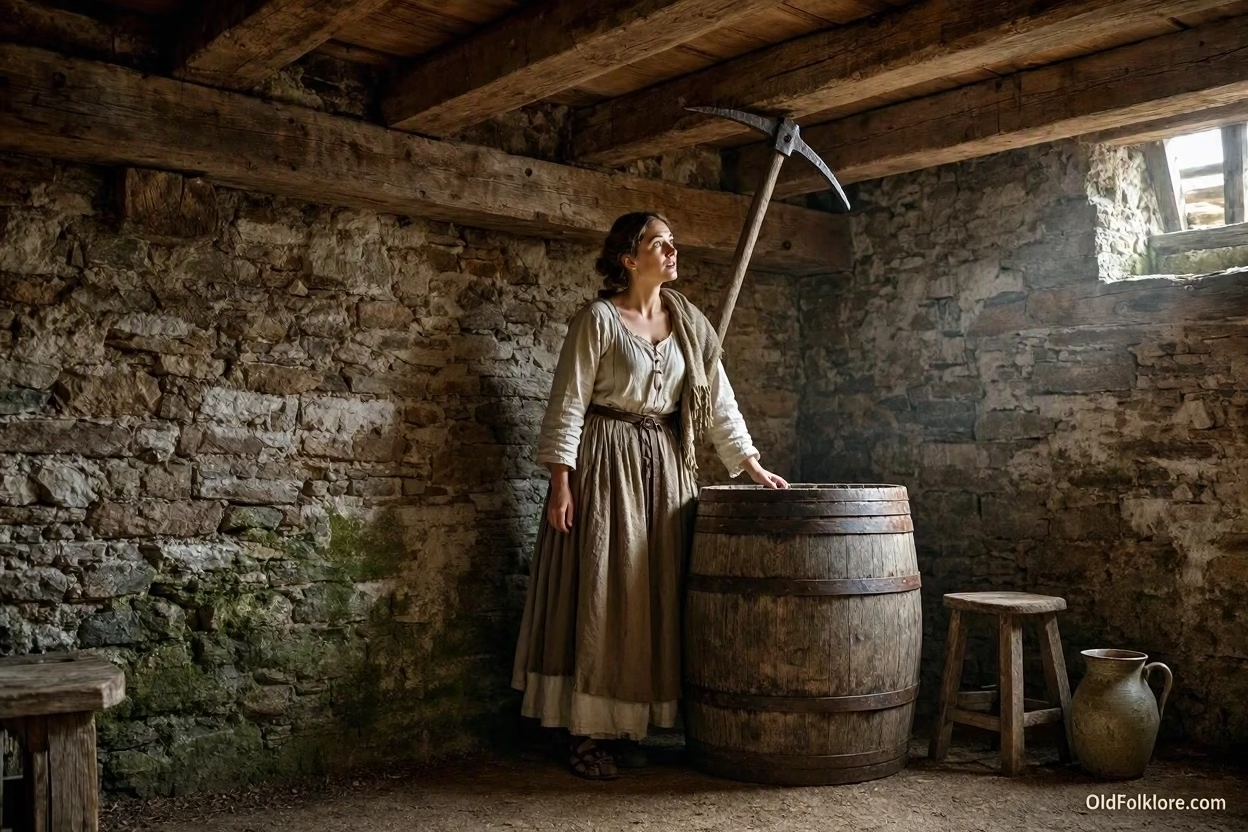
Elsie took a pitcher and went downstairs. She placed a stool near the beer barrel and positioned the pitcher beneath the tap. While the beer flowed, she looked around the cellar.
Then she noticed a pickaxe lodged in the ceiling.
The Pickaxe in the Cellar
Elsie stared at the pickaxe and began thinking about what might happen in the future.
If she married Hans, she reasoned, they might one day have a child. When that child grew older, he might come into the cellar to draw beer, just as she was doing.
But what if the pickaxe fell from the ceiling while the child was standing beneath it?
The thought frightened Elsie. She imagined the tool falling and killing her future child. Although no child existed and the pickaxe had not moved, she became overwhelmed by grief.
Elsie began to cry loudly beside the beer barrel.
She was no longer concerned about filling the pitcher or taking the beer upstairs. Instead, she mourned the death of a child who might never even be born.
Upstairs, her family and Hans waited for the beer. When Elsie failed to return, her mother became concerned and sent the maid down to find out what was happening.
Explore more stories from our Brothers Grimm Tales collection.
The Whole Family Joins the Weeping
The maid entered the cellar and found Elsie crying beside the beer barrel.
When she asked what was wrong, Elsie explained her fear about the pickaxe and her possible future child.
Rather than pointing out that Elsie was worrying about something that had not happened, the maid praised her supposed cleverness. She then sat down and began crying with her.
When the maid did not return, the family sent the boy to investigate. He also found Elsie and the maid weeping.
After hearing the explanation, he joined them.
The boy’s continued absence caused further concern, so Elsie’s mother went downstairs herself. She discovered the three of them crying and asked what had happened.
Elsie explained the imagined tragedy once again. Her mother praised her daughter’s cleverness and joined the others in their lamentations.
At last, Elsie’s father went down to see why nobody had returned with the beer. He found his wife, daughter, the maid and the boy all crying together.
When they explained the reason, he too praised Elsie’s cleverness and sat down to weep.
The family had now abandoned the simple task of bringing up the beer. They were all grieving over an accident that had not occurred and might never occur.
Meanwhile, Hans had been left waiting upstairs. When nobody returned, he went down to the cellar to discover the cause of the delay.
He found the entire family crying together and listened as they explained Elsie’s fear.
The episode revealed how completely the family had accepted Elsie’s strange reasoning. Instead of thinking sensibly about the situation, they had allowed an imagined danger to distract them from everything else.
Nevertheless, Hans eventually married Elsie.
Elsie Goes to Reap the Corn
After their marriage, Hans expected Elsie to help with the household work.
One day, he told her to go into the field and reap the corn. He prepared food for her to take along, including a pot of stew.
Elsie went to the field, but when she arrived, she began wondering what she should do first.
Should she reap the corn before eating, or should she eat before beginning her work?
She considered the question until she decided that eating would be best.
Elsie sat down and ate the stew. Once she had finished, she began wondering whether she should now reap the corn or take a nap first.
After thinking about the alternatives, she decided to sleep.
She lay down among the corn and soon fell asleep without doing any of the work Hans had assigned her.
Meanwhile, Hans returned home and waited for his wife. As the day passed and she failed to return, he decided to go to the field to see how much corn she had reaped.
To his disappointment, he discovered that she had cut none at all. Instead, she was lying asleep among the plants.
Hans realised that Elsie had once again allowed herself to become distracted from a straightforward task.
The Bells and Elsie’s Confusion
Hans returned home and fetched a bird net fitted with little bells. He went back to the field and threw the net over Elsie while she slept.
He then left her there and returned home.
When Elsie eventually woke up, she began to move. The bells attached to the net jingled, and the unfamiliar sound frightened her.
She could not understand why she was covered by a net or why the bells were making such a noise.
Elsie began to question her own identity.
Was she really herself, or had she somehow become someone else?
She thought about the question but could not reach a conclusion. Eventually, she decided to go home and ask Hans. Surely, he would know whether she was truly Elsie.
She hurried back to the house, but when she arrived, she found the door locked.
Elsie knocked and called through the window.
“Hans, is Elsie within?”
Hans heard her and answered that Elsie was inside.
His reply confused her even more. If Elsie was already inside the house, she reasoned, then the person standing outside could not be Elsie.
She concluded that she must have lost her identity.
Clever Elsie’s Final Disappearance
Unable to settle the matter, Elsie left the house and went to another home in the village, hoping that someone there would let her in.
However, the bells continued to jingle whenever she moved. The people inside heard the strange noise and refused to open their doors.
Elsie tried elsewhere, but nobody would receive her.
Her confusion had become so complete that she could no longer find her place in the village. Rather than returning to her home and questioning her mistaken conclusion, she continued to wander.
At last, she ran away beyond the village.
After that, nobody saw Clever Elsie again.
Explore our complete Historic Folklore & Fairy-Tale Collections archive
Moral Lesson
True cleverness requires sound judgement and practical thinking. Worrying about imaginary problems and failing to make sensible decisions can turn simple situations into unnecessary difficulties.
Knowledge Check
1. Who was Clever Elsie?
Clever Elsie was a young woman whose parents believed she was exceptionally clever.
2. Why did Hans want to assess Elsie’s cleverness?
He wanted to make sure she was genuinely as wise as her parents claimed before marrying her.
3. What made Elsie cry in the cellar?
She saw a pickaxe lodged in the ceiling and imagined that it might fall on a future child.
4. Why did the family join Elsie in crying?
They accepted her imagined tragedy instead of questioning whether the accident was likely to happen.
5. What happened when Elsie went to reap the corn?
She ate the food she had brought and then fell asleep without reaping any corn.
6. Why did Elsie leave the village?
After waking beneath the net, she became confused about her identity and believed Hans’s answer meant that she was not herself.
Source
Jacob Grimm and Wilhelm Grimm, Grimm’s Household Tales, translated by Margaret Raine Hunt, 1884, Tale 34, “Clever Elsie” (German: “Die kluge Else”).
Explore More Brothers Grimm Tales
- The Snowman: A Danish Folktale by Andersen
- The Golden Goose: A Brothers Grimm Fairy Tale
- The Bremen Town Musicians: Grimm Fairy Tale
- Clever Hans: A Brothers Grimm Fairy Tale
- The Girl Without Hands: A Grimm Fairy Tale
- The Devil with the Three Golden Hairs: Grimm Tale
- The Louse and the Flea: A Grimm Fairy Tale
The Three Languages: Grimm Fairy Tales