The Wishing Table, the Gold Ass, and the Cudgel in the Sack is a German fairy tale collected by Jacob and Wilhelm Grimm. It follows three brothers who leave home to learn different trades and receive extraordinary gifts from their masters. Their good fortune takes a disappointing turn when a dishonest innkeeper steals two of their treasures. However, the youngest brother receives a magical cudgel that helps him recover the stolen gifts and reunite his family.
The Tailor and His Three Sons
There was once a tailor who had three sons and a single goat. The goat provided milk for the whole family, so the animal was important to their daily lives. To keep her healthy and well fed, the family had to take her out to pasture regularly.
The three sons took turns looking after her. Each day, one of them led the goat to a place where she could find fresh grass and other plants to eat.
The arrangement seemed simple enough, and the tailor trusted his sons to care for the animal properly. As long as the goat was well fed, she could continue providing the milk on which the family depended.
One day, the eldest son took the goat out to graze. He led her to a churchyard where there were plenty of herbs and plants. The goat wandered around and ate to her heart’s content.
When evening came, the young man asked whether she had eaten enough.
The goat replied that she had eaten so much that she could not possibly eat another leaf.
Satisfied with her answer, the young man led her home and secured her in the stable.
When he returned to his father, the tailor asked whether the goat had received enough food.
The son assured him that she had eaten plenty and repeated the goat’s own words.
However, the tailor wanted to check for himself. He went to the stable and asked the goat whether she had been properly fed.
Instead of confirming his son’s account, the goat claimed that she had not eaten enough.
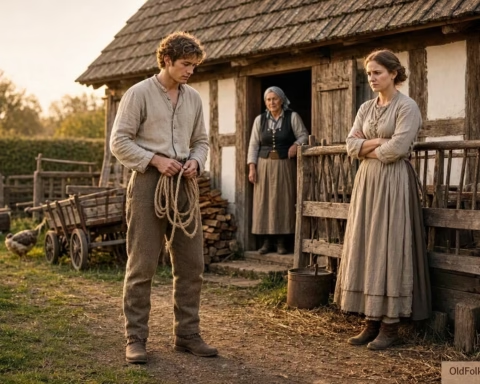
The tailor was furious. Believing that his eldest son had neglected his responsibility, he drove him out of the house.
The Second Son Is Sent Away
The following day, the second son took his turn caring for the goat.
He led her to a place where she could graze and allowed her to eat throughout the day. When evening approached, he asked whether she had eaten enough.
The goat gave the same reassuring answer, claiming that she could not eat another leaf.
The young man took her home and tied her securely in the stable.
When the tailor questioned him, the second son explained that the goat had eaten well. But when their father went to speak to the animal himself, she again claimed that she had received no food.
The tailor believed the goat rather than his son.
Angry at what he thought was another failure to care for the family animal, he drove his second son away as well.
The second son left home, just as his elder brother had done.
The Youngest Son Meets the Same Fate
The youngest son was next to take the goat out to pasture.
He led her into the garden and allowed her to feed on the grass and plants. By the end of the day, he too was convinced that the animal had eaten enough.
When he asked whether she was satisfied, the goat repeated her familiar claim that she could not eat another leaf.
The youngest son brought her home and secured her in the stable.
His father questioned him about the day’s work, and the young man gave the same answer as his brothers.
But when the tailor visited the goat, she once again complained that she had not been fed.
The tailor lost his temper completely. He had now convinced himself that all three sons were careless and unreliable.
He drove the youngest son away, leaving himself alone with the goat.
For a time, the tailor continued caring for the animal himself. He gave her food and made sure that she had an opportunity to graze.
At the end of the day, he asked whether she had eaten enough.
The goat responded with her familiar complaint, insisting that she had not been properly fed.
Only then did the tailor realise that the animal had been deceiving him. His sons had been telling the truth, while the goat had repeatedly lied.
In his anger, he took a whip and drove the goat away.
The tailor was now alone. His three sons had left home because of the goat’s lies, and he regretted the way he had treated them.
Explore more stories from our Brothers Grimm Tales collection.
Meanwhile, the brothers had gone out into the world to learn trades and make their own way in life.
The Eldest Son Learns Carpentry
The eldest son found a master carpenter and entered his service. He worked diligently, learning how to handle tools, measure wood and shape it into useful objects.
He remained with his master until he had completed his apprenticeship.
When the time came for him to leave and travel as a skilled workman, the master was pleased with his conduct. As a reward, he gave the young man a small table.
At first, the gift seemed ordinary. It was a simple piece of furniture that could be carried from place to place.
However, the table possessed a remarkable power.
Whenever its owner placed it on the ground and said, “Table, cover thyself,” it would immediately provide a fine meal. Delicious dishes appeared upon it without anyone having to prepare them.
The young carpenter was delighted. With such a table, he would never have to worry about finding food during his travels.
He thanked his master and set out into the world.
Whenever he grew hungry, he placed the table before him and spoke the words that brought forth the meal. The table would cover itself with food, and he could eat as much as he needed.
After travelling for some time, he decided that he would return home and show his father the wonderful gift. He hoped that the table would demonstrate that he had learned a useful trade and give his father a reason to welcome him back.
The Innkeeper Steals the Wishing Table
On his journey home, the young carpenter reached an inn.
He entered with his table and several other belongings. As he sat down, other travellers gathered around, and he began telling them about the things he had seen.
When he wanted supper, he placed his table before him and spoke the words that made it cover itself.
Immediately, a splendid meal appeared.
The other guests were astonished. The innkeeper, who had been watching closely, was even more interested.
He realised that the table was no ordinary piece of furniture. Whoever owned it could produce a meal without paying a cook or buying provisions.
The innkeeper began thinking about how he might obtain it.
That night, the carpenter went to bed and left the table nearby. The innkeeper waited until he believed the young man was asleep.
Then he quietly exchanged the magical table for an ordinary one that looked almost exactly the same.
The carpenter knew nothing about the trick.
In the morning, he picked up what he believed was his wishing table, paid for his stay and continued his journey.
When he reached home, he greeted his father and explained that he had learned carpentry.
His father asked what he had brought back from his travels.
The young man proudly produced the table and demonstrated its power. He placed it before him and spoke the words that should have caused it to cover itself.
Nothing happened.
The table remained an ordinary piece of furniture.
The young carpenter realised that he had been cheated at the inn. His wonderful gift had been stolen, and he had nothing to show his father but a useless replacement.
The Second Son Receives a Golden Ass
The second son had also found a master and learned a trade. He became a miller and worked faithfully until his apprenticeship was complete.
His master was pleased with him and decided to reward him with an unusual gift: a donkey that could produce gold.
The animal did not pull carts or carry ordinary loads. Its extraordinary ability was revealed when its owner placed it on a cloth and spoke the word “Bricklebrit.”
At once, gold pieces would fall from its mouth.
The young miller was amazed. He thanked his master and began travelling with the donkey.
Whenever he needed money, he spread a cloth on the ground and spoke the word. The donkey produced gold, allowing him to pay for food, lodging and other necessities.
He could now travel comfortably without worrying about the cost of his journey.
After some time, he too decided to return home. He wanted to see his father and show him the extraordinary animal.
On the way, he stopped at the same inn where his elder brother had stayed.
The innkeeper recognised the opportunity to obtain another magical treasure. He watched the donkey carefully and saw how it produced gold when given the proper command.
That night, while the miller slept, the innkeeper exchanged the golden ass for an ordinary donkey.
The following morning, the young man continued his journey, unaware that he had been robbed.
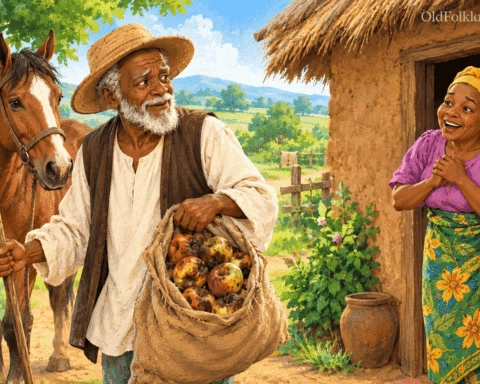
When he reached home, he showed his father the donkey and explained its unusual ability. But when he placed a cloth beneath it and spoke the magic word, no gold appeared.
The second son discovered that he too had been deceived.
The tailor now had two sons who had returned home without the magical gifts they had expected to bring him.
The Youngest Son Receives a Cudgel in a Sack
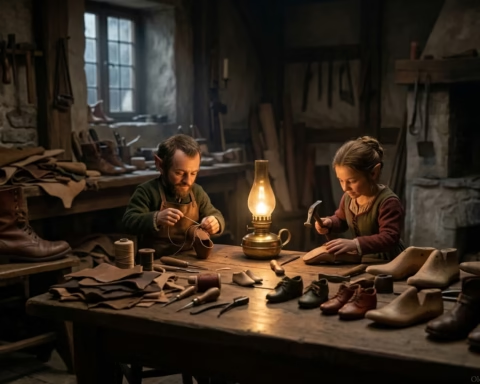
The youngest son had entered the service of a master turner, a craftsman who shaped wood on a turning lathe.
His trade required considerable skill, so he remained in training longer than his brothers.
During his apprenticeship, he learned to work carefully and faithfully. Eventually, he completed his training and prepared to travel as a journeyman.
By then, he had received letters from his brothers explaining what had happened to them. He knew that both had obtained extraordinary gifts but had been cheated by an innkeeper on their journeys home.
His master was pleased with the youngest son’s work and gave him a sack as a parting gift.
Inside the sack was a cudgel.
The young turner wondered why he should carry a stick in a bag, but his master explained its special power.
If anyone tried to harm him or treated him dishonestly, he only needed to say, “Out of the sack, Cudgel!”
The cudgel would leap out and beat the offender until the young man ordered it to stop.
The turner thanked his master and continued his travels with the sack over his shoulder.
He remembered his brothers’ letters and suspected that the innkeeper who had cheated them might still be waiting for another opportunity to steal from an unsuspecting traveller.
When he reached the same inn, he decided to find out whether the man was as dishonest as his brothers had described.
The Cudgel Punishes the Dishonest Innkeeper
The young turner entered the inn and placed his sack where he could keep it close. He began talking with the innkeeper and the other guests about the wonders he had encountered during his travels.
He mentioned magical objects and remarkable gifts, but he made the innkeeper especially curious by suggesting that the treasure inside his sack was more valuable than the wishing table or the golden donkey.
The innkeeper immediately became interested.
He wondered what valuable object the young man might be carrying. If he could steal this treasure as he had stolen the others, he might gain another remarkable possession.
That night, the turner went to bed and placed his sack beneath him as a pillow. He pretended to fall asleep, but he remained alert.
After a while, the innkeeper approached quietly and tried to pull the sack away from beneath the young man’s head.
The turner waited until the innkeeper was close enough.
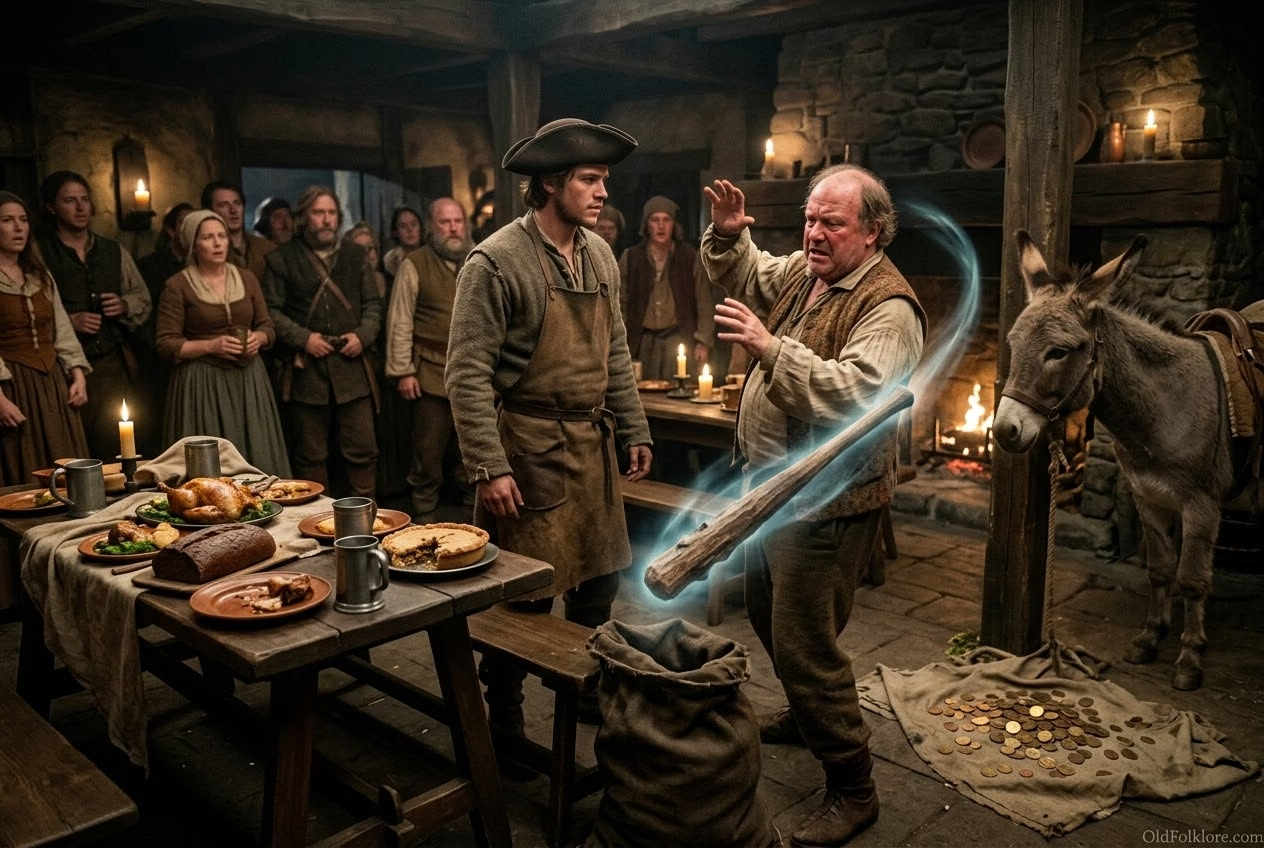
Then he shouted, “Out of the sack, Cudgel!”
At once, the cudgel sprang out and began beating the innkeeper.
The man tried to escape, but the cudgel continued striking him. The more he cried for mercy, the more fiercely it beat him.
At last, the exhausted innkeeper fell to the ground and begged the young man to stop the punishment.
The turner demanded that he return the wishing table and the golden ass he had stolen from the two older brothers.
The innkeeper, unable to endure any more blows, agreed to give back both treasures. He pleaded with the turner to call off the cudgel.
The young man agreed to show mercy once the stolen property had been returned. He gave the command, “Into the sack, Cudgel!”
The cudgel immediately stopped beating the innkeeper and returned to the sack.
The turner had succeeded where his brothers had failed. He had recovered the treasures through alertness and the magical protection his master had given him.
The Brothers Return Home in Triumph
The next morning, the youngest son set out for home with the wishing table and the golden ass. He also carried his own magical sack.
When he arrived, his father was delighted to see him. The tailor asked what trade he had learned and what he had brought back from his travels.
The young man explained that he had become a turner and showed his father the cudgel in the sack.
At first, the tailor was unimpressed. A simple stick did not seem like a valuable reward for years of training.
The youngest son explained how the cudgel had helped him recover the two stolen treasures from the dishonest innkeeper.
He then suggested that the family invite their relatives and friends to celebrate. He promised that everyone would receive food and drink, and that he would share gold with them.
The tailor gathered the family and their guests together, although he was still uncertain about the claims his youngest son had made.
The turner spread a cloth on the floor and brought out the golden ass.
He asked his second brother to give the animal its command.
The miller said, “Bricklebrit!”
Immediately, gold pieces poured from the donkey’s mouth onto the cloth. The gold continued to fall until everyone present had collected as much as they could carry.
The guests watched in amazement as the young man demonstrated the power of the magical animal.
Then the turner brought out the wishing table.
He asked his eldest brother to speak the words that would make it cover itself.
The carpenter said, “Table, cover thyself!”
At once, the table was filled with delicious dishes. There was enough food for everyone, and the guests sat down to enjoy a magnificent meal.
The tailor had never experienced such a feast in his own home. His three sons were together again, and the family no longer had to live in the same poverty and uncertainty.
The tailor put away his needle, thread, measuring stick and other working tools. He and his sons lived happily, surrounded by the comforts their extraordinary gifts had brought them.
The story leaves one final question for its readers, the fate of the goat whose lies had caused the tailor to drive his sons away.
Explore our complete Historic Folklore & Fairy-Tale Collections archive.
Moral Lesson
Honesty, patience and careful judgement are important. The tailor’s quick decision to trust the goat without properly examining the facts cost him the company of his sons. The brothers’ experiences also show the value of learning a trade, recognising dishonesty and using good judgement to overcome difficulties.
Knowledge Check
1. Why did the tailor’s three sons take turns caring for the goat?
The goat provided milk for the family and needed to be taken out to pasture each day.
2. Why did the tailor drive his sons away?
The goat falsely claimed that she had not been fed properly, and the tailor believed her instead of his sons.
3. What magical gift did the eldest son receive?
He received a wishing table that produced a fine meal whenever he spoke the words, “Table, cover thyself!”
4. What could the golden ass do?
When placed on a cloth and given the command “Bricklebrit,” it produced gold pieces from its mouth.
5. How did the youngest son recover his brothers’ treasures?
He used the magical cudgel in his sack to punish the dishonest innkeeper until the man returned the wishing table and golden ass.
6. How did the family celebrate their reunion?
The youngest son demonstrated the powers of the golden ass and wishing table, providing gold and a magnificent meal for the family and their guests.
Source
Jacob Grimm and Wilhelm Grimm, Grimm’s Household Tales, translated by Margaret Raine Hunt, 1884, Tale 36, “The Wishing Table, the Gold Ass, and the Cudgel in the Sack.”
Explore More Brothers Grimm Tales
- The Golden Goose: A Brothers Grimm Fairy Tale
- The Bremen Town Musicians: Grimm Fairy Tale
- Clever Hans: A Brothers Grimm Fairy Tale
- The Girl Without Hands: A Grimm Fairy Tale
- The Devil with the Three Golden Hairs: Grimm Tale
- The Louse and the Flea: A Grimm Fairy Tale
- The Three Languages: Grimm Fairy Tales
- Clever Elsie: A Brothers Grimm Fairy Tale