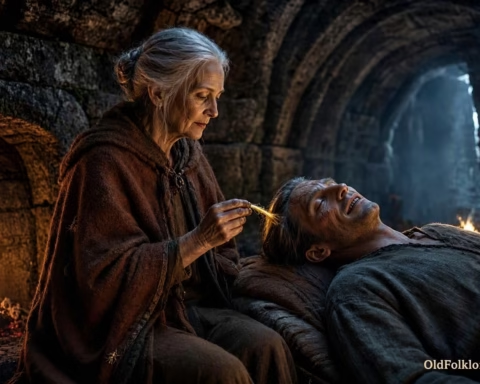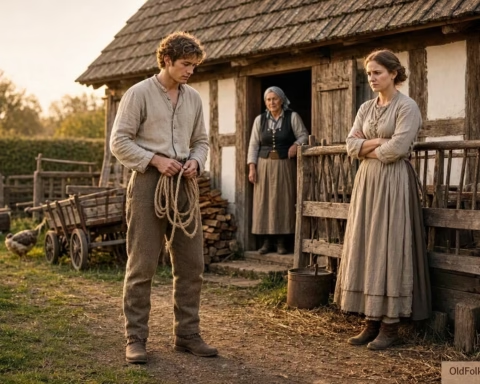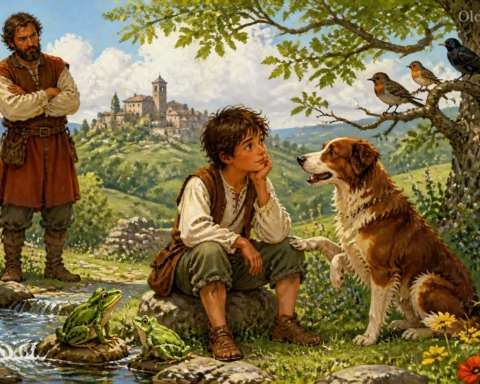
The Singing Bone is a dark German fairy tale collected by Jacob and Wilhelm Grimm. It follows two brothers who attempt to defeat a dangerous wild boar in exchange for the king’s daughter. Although the younger brother succeeds through courage and unexpected help, his elder brother’s jealousy leads to betrayal. Years later, a mysterious discovery exposes the crime and brings the truth to light.
The Wild Boar That Terrified the Kingdom
In a certain kingdom, the people lived in fear of a terrible wild boar. The animal destroyed farmers’ fields, killed cattle and attacked people with its sharp tusks. Its strength made it so dangerous that nobody dared to enter the forest where it lived.
The king wanted to free his kingdom from this threat. He promised a great reward to anyone who could capture or kill the beast. Eventually, he announced an even greater prize: whoever defeated the wild boar would marry his only daughter.
The promise attracted two brothers who came from a poor family. Both declared themselves willing to undertake the dangerous task, but their reasons differed.
The elder brother was clever and calculating. He wanted to win the princess out of pride and ambition. The younger brother, by contrast, was innocent and kind-hearted. He accepted the challenge with a sincere desire to help rid the kingdom of the dangerous animal.
The king instructed the brothers to enter the forest from opposite sides so that they would have a better chance of finding the boar.
The elder brother entered from the western side, while the younger brother took the eastern route.
The Younger Brother Receives a Magical Spear
As the younger brother walked through the forest, a little man suddenly appeared before him. The stranger carried a black spear.
Recognising the young man’s good heart, the little man offered him the weapon.
“I give you this spear because your heart is pure and good,” he explained. “With it, you can attack the wild boar without suffering any harm.”
The younger brother gratefully accepted the gift. He took the black spear and continued through the forest without fear.
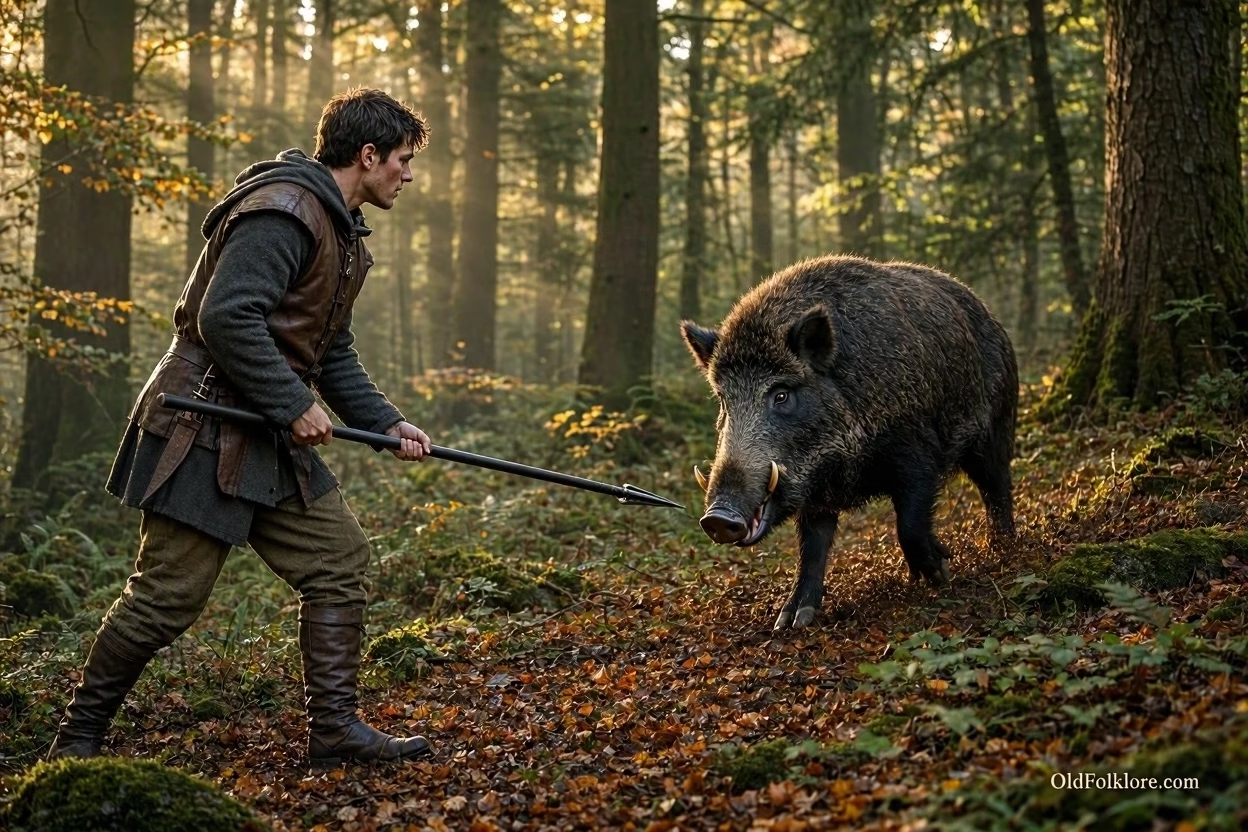
Before long, he encountered the enormous wild boar. The beast charged at him with all its strength, determined to attack.
The young man stood his ground and pointed the spear towards the approaching animal. Driven by its own fury, the boar rushed straight into the weapon. The spear pierced its heart, killing it.
The danger that had troubled the kingdom was over.
The younger brother lifted the dead boar onto his back and began carrying it towards the king. He had completed the difficult task through courage and the help of the mysterious little man.
However, his success would soon awaken a terrible jealousy.
Explore more stories from our Brothers Grimm Tales collection.The Elder Brother’s Betrayal
As the younger brother emerged from the forest, he came to a house near its entrance. People inside were drinking wine and dancing.
His elder brother had already entered the house. Rather than searching seriously for the dangerous boar, he had decided to drink until he felt brave enough to face it.
When he saw his younger brother approaching with the dead animal, envy filled his heart. The younger man had accomplished what he himself had not dared to do.
The elder brother concealed his jealousy and welcomed him warmly.
“Come in, dear brother,” he said. “Rest and refresh yourself with a cup of wine.”
Trusting his brother, the younger man accepted the invitation. He entered the house, rested and explained how the little man had given him the black spear that enabled him to kill the boar.
The elder brother listened carefully. He learned the details of the encounter and understood that his younger brother had secured the reward.
He kept the young man at the house until evening. When they finally left together, darkness had fallen.
Their journey took them towards a bridge crossing a brook. As they reached it, the elder brother allowed the younger man to walk ahead.
When the younger brother had reached the middle of the bridge, his elder brother struck him from behind with such force that he fell dead.
The elder brother had murdered his own brother to steal the reward.
He buried the body beneath the bridge, took the dead boar and carried it to the king. He claimed that he had killed the beast himself.
The king believed him and gave him his only daughter in marriage.
When the younger brother failed to return, the elder brother explained that the wild boar must have killed him. Everyone accepted this explanation, unaware of the terrible truth.
The murderer had gained the princess and the reward he desired, but he could not keep his crime hidden forever.
The Mysterious Singing Bone
Years passed.
One day, a shepherd was driving his flock across the bridge where the younger brother had been buried. As he looked down towards the sand beneath it, he noticed a small bone that was remarkably white.
The shepherd thought the bone would make a useful mouthpiece for his horn. He climbed down, picked it up and fashioned it into the instrument.
When he blew through it for the first time, something extraordinary happened.
The bone began to sing by itself.
Its song told a chilling story. It revealed that the person whose bone had become the mouthpiece had lain beside the water for a long time. It also declared that his own brother had killed him for the boar and taken the king’s daughter as his wife.
The shepherd was astonished. He had never encountered a horn that could sing without anyone controlling its words.
Realizing that the discovery was important, he decided to take the instrument to the king.
The Truth Comes to Light
When the shepherd arrived at the king’s court, he showed the king the remarkable horn.
As soon as the shepherd played it, the bone sang the same words again. Its message revealed the murder and identified the motive behind it.
The king listened carefully and understood what the song meant. He ordered his servants to investigate the place beneath the bridge.
When the ground was dug up, they discovered the complete skeleton of a murdered man.
The discovery confirmed that a terrible crime had taken place. The elder brother could no longer escape responsibility for what he had done.
The bone had revealed the truth that he had tried to bury.
The king ordered the wicked brother to be sewn into a sack and drowned as punishment for the murder.
Meanwhile, the remains of the younger brother received an honorable burial. His bones were laid in a beautiful tomb in the churchyard.
The younger brother had died because of his elder brother’s jealousy, but the truth eventually emerged. The murderer’s deception could not erase the crime or prevent justice from being served.
Explore our complete Historic Folklore & Fairy-Tale Collections archive.
Moral Lesson
Jealousy and greed can lead people to commit terrible acts, even against those closest to them. The story also teaches that wrongdoing may remain hidden for years, but the truth can eventually come to light.
Knowledge Check
1. Why were the people of the kingdom afraid of the wild boar?
The boar destroyed fields, killed cattle and attacked people with its tusks.
2. What reward did the king promise to whoever defeated the wild boar?
He promised that the successful person would marry his only daughter.
3. How did the younger brother kill the wild boar?
A little man gave him a magical black spear. When the boar charged, it ran into the spear and was killed.
4. Why did the elder brother murder the younger brother?
He was jealous of the younger brother’s success and wanted to claim the reward and marry the princess himself.
5. How was the murder eventually discovered?
A shepherd made a mouthpiece for his horn from a bone found beneath the bridge. The bone sang a message revealing the murder, leading the king to order an investigation.
6. What happened to the two brothers at the end of the story?
The elder brother was sewn into a sack and drowned as punishment. The younger brother’s remains were buried in a beautiful tomb in the churchyard.
Source
Jacob Grimm and Wilhelm Grimm, Household Tales, translated by Margaret Hunt, 1884, Tale 28, “The Singing Bone” (German title: “Der singende Knochen”).