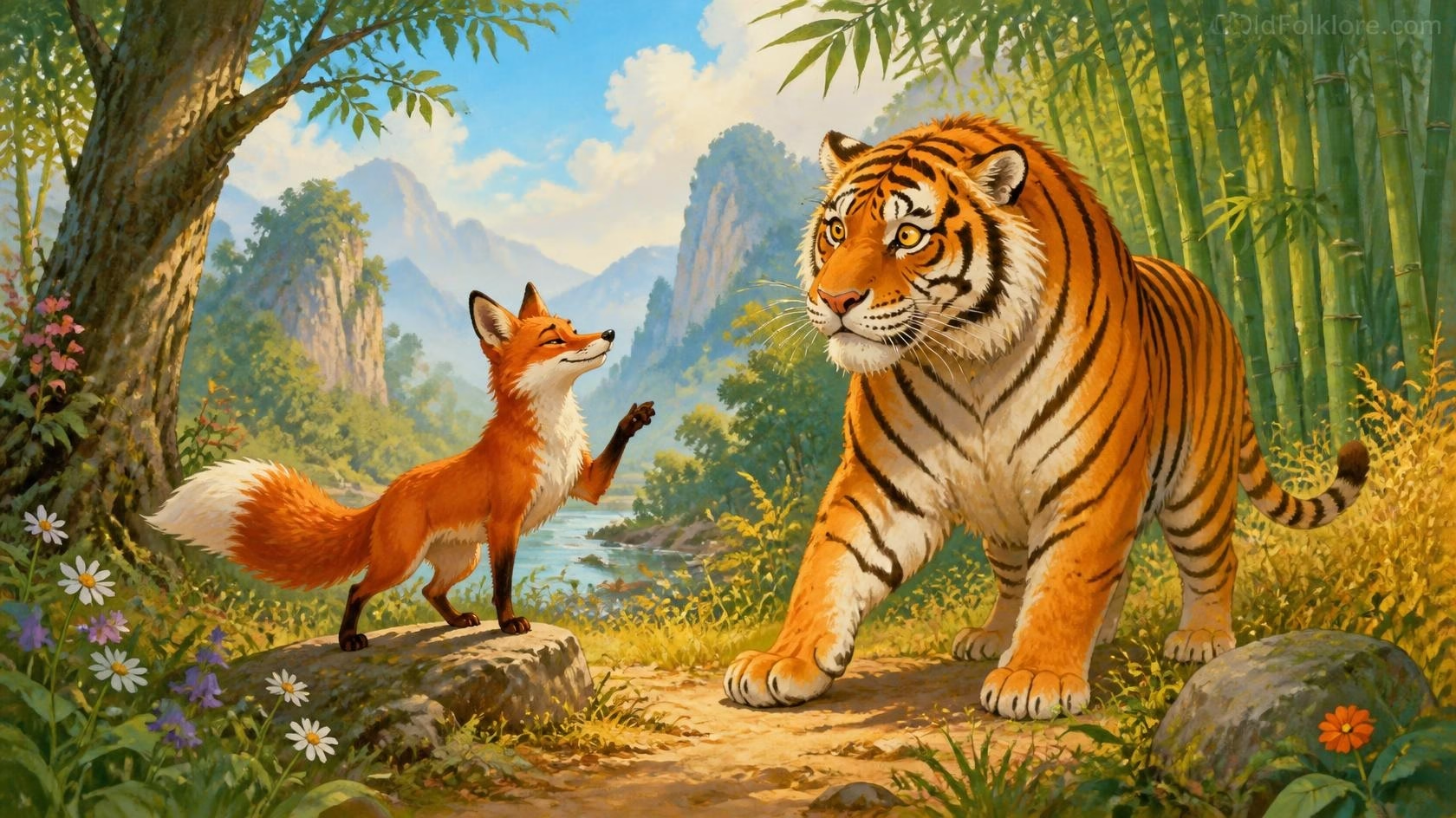
One day, a fox found himself face-to-face with a tiger. The enormous predator bared his sharp teeth, extended his claws and prepared to make a meal of the smaller animal. To the tiger, the fox appeared to be nothing more than an easy catch, with little chance of escaping his powerful jaws.
But the fox was not ready to surrender. Although he was smaller and weaker, he possessed something that the tiger had underestimated: a clever mind.
Instead of running away, the fox stood his ground and addressed the tiger boldly.
“Why do you assume that you are the only king among the beasts?” he asked. “Your courage is nothing compared with mine. If you doubt my words, walk behind me along the road. Let us see whether the people we meet are brave enough to stand before me. If they see me and show no fear, you may eat me.”
Explore more stories from our The Chinese Fairy Book collection.
The tiger paused to consider the challenge. Curious to discover whether the fox was telling the truth, he agreed to follow him.
With the tiger trailing behind, the fox set off along a broad highway. He walked confidently, as though he had nothing to fear and the entire world belonged to him. Behind him came the tiger, whose mere presence was enough to frighten anyone who caught sight of him.
Before long, travellers appeared on the road. When they noticed the tiger approaching behind the fox, terror seized them. Some turned and ran, while others hurried away as quickly as they could. None dared remain in the path of the fearsome predator.
The fox watched them flee and continued walking until he was certain that the tiger had seen what happened. Then he turned towards his companion with an air of triumph.
“Well,” he said, “what do you think now? I walked ahead of you, and the people saw me first. Yet they were so frightened that they ran away before you even came near them. Surely you can see how greatly they fear me.”
The tiger looked back at the empty road. He had witnessed the travellers fleeing, and he had heard the fox’s confident explanation. But he failed to understand the real reason behind their terror.
He had not realised that the people were afraid of the tiger himself, not the fox walking in front of him.
Convinced that he had encountered an animal more powerful and frightening than himself, the tiger tucked in his tail and fled.
The fox had escaped being eaten, not because he possessed greater strength or inspired greater fear, but because he had cleverly made the tiger misunderstand what he had witnessed. The smaller animal had turned the larger beast’s own fear and reputation into a means of survival.
And so the fox walked away unharmed, leaving the tiger to run from a danger that had never existed.
Explore more stories from our Lafcadio Hearn’s Kwaidan collection.
Moral
Appearances can deceive, and wisdom can overcome strength. A clever person can sometimes escape a powerful opponent by understanding a situation better than the opponent does. The story also warns against drawing conclusions without examining the real reasons behind what we see.
Knowledge Check
1. Why did the tiger initially want to eat the fox?
The tiger considered the fox an easy prey because he was smaller and weaker.
2. How did the fox persuade the tiger to spare him temporarily?
He challenged the tiger to follow him along the highway and observe how people reacted to him.
3. Why did the travellers run away?
They were frightened by the tiger following behind the fox.
4. What mistake did the tiger make?
He believed the travellers feared the fox, failing to recognise that their fear was caused by his own presence.
5. What is the central lesson of the fable?
Cleverness can overcome physical strength, and appearances can lead to false conclusions.
Source
The retelling is based on “The Fox and the Tiger,” Chapter XI of The Chinese Fairy Book, edited by Richard Wilhelm and translated from original sources by Frederick H. Martens. The book was published in New York by Frederick A. Stokes Company in 1921. The tale appears on printed page 27. The original collection describes it as a universally known fable traditionally narrated.