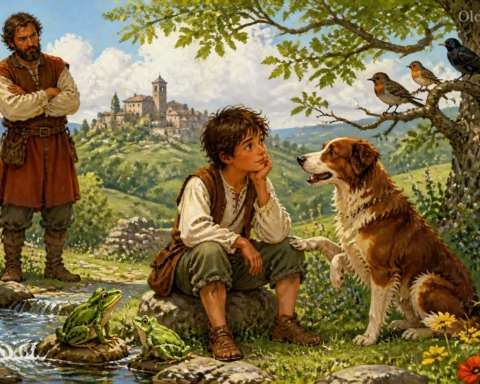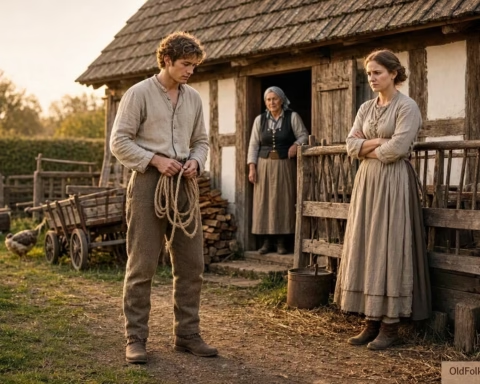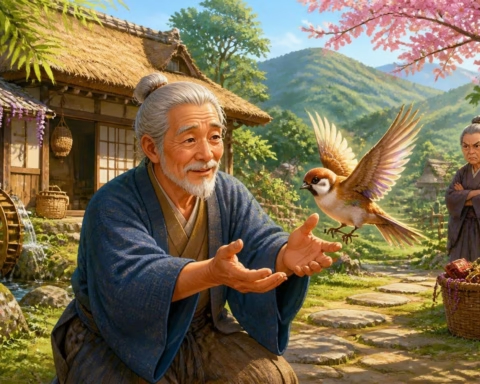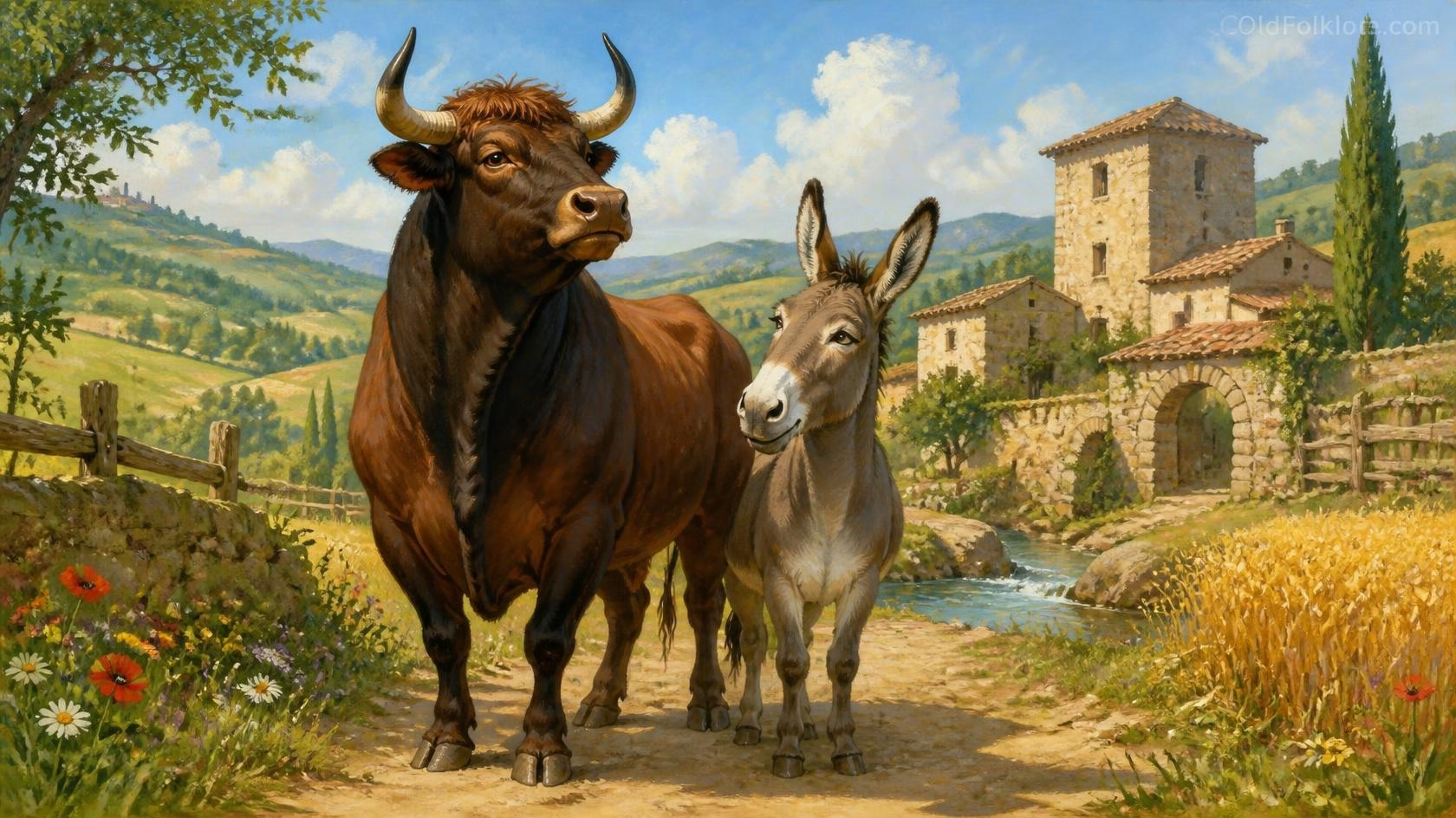
There once lived a wealthy merchant who owned vast herds of cattle, camels, bull, Ass and other livestock. He had a wife and children, and his experience in farming had made him prosperous. Yet he possessed a remarkable secret: by the grace of Allah, he could understand the languages of animals and birds.
There was one condition attached to this extraordinary gift. If he ever revealed what he understood, he would die. Fearing the consequences, the merchant kept his ability to himself.
Among his animals were a Bull and an Ass, whose stalls stood beside each other. One day, while the merchant sat nearby with his servants and children, he overheard the Bull complaining to the Ass.
Explore more stories from our The Arabian Nights collection.
“You have an easy life,” the Bull said bitterly. “Your stall is clean, your food is good, and your water is fresh. You sleep comfortably while I am dragged out before sunrise and forced to plough the fields until evening. The yoke wounds my neck, my legs ache, and I return home exhausted. Even my food is mixed with dirt and chaff. You are treated with kindness, while I suffer every day.”
The Ass listened before answering.
“You work hard because you do not know how to protect yourself,” he said. “You exhaust yourself for someone else’s benefit, then return for another day’s punishment. If you want your suffering to end, you must make your master believe that you are ill.”
He explained his plan. The next morning, when the Bull was taken to the fields, he should refuse to work. Even if the ploughman beat him, he should repeatedly lie down. Once returned to his stall, he should refuse his food and pretend to be too sick to eat.
“Continue this for a few days,” the Ass advised, “and you may finally be allowed to rest.”
The Bull thanked him warmly, convinced that he had found a true friend. The merchant, who had heard every word, understood exactly what the Ass was planning.
The following morning, the ploughman took the Bull into the fields as usual. But the animal followed the Ass’s instructions. He resisted the plough, lay down repeatedly and refused to cooperate despite being beaten. By evening, he had done almost no work.
Back at the farm, the Bull turned away from his food and lay apart from his manger. When the ploughman found him the next morning, the untouched fodder and the animal’s miserable appearance convinced him that the Bull was seriously ill.
He hurried to report the matter to the merchant.
“Take the Ass instead,” the merchant ordered. “Put the yoke on him and make him do the Bull’s work.”
The ploughman obeyed. All day, the Ass was forced to pull the plough. When he weakened, the man beat him and drove him onwards until his sides were sore and his neck was wounded. By the time he returned to the stable, he could barely walk.
Meanwhile, the Bull had spent the day resting comfortably and eating his fill. Believing that his friend’s advice had worked perfectly, he welcomed the Ass that evening and thanked him enthusiastically.
The Ass was too exhausted and angry to reply. He now understood the cost of his clever scheme.
“I was happy before I interfered,” he thought. “My own eagerness to advise another has brought this misery upon me.”
He resolved to find a way out of the trouble he had created.
That night, the Bull asked what he should do the following morning. Delighted with his success, he announced that he intended to continue refusing his food and pretending to be sick.
The Ass immediately warned him against it.
“I overheard our master speaking to the herdsman,” he explained. “If you refuse to work again and leave your food untouched, he intends to send you to the butcher. Your meat will be distributed to the poor, and your hide will be used for leather.”
Terrified by this news, the Bull abandoned his plan. He promised to eat his food, rise when summoned and return to work.
The merchant, who had once again overheard their conversation, was greatly amused. The next morning, when he saw the Bull spring to his feet, swish his tail and frisk about energetically, he laughed so uncontrollably that he fell backwards.
His wife was astonished.
“What has made you laugh so much?” she demanded.
The merchant refused to explain. He told her only that he had witnessed something amusing but could not disclose it without losing his life.
His wife would not accept this answer. She insisted that he tell her the secret, even if revealing it killed him. The merchant explained his vow and begged her to stop questioning him, but she continued to press him, declaring that she would leave him if he refused.
At last, exhausted by her demands, the merchant summoned their relatives, neighbours and the local judge. He intended to make his final arrangements, reveal his secret and accept the death he believed would follow. He loved his wife deeply; she was his cousin, the mother of his children, and the companion with whom he had shared a long life.
The assembled family and neighbours pleaded with his wife to reconsider. They warned her that her insistence might cost her husband his life. Still, she refused to change her mind.
The merchant withdrew to an outbuilding to perform his ablutions before returning to reveal the secret. There, he overheard a conversation between one of his dogs and the household’s rooster.
The dog rebuked the rooster for behaving cheerfully when their master was preparing to die. The rooster, however, was unimpressed by the merchant’s predicament.
“Our master has little sense,” the rooster declared. “I manage dozens of hens, yet he cannot manage a single wife.”
When the dog asked what the merchant should do, the rooster recommended taking a bundle of mulberry twigs and beating his wife until she abandoned her demands.
The merchant listened, then returned to the house with a plan of his own. He prepared the twigs, called his wife into a private room under the pretence of revealing his secret, and locked the door.
Instead of explaining his gift, he beat her. She eventually begged him to stop, promising never again to demand an answer that might cost him his life.
He ceased, and the two emerged from the room. Their waiting relatives were relieved that the merchant had survived, and the household returned to its former routine. The story concludes that the merchant and his wife lived together until their deaths.
The Lesson Reaches the Vizier’s Daughter
The merchant’s tale was not told merely to entertain. It was a warning offered by a father who feared for his daughter’s life.
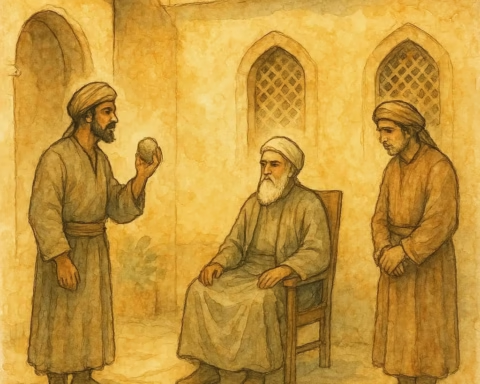
In the royal court, the king’s vizier had a daughter named Shahrazad, who had resolved to marry King Shahryar despite knowing the danger. The king had adopted a horrifying practice: after marrying a woman and spending the night with her, he ordered her execution the following morning.
Shahrazad’s father desperately tried to dissuade her. To make her understand the danger of acting without sufficient caution, he recounted the story of the Bull and the Ass, including the merchant’s desperate struggle to protect his secret.
But Shahrazad remained unmoved.
Her father then warned her that she might suffer the same fate as the merchant’s wife. He told her that if she persisted, he would deal with her as the merchant had dealt with his own wife. Still, Shahrazad refused to surrender her decision.
“I will go to the king myself,” she insisted, “and tell him that I asked you to arrange this marriage, but you refused.”
Her father realised that persuasion would not change her mind. He therefore went before King Shahryar and explained the situation, including his daughter’s determination to marry him.
The king reminded the vizier of his terrible decree. If Shahrazad spent the night with him, she would be executed the following morning. If the vizier failed to carry out the order, he would die in her place.
The vizier returned home in grief and told his daughter that the king had agreed to the marriage. Shahrazad, however, was joyful. She began preparing for the night and called her younger sister, Dunyazad, aside.
She instructed Dunyazad to ask for a story after the king had retired with her. Shahrazad intended to tell a tale so compelling that the king would want to hear its conclusion. If she could keep him listening until morning, she hoped to find a way to escape execution.
Dunyazad agreed to follow her instructions.
That night, the vizier brought Shahrazad to the palace. King Shahryar welcomed her, unaware of the plan she had formed. Before the night was over, Shahrazad asked permission to see her younger sister one last time. The king agreed, and Dunyazad was summoned to the chamber.
After the king had taken Shahrazad as his bride, the three eventually fell asleep. But when midnight arrived, Shahrazad awoke and signalled to her sister.
Dunyazad made the request they had planned.
“Dear sister, if you are not asleep, tell us a delightful new story to make the remaining hours of the night pass pleasantly.”
Shahrazad turned to the king and asked whether she might tell a story.
The king, restless and eager to hear something entertaining, gave his permission.
Shahrazad rejoiced. She began to speak, opening the first night of the Thousand Nights and a Night with a tale designed to hold the king’s attention.
The story of the Bull and the Ass had therefore served a purpose beyond its animal characters and their quarrel. It had become part of the chain of stories through which Shahrazad would attempt to save her own life.
Explore more stories from our Brothers Grimm Tales collection
Moral
The tale warns that advice can have consequences beyond what the adviser intends. The Ass’s cleverness saves the Bull from immediate hardship but transfers that hardship to himself. It also shows how fear, secrecy and the desire for control shape people’s decisions.
However, the story’s ending should not be taken to mean that violence is a justified way to resolve disagreement. Its portrayal of the merchant’s treatment of his wife reflects the narrative’s particular assumptions about authority and obedience, which modern readers can question.
Knowledge Check
1. Why did the Bull complain to the Ass?
The Bull was exhausted by daily ploughing and believed the Ass enjoyed a much easier life.
2. What advice did the Ass give the Bull?
He advised the Bull to pretend to be ill, refuse his food and resist working so that the master would give him a rest.
3. Why did the Ass regret his advice?
The merchant sent the Ass to do the Bull’s work, leaving the Ass exhausted and injured.
4. Why did the merchant laugh when he saw the Bull the next morning?
He knew from overhearing the animals that the Bull had been persuaded to resume his work after the Ass warned him of the threat of slaughter.
5. How does the tale connect to Shahrazad?
The vizier tells the story to discourage his daughter from marrying King Shahryar. Shahrazad refuses to change her mind and prepares to use storytelling to delay her execution.
Source
The Book of the Thousand Nights and a Night, Richard F. Burton translation, volume I, first published 1885. Project Gutenberg 3435.