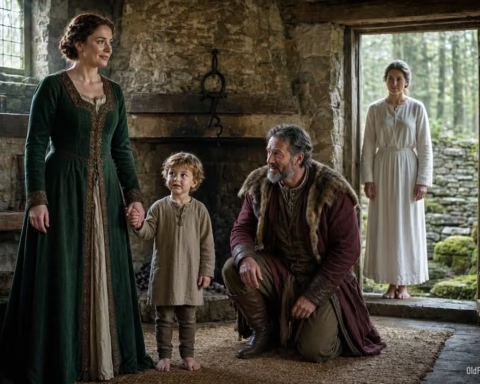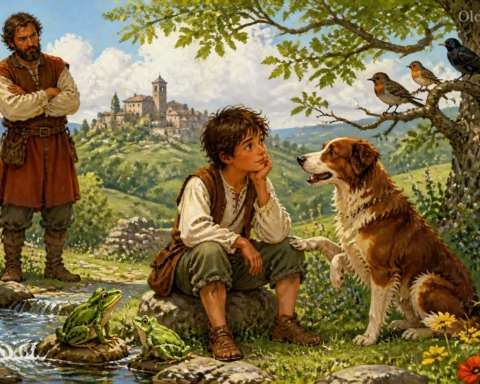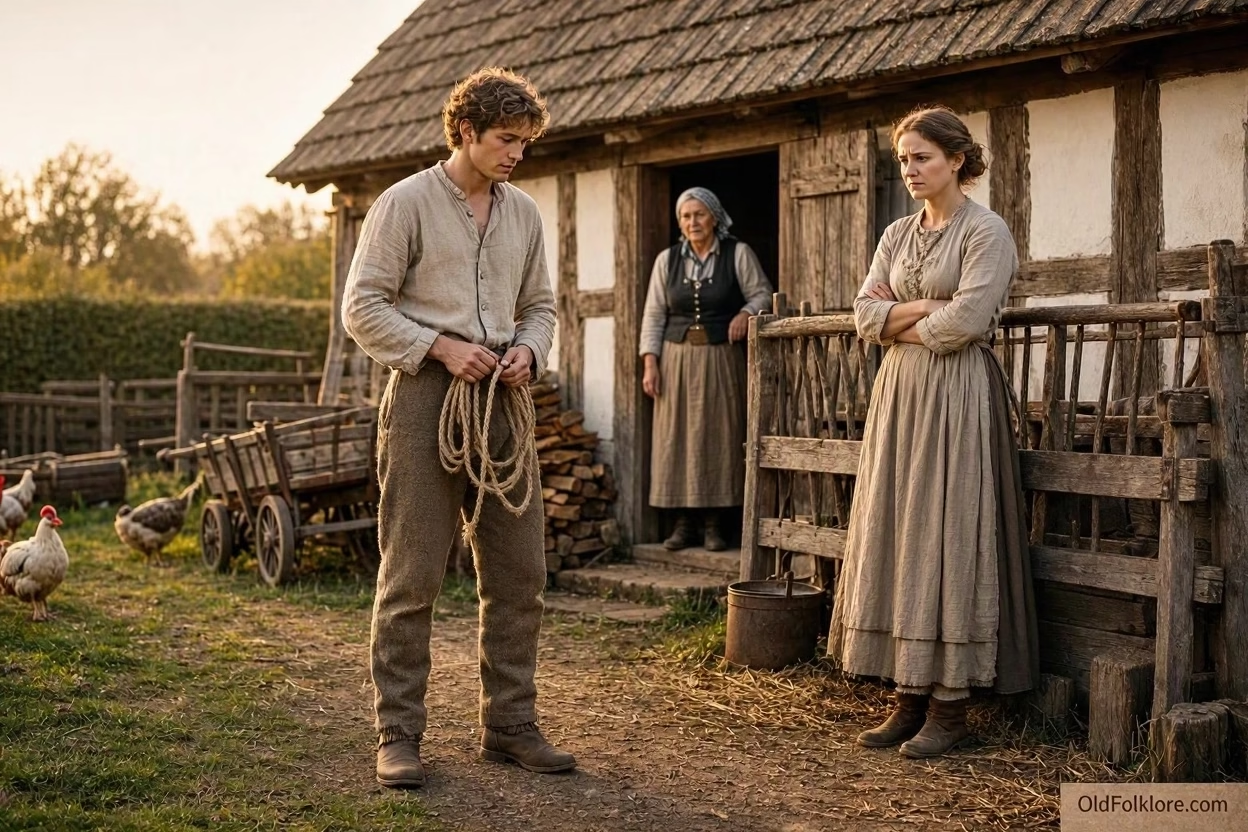
Clever Hans, also known as Der gescheite Hans, is a comic German folk tale collected by Jacob and Wilhelm Grimm. Its humour comes from a young man who repeatedly misunderstands how to handle gifts and respond to other people. Although his mother tries to correct his mistakes, Hans applies her advice inappropriately the next time he visits Gretel. The story builds through repetition until his final action produces an unexpected ending.
Hans Sets Out to Visit Gretel
Hans lived with his mother, who regularly reminded him to behave properly whenever he went out. She wanted him to learn how to conduct himself around other people, especially Gretel, the young woman he visited.
One morning, his mother asked him where he was going.
“Whither away, Hans?” she said.
“To Gretel,” he replied.
“Behave well, Hans.”
“Oh, I’ll behave well. Goodbye, Mother.”
“Goodbye, Hans.”
With that, Hans set off to visit Gretel. His mother expected him to remember her advice, but Hans had a habit of understanding instructions in a way that did not help him. He was willing to listen, yet he did not seem able to recognise what a sensible response required in practice.
When he arrived at Gretel’s home, she greeted him.
“Good day, Gretel,” said Hans.
“Good day, Hans. What do you bring that is good?” she asked.
Hans had brought nothing with him. However, rather than seeing her question as an opportunity to exchange something thoughtful, he answered honestly.
“I bring nothing. I want to have something given me.”
Gretel gave him a needle.
Hans accepted the gift. He did not consider how best to carry it home or ask Gretel whether she had anything else to tell him. Instead, he simply said goodbye.
“Goodbye, Gretel.”
“Goodbye, Hans.”
He left with the needle, apparently pleased to have received something from his visit.
The Needle and the Hay Cart
On his way home, Hans came upon a hay cart. He decided to stick the needle into the cart and then followed it along the road.
He did not put the needle safely into his clothing. Instead, he left it in the hay cart, where it could easily be lost.
When he reached home, he greeted his mother.
“Good evening, Mother.”
“Good evening, Hans. Where have you been?” she asked.
“With Gretel.”
“What did you take her?”
“I took nothing. I had something given me.”
“What did Gretel give you?”
“She gave me a needle.”
His mother wanted to know where the needle was. Hans explained that he had stuck it into the hay cart.
His mother was disappointed. She explained that he should have placed the needle in his sleeve instead of leaving it in a cart.
Hans listened to her correction.
“That was ill done, Hans,” his mother told him. “You should have stuck the needle in your sleeve.”
Hans accepted that he had made a mistake.
“Never mind,” he replied. “I’ll do better next time.”
His mother hoped he would remember the lesson. A needle was small and easily lost, and keeping it in his sleeve would have been a much more sensible way to carry it.
Yet Hans seemed to learn only the particular instruction she had given him, rather than the wider idea behind it. He had not understood that different objects needed to be handled in different ways.
Explore more stories from our Brothers Grimm Tales collection.
Hans Receives a Calf
The following day, Hans prepared to visit Gretel again.
His mother asked him where he was going.
“Whither away, Hans?”
“To Gretel, Mother.”
“Behave well, Hans.”
“I’ll behave well. Goodbye, Mother.”
“Goodbye, Hans.”
Hans went to Gretel’s home, where she greeted him once more.
“Good day, Hans,” she said.
“Good day, Gretel.”
She asked him what good thing he had brought her. As before, Hans had brought nothing, and he asked to receive something instead.
Gretel gave him a calf.
Hans accepted the animal and began his journey home. Remembering that his mother had criticized him for putting the needle in a hay cart, he tried to follow her advice in a different way.
He placed the calf on his head.
This was a foolish choice. The calf could not be carried comfortably in that position, and it began to kick him in the face.
Hans struggled with the animal but did not understand that he had made another mistake. His attempt to apply his mother’s earlier correction had led him to handle a much larger gift in an entirely unsuitable manner.
Eventually, he reached home.
“Good evening, Mother,” he said.
“Good evening, Hans. Where have you been?”
“With Gretel.”
“What did you take her?”
“I took nothing, but had something given me.”
“What did Gretel give you?”
“A calf.”
His mother asked where the calf was.
Hans explained that he had put it on his head and that it had kicked him in the face.
His mother was once again dismayed by his behaviour.
“That was ill done, Hans,” she told him. “You should have led the calf and put it in the stall.”
Hans acknowledged her correction, at least outwardly.
“Never mind,” he replied. “I’ll do better next time.”
His mother had now explained that a needle belonged in his sleeve and a calf should be led to its stall. She hoped that the next time he received something, he would think carefully before deciding what to do with it.
Hans, however, continued to follow instructions without understanding the judgement that made them sensible.
Gretel Agrees to Go with Hans
Hans returned to Gretel on another day.
As usual, his mother asked him where he was going and reminded him to behave well.
“To Gretel, Mother,” he replied.
“Behave well, Hans.”
“I’ll behave well. Goodbye, Mother.”
“Goodbye, Hans.”
When Hans reached Gretel’s home, she greeted him and asked what he had brought.
“Good day, Gretel.”
“Good day, Hans. What good thing dost thou bring?”
Hans gave his familiar answer. He had brought nothing, but he wanted something to be given to him.
This time, Gretel offered something different.
“I will go with thee,” she said.
Hans accepted her offer, but he did not understand how he should behave towards a person who had agreed to accompany him. He treated Gretel as though she were another possession that he needed to transport home.
He took a rope, tied her to it and led her to the rack, where he fastened her securely. He then scattered some grass for her.
Having completed what he believed was the proper arrangement, Hans left Gretel there and returned to his mother.
His Mother’s Advice About Gretel
When Hans arrived home, his mother greeted him.
“Good evening, Hans.”
“Good evening, Mother.”
“Where have you been?”
“With Gretel.”
“What did you take her?”
“I took her nothing.”
His mother then asked what Gretel had given him.
“She gave me nothing,” Hans answered. “She came with me.”
His mother wanted to know where he had left Gretel.
Hans explained that he had led her by a rope, tied her to the rack and scattered grass for her.
His mother was appalled. She had hoped that he would learn to treat Gretel with kindness, but he had treated her like an animal.
“That was ill done, Hans,” she told him. “You should have cast friendly eyes on her.”
Her advice meant that Hans should have shown Gretel affection and kindness. She wanted him to understand that a young woman who agreed to accompany him deserved to be treated with respect, not tied up and left beside a rack.
Hans again promised to do better.
“Never mind,” he said. “I’ll do better.”
His mother had now tried to guide him through several situations. Each time, she explained what he should have done after he had already made a mistake. Yet Hans continued to miss the meaning of her words.
The tale moves towards its strange conclusion when he attempts to act on her most recent advice.
Hans Makes His Final Mistake
Hans went into the stable. There, he cut out the eyes of the calves and sheep.
He then threw the eyes in Gretel’s face.
This was his attempt to follow his mother’s instruction that he should cast friendly eyes on Gretel. Instead of understanding the expression as advice to show affection, Hans interpreted it literally.
The result was disastrous for Gretel. She became angry, tore herself loose and ran away.
The tale concludes with the unexpected statement that Gretel became the bride of Hans.
This ending is part of the original Grimm story, despite the absurd and unpleasant chain of events that leads to it. The title Clever Hans is therefore commonly understood as ironic. Hans repeatedly receives advice but fails to understand its meaning, and his actions reveal the difference between merely hearing words and knowing how to apply them sensibly.
The story ends without explaining how Gretel’s anger is resolved or how she comes to marry Hans. Its final effect comes from the abruptness of that conclusion, which follows a succession of misunderstandings rather than a conventional courtship.
Explore our complete Historic Folklore & Fairy-Tale Collections archive.
Moral Lesson
Listen carefully to advice and understand its meaning before acting on it. Following words literally without considering the situation can lead to foolish and harmful decisions.
Knowledge Check
1. Where did Hans go when his mother first asked him about his plans?
He went to visit Gretel.
2. What gift did Gretel give Hans on his first visit?
She gave him a needle.
3. Why did Hans put the calf on his head?
He failed to understand his mother’s advice about carrying the needle and made another poor decision when handling the calf.
4. How did Hans treat Gretel when she agreed to go with him?
He tied her with a rope, led her to a rack and fastened her there, treating her like an animal.
5. What did Hans’s mother mean when she told him to cast friendly eyes on Gretel?
She meant that he should show Gretel kindness and affection.
6. Why is the title Clever Hans ironic?
Hans repeatedly misunderstands advice and behaves foolishly, showing that he does not understand the meaning behind the words he hears.
Source
Jacob Grimm and Wilhelm Grimm, Grimm’s Household Tales, translated by Margaret Raine Hunt, 1884, Tale 32, “Clever Hans” (German: “Der gescheite Hans”).
Explore more on Brothers Grimm Tales
- The Girl Without Hands: A Grimm Fairy Tale
The Louse and the Flea: A Grimm Fairy Tale - The Devil with the Three Golden Hairs: Grimm Tale