In Japanese supernatural folklore, some spirits are remembered not only for the fear they inspire but also for the human failings that led to their existence. Jikininki is one such figure. Associated with the consumption of human corpses, this hungry spirit appears in a tale about a travelling Buddhist priest whose search for shelter leads him into an unsettling encounter.
The story follows Musō Kokushi, a Zen priest travelling through the mountainous province of Mino. After receiving an unexpected welcome in a small village, he chooses to remain behind when the villagers abandon a dead man’s body for the night. What he witnesses reveals a disturbing secret about a mysterious hermit living nearby and the spiritual consequences of neglecting one’s religious responsibilities.
The Priest Loses His Way
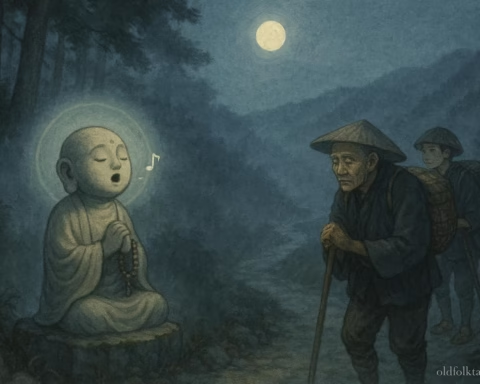
Musō Kokushi was travelling alone through the mountains of Mino when evening approached. The roads had become unfamiliar, and he could not find a suitable place to spend the night.
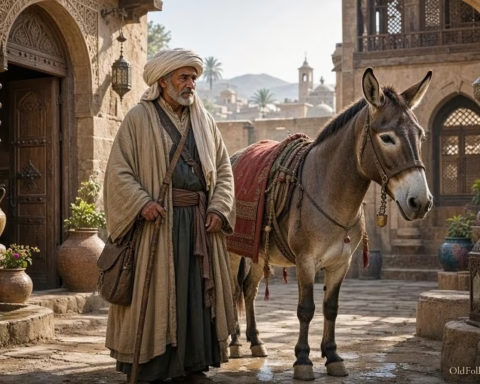
As he looked across the landscape, he noticed a small hermitage standing on a hill. Hoping to receive shelter, he climbed towards it and asked the elderly priest who lived there for permission to stay.
The hermit responded harshly and refused to accommodate him. Rather than offering hospitality, he directed Musō towards a nearby village where he might find somewhere to rest.
Musō continued his journey until he reached a small settlement containing fewer than twelve farm cottages. The villagers received him warmly, and their headman welcomed him into his home. Between forty and fifty people had gathered in the main room, but the visitor was given a separate room where he could eat and sleep.
Explore more stories from our Lafcadio Hearn’s Kwaidan collection.
After the uncomfortable encounter at the hermitage, the villagers’ kindness was a welcome relief. Musō settled down for the night, unaware that the household would soon face an unusual disturbance.
A Death in the Village
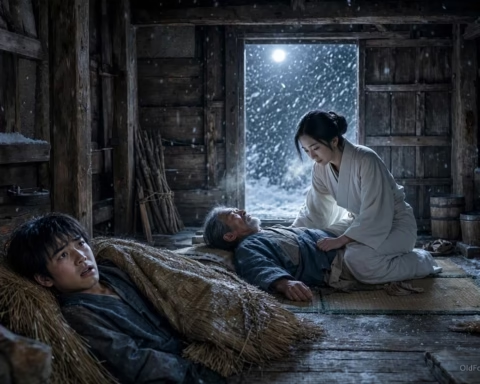
Shortly before midnight, Musō was awakened by the sound of loud weeping. The headman’s eldest son entered his room and explained that his father had died only a few hours earlier.
The young man apologised for disturbing the priest and explained that the family had chosen not to tell him earlier because they did not wish to trouble their guest.
He then described a strange custom followed by the villagers whenever someone died. After a death, everyone had to leave the village for the night. They would make the necessary offerings and prayers before departing, leaving the corpse alone inside the house.
The villagers followed this practice because disturbing events were believed to occur in houses where the dead had been left. The young man offered to help Musō find accommodation in another village, where he could spend the remainder of the night safely.
However, Musō refused to leave. As a Buddhist priest, he considered it his responsibility to perform the necessary funeral service and remain beside the dead man. He therefore decided to stay in the house while the entire village departed.
The Terrifying Visitor
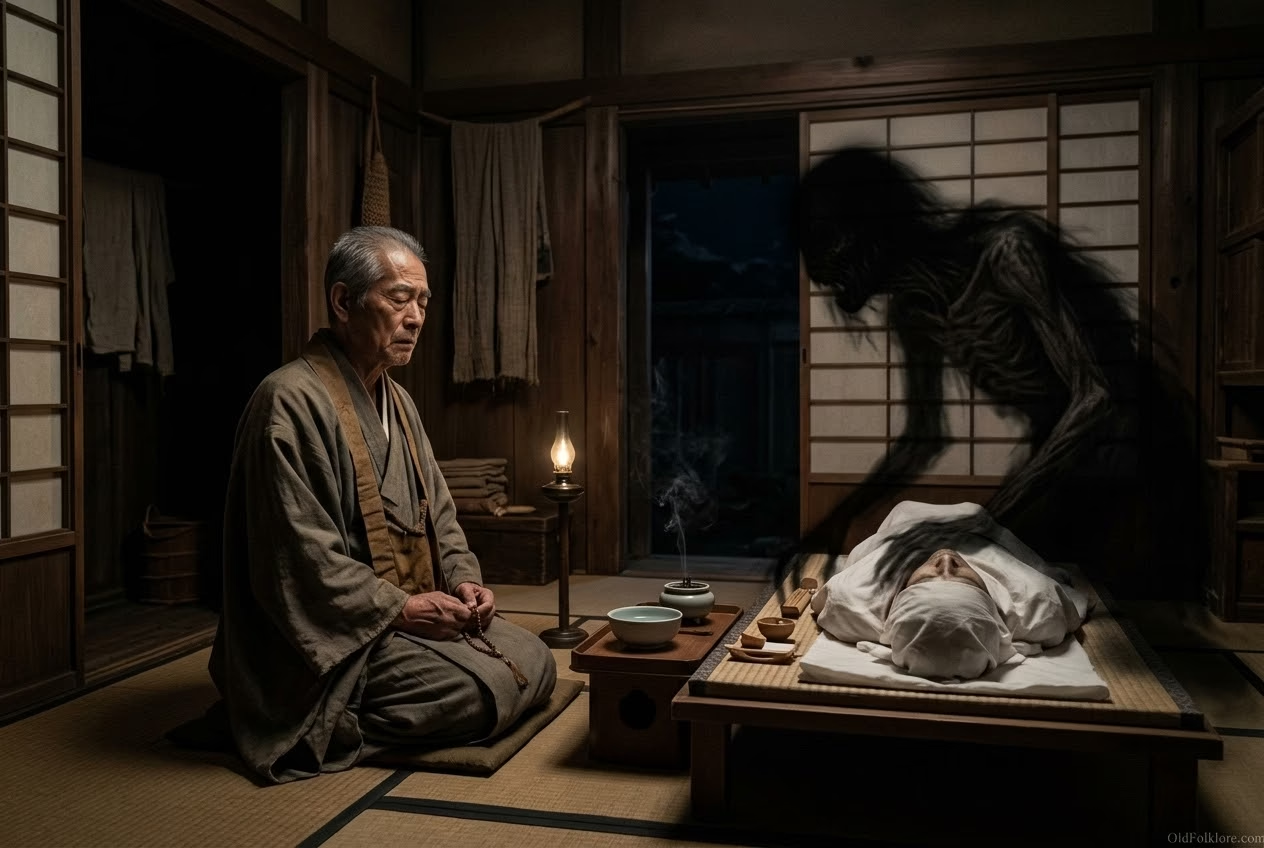
After the villagers had left, Musō began the funeral rites. He recited the appropriate prayers and meditated beside the dead man’s body, determined to fulfil his religious duty.
The hours passed quietly until the deepest part of the night. Then, something entered the room.
A vast and indistinct Shape appeared before him. Its presence was so terrifying that Musō became unable to move or speak. He could only remain where he was, watching helplessly as the mysterious visitor approached the corpse.
The Shape began consuming the dead man. It devoured the entire body, including the hair, bones and shroud. It also consumed the food offerings that had been placed for the deceased.
Musō could do nothing to prevent the horrifying scene. Once the corpse and offerings had disappeared, the enormous Shape vanished as mysteriously as it had arrived.
The priest remained in the house until morning, deeply shaken by what he had witnessed.
The Villagers Reveal an Old Mystery
When daylight came, the villagers returned to the house. They were not surprised to discover that the corpse and offerings had disappeared. Their reaction suggested that the incident was not entirely unfamiliar to them.
The headman asked Musō whether he had seen the cause of the disappearance. The priest described the enormous Shape that had entered during the night and consumed everything before vanishing.
The villagers listened carefully. They explained that his account agreed with what had been described in older reports of similar incidents. The mysterious visitor was connected to the strange events that had made their nighttime custom necessary.
Musō then remembered the elderly priest at the hilltop hermitage. He asked the headman about the man and his place of residence.
The answer surprised him. According to the headman, there was no hermitage on that hill and no priest had lived there for generations. Musō had seen something that the villagers could not explain through ordinary experience.
Determined to understand the mystery, he left the village and returned to the hill.
The Hermit’s Terrible Confession
When Musō arrived at the hermitage again, the elderly priest received him very differently. Instead of refusing him, the hermit welcomed him and bowed repeatedly, expressing deep shame.
Musō told him there was no need to feel ashamed about refusing him accommodation the previous evening. He explained that he had received kindness from the villagers and had not suffered because of the refusal.
The hermit clarified that his shame had nothing to do with denying the priest a place to sleep. He was ashamed because Musō had witnessed his real form during the night. The Shape that had consumed the corpse and offerings was none other than the elderly hermit himself.
He then revealed the reason for his terrible condition.
Long ago, he had been the only Buddhist priest in that lonely region. People travelled from distant places to bring their dead to him, trusting him to perform the necessary religious services.
However, he had not treated his responsibility with the seriousness it deserved. Instead of concentrating on the sacred duty of conducting funeral rites, he had become concerned only with the food and clothing he received from his profession.
His work had become a means of personal gain rather than an expression of religious devotion. He performed the ceremonies without giving proper attention to their spiritual purpose.
According to his confession, this selfishness and impiety brought about his terrible fate. After death, he was reborn as a Jikininki, a spirit condemned to consume the corpses of people who died in the district.
A Plea for Spiritual Release
The hermit understood the horror of his existence and could no longer hide the shame associated with it. He begged Musō to perform a Segaki service and pray for him.
A Segaki is a special Buddhist service associated with making offerings to hungry spirits. The hermit hoped that the prayers would help release him from the miserable condition into which he had fallen.
Musō listened to his request. However, before anything further could happen, the mysterious scene changed.
The elderly priest and the hermitage suddenly disappeared. Musō found himself kneeling in the middle of tall grass, beside an ancient stone tomb covered in moss.
The tomb was a five-ring stone monument, traditionally associated with Buddhist symbolism and the five elements. The hermit and his dwelling had been no ordinary part of the landscape. The priest had encountered the spiritual remains of a man whose former religious life had ended in a terrible transformation.
The encounter left Musō with the knowledge that the terrifying Jikininki was not simply a creature driven by hunger. It was also the consequence of a life in which sacred responsibilities had been neglected for personal benefit.
Explore our complete Historic Folklore & Fairy-Tale Collections archive.
Moral Lessons
The story of Jikininki highlights the importance of sincerity and responsibility. The hermit had been entrusted with the duty of conducting funeral services, but he allowed personal gain to become more important than the spiritual purpose of his work. His fate serves as a warning against treating important responsibilities carelessly or using them merely for selfish advantage.
It also explores compassion towards those suffering the consequences of their actions. Although the hermit had become a terrifying spirit, he recognised his wrongdoing and sought spiritual assistance. Musō’s willingness to listen to his confession reflects the importance of prayer, mercy and the possibility of spiritual release.
Knowledge Check
1. Who was Musō Kokushi?
Musō Kokushi was a Zen Buddhist priest travelling alone through the mountainous province of Mino.
2. Why did the elderly priest initially refuse Musō shelter?
The elderly priest refused to accommodate him and directed him towards a nearby village.
3. Why did the villagers leave their homes after the headman’s death?
Their custom required everyone to leave the village overnight after a death because strange events were believed to occur in houses containing corpses.
4. What happened to the dead man’s body during the night?
A vast and mysterious Shape entered the room and consumed the corpse, including its hair, bones and shroud, as well as the food offerings.
5. Why had the elderly hermit become a Jikininki?
He confessed that he had performed funeral services for personal gain rather than with proper religious devotion, and believed this selfishness had caused his terrible rebirth.
6. What did the hermit ask Musō to do for him?
He begged Musō to perform a Segaki service and pray for his release from his existence as a Jikininki.
Source
This retelling is based on “Jikininki,” a story in Lafcadio Hearn’s Kwaidan: Stories and Studies of Strange Things, published in 1904.
Explore More Lafcadio Hearn’s Kwaidan