In a Dahomean narrative about Legba and his siblings, a simple disagreement over the division of funeral gifts leads to an unexpected discovery. Three siblings receive payment for their musical performance, but they cannot agree on who should receive the final cowry.
Their disagreement becomes increasingly serious as they reject the suggestions of people who try to help them. Eventually, Legba introduces a different solution by creating a dog and allowing the animal to settle the matter.
The dog’s decision brings the quarrel to an end and establishes its place in the relationship between humans, gods and ancestors. The story also explains how Legba, Minona and Aovi receive different responsibilities, with Legba becoming the guardian of men and gods.
The Three Siblings
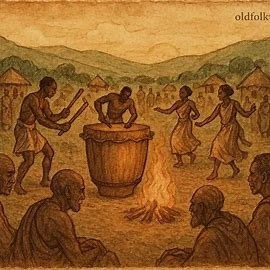
Long ago, in Dahomey, three siblings named Minona, Aovi and Legba were associated with a funeral band. They travelled together, performing music and songs at funeral gatherings.
Their performances were valued, and people rewarded them for their work. On one occasion, news reached them that an important man had died in Adjaminako. The siblings travelled there to perform at his funeral.
They played their music and fulfilled their responsibilities at the gathering. Their performance pleased those present, and they received gifts, including cowries.
Cowries were valuable in the society of the time and served as a form of currency. The siblings therefore had a reason to divide their earnings carefully.
When the funeral ended, they gathered to share what they had received. However, their problem was not the total amount of their payment. It was the single cowry that remained after they had divided the rest.
The Dispute Over the Extra Cowry
The three siblings wanted an equal division of their earnings, but they could not agree on what to do with the remaining cowry.
Explore more stories from our Beninese Folktales Collections archive.
Each believed that the extra shell should belong to them. Their disagreement continued as they tried different ways of dividing the money.
Because none of them could settle the matter, they decided to ask other people for help.
Their first attempts at finding a solution did not bring peace. The suggestions they received failed to satisfy the siblings, and their anger grew.
The disagreement became more serious than the value of the cowry itself. Each sibling wanted their position recognised, and none was willing to accept a decision that favoured another.
Their inability to settle such a small dispute revealed how far their quarrel had gone.
The Dog Offers a Solution
As the disagreement continued, Legba decided to find another way to settle it.
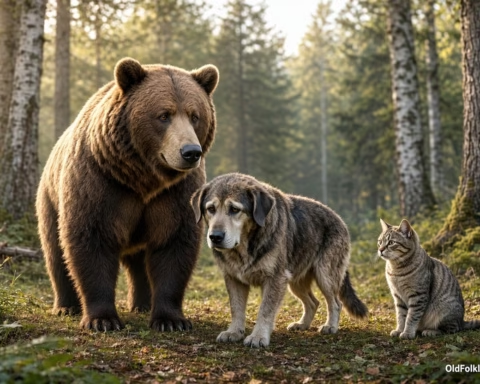
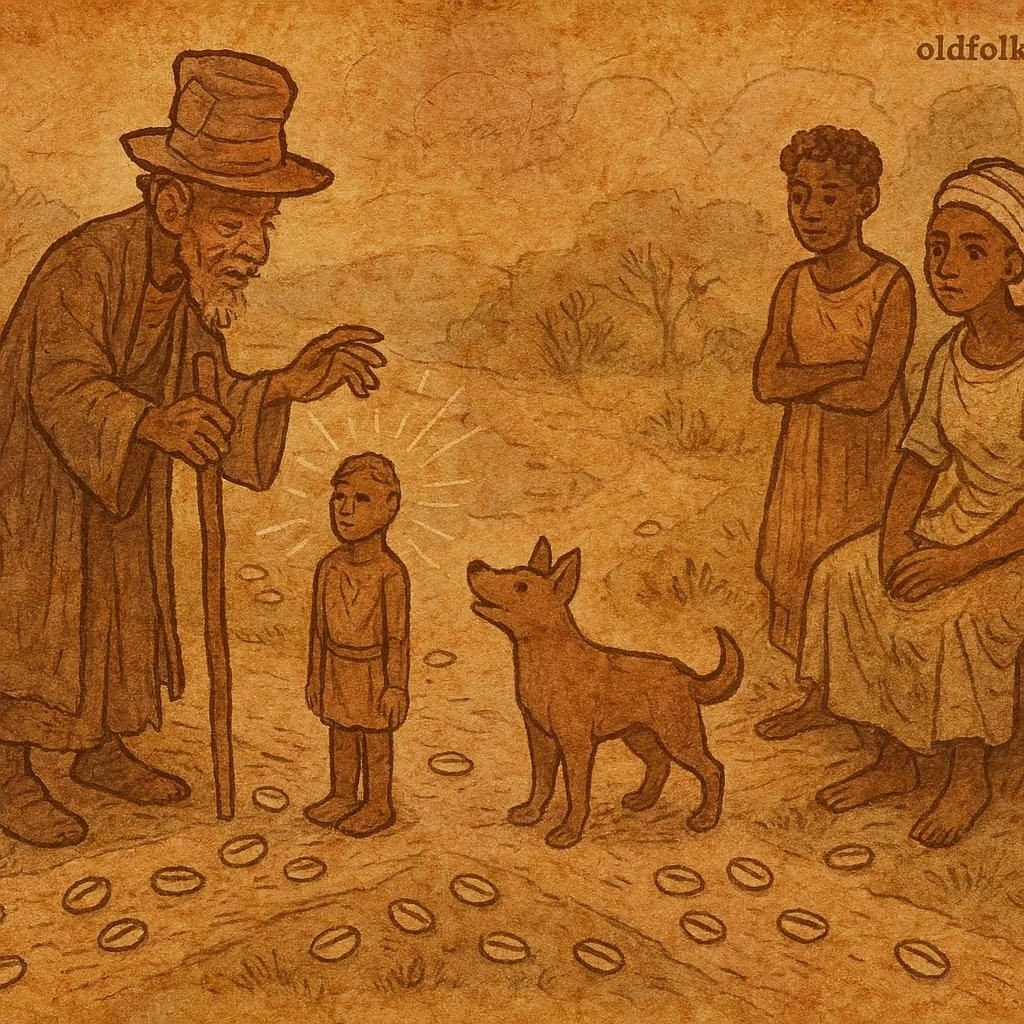
He took a carved figure from Fa’s sacred belongings and brought it to life in the form of a dog. He then instructed the animal to approach the siblings and help them divide their cowries.
When the dog arrived, the three explained their problem. They wanted an equal division, but the extra cowry continued to prevent them from reaching an agreement.
The dog considered the matter and recognised that the siblings were trying to divide something that could not be shared equally among them.
Instead of awarding the remaining cowry to one of the three, the dog dug a hole in the ground and buried it.
The action provided a different answer to their disagreement. The extra cowry would not belong to Minona, Aovi or Legba. It would be given to the ancestors.
This solution satisfied the siblings. For the first time, they had found a way to end their argument without favouring one another.
The dog had succeeded where the earlier suggestions had failed.
The Dog Receives an Honoured Place
The siblings recognised the wisdom of the dog’s decision and honoured the animal for settling their dispute.
Its action had introduced an important idea into the story: something that could not be divided among the living could instead be offered to the ancestors.
The dog therefore became associated with the relationship between people, the gods and the ancestral world.
Its role was no longer simply that of an animal created to resolve an argument. It had demonstrated an ability to settle a dispute by recognising a place for the ancestors in the decision.
The story uses this event to explain why the dog receives respect within the religious understanding represented in the narrative.
The Trouble Caused by Legba
The dispute over the cowries was not the only difficulty connected with Legba.
Earlier, he had become involved in a matter concerning Fa and the use of medicinal powders. The powders were associated with different effects, and Legba was entrusted with delivering the appropriate one to someone seeking help.
Instead of following the instruction, Legba gave the wrong powder.
His action caused serious consequences and contributed to further trouble involving the people who sought Fa’s guidance.
As the consequences became known, Legba faced accusations connected with his conduct. The narrative presents him as a figure whose cleverness and ability to act independently could also create problems for others.
The account does not portray his actions as harmless. His decisions bring conflict and place him in difficult circumstances.
Legba Seeks Safety
As the accusations against him developed, Legba had to find a way to escape the consequences of his actions.
He eventually went to his in-laws’ home. The episode involving his mother-in-law forms part of the unusual sequence of events through which the narrative explains Legba’s position.
Rather than presenting his appointment as a simple reward for good behaviour, the account connects it to the complicated events surrounding his actions, the accusations against him and the recognition of his particular abilities.
The story therefore presents Legba as a figure who occupies an important position despite his troublesome conduct.
His role is not based solely on his relationship with Fa or his membership of the divine family. It also reflects his ability to move between different groups and situations.
The Siblings Receive Different Responsibilities
By the end of the narrative, King Metonofi recognises the different positions of the three siblings and assigns them separate responsibilities.
Minona becomes associated with women. Aovi receives responsibility connected with the gods and the respect owed to them.
Legba receives a wider responsibility. He becomes the guardian of men and the figure who can move between the human and divine worlds.
This arrangement gives the three siblings distinct places within the order described by the story.
Legba’s position is particularly important because his responsibility extends beyond one group. He stands between humans and the gods, connecting different parts of the spiritual world.
His role as guardian explains why he occupies an important position in the narrative’s understanding of divine relationships.
The Meaning of the Dog’s Place
The dog episode provides the central explanation for the animal’s honoured position in this particular Dahomean account.
The siblings could not agree on who should receive the extra cowry. Their attempts to settle the disagreement through ordinary division only produced more conflict.
The dog offered a solution that none of them had considered. By burying the remaining cowry, it treated the shell as an offering for the ancestors rather than property belonging to one individual.
This action brought the dispute to an end and connected the dog with the relationship between the living and the ancestral world.
The narrative also explains Legba’s guardianship through the events surrounding the siblings. Although his conduct creates difficulties, he becomes the figure entrusted with responsibility for humans and the gods.
Together, the two explanations show how the story connects everyday objects, disputes and unusual events with the roles assigned to spiritual figures.
Explore our complete Africa Folktales collection.
Moral of the Story
The tale highlights the importance of finding solutions that do not favour one person unfairly. The dog ends the siblings’ quarrel by recognising that the remaining cowry can be given to the ancestors instead of being claimed by any one of them.
It also explores the complicated nature of Legba, whose cleverness brings both trouble and an important position within the spiritual order described in the story.
Knowledge Check
- Who were the three siblings in the story?
They were Minona, Aovi and Legba.
- Why did the siblings quarrel after the funeral?
They could not agree on who should receive the extra cowry left after dividing their payment.
- How did Legba help settle the disagreement?
He brought a carved figure to life as a dog and sent it to help the siblings resolve their dispute.
- What did the dog do with the remaining cowry?
It dug a hole and buried the cowry for the ancestors.
- What responsibilities were assigned to the three siblings?
Minona became associated with women, Aovi with the gods, and Legba became guardian of men and gods.
- Why does the story explain the dog’s honoured position?
The dog settled the siblings’ disagreement by giving the remaining cowry to the ancestors.
Source
Source: Adapted from “How Legba Became Guardian of Men and Gods: Why the Dog Is Respected,” a Dahomean narrative recorded in Melville J. Herskovits and Frances S. Herskovits, Dahomean Narrative: A Cross-Cultural Analysis (1958), Narrative 10, pp. 142–147.
Explore More Beninese Folktales
- The Princess and the Dangerous Lion
- The Orphan Girl and Her Stepmother
- The Truth Behind the King’s First Wife
- Turtle’s Revenge on the Lion
- The King and the Magic Stone
- Why Death Came to the World
- The Talking Drum’s Warning