In a Dahomean folktale about the exploits of the gods, Legba becomes involved in a dispute with Fa after discovering that his wife, Nunde, has been unfaithful to him. When he questions her, she gives him an answer that challenges his standing as a husband.
Rather than allowing the disagreement to remain private, Legba decides to demonstrate his strength before the people. He gathers the community and uses the occasion to challenge Fa and declare a new privilege for himself.
The story explains how Legba came to claim the right to take any woman who pleased him, even when she was already married. It also preserves details about his relationship with Nunde and the joyful response associated with his sacred drums.
Legba and His Wife, Nunde
Legba was a powerful figure among the Dahomean gods. He had a wife named Nunde, also known in the account as Konikoni.
Their marriage becomes the centre of a dispute involving another god, Fa. While Legba was away, Fa had sexual relations with Nunde.
When Legba returned, he discovered what had happened. He questioned his wife about her involvement with Fa, seeking an explanation for her actions.
Nunde did not deny the encounter. Instead, she responded by telling Legba that he did not satisfy her sexually.
Her answer turned the disagreement into a challenge to Legba’s standing as a husband. The matter was no longer simply about her unfaithfulness; it had become a question of his ability and strength.
Legba Prepares to Prove His Strength
Legba was angered by Nunde’s response. Rather than accepting her judgement, he decided to demonstrate his strength publicly.
Explore more stories from our Beninese Folktales Collections archive.
He ate a large quantity of food as preparation for the display he intended to make. His response was not limited to confronting Nunde privately. He wanted the people to witness his abilities and understand that her criticism did not define him.
Legba therefore arranged for the people to assemble. His intention was to make his demonstration before the community, where his strength could be seen rather than merely discussed.
The gathering created an opportunity for him to address both his wife and Fa. Their actions had challenged his position, and he intended to answer that challenge openly.
The Public Demonstration
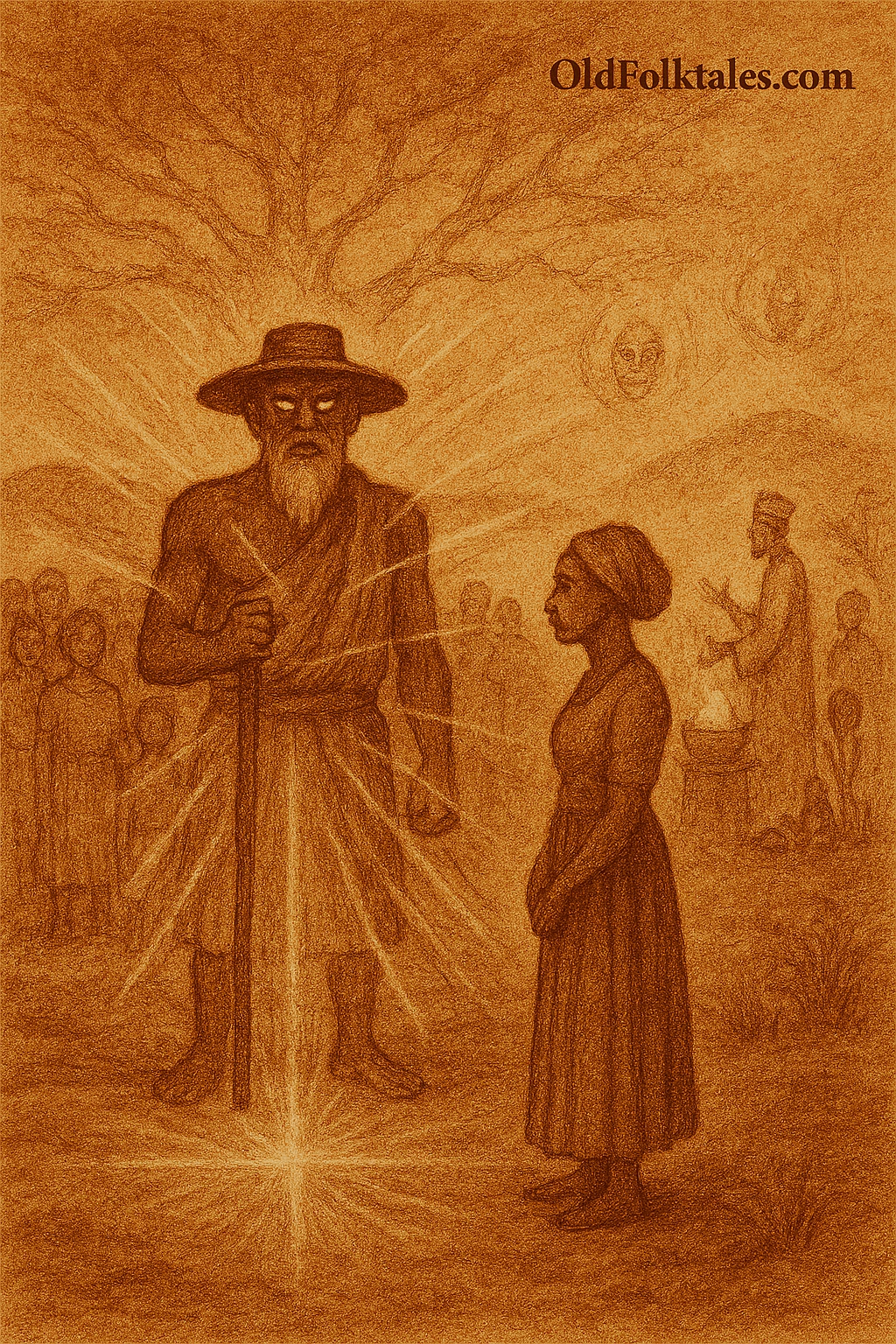
When the people had assembled, Legba carried out his demonstration. The original narrative describes it in sexual terms, making clear that he was displaying his sexual strength.
He accompanied the demonstration with a chant asserting the greatness of his power.
The performance was intended to answer Nunde’s accusation that he lacked the ability to satisfy her. By making his display public, Legba turned a private marital dispute into a matter witnessed by the community.
His actions also challenged Fa, whose involvement with Nunde had contributed to the conflict.
The story presents this event as the moment when Legba establishes his authority in the dispute. Rather than relying on an argument, he uses a public display to support his claim.
Legba Challenges Fa
After his demonstration, Legba addressed Fa.
He declared that he and Fa were gods of equal standing. However, he also established a distinction between their positions and responsibilities.
Legba maintained that Fa should remain at home while the other gods travelled. This statement formed part of his response to the dispute and asserted his own position among the gods.
The disagreement was therefore not limited to the relationship between Legba and Nunde. It also involved Fa and the standing of the two divine figures.
Through his declaration, Legba sought to make clear that Fa could not simply challenge him without consequence.
Legba’s Declaration About Women
Following the demonstration, Legba made a declaration that gave the tale its title.
He announced that whenever he encountered a woman who pleased him, he could take her, even if she was already married to another man.
This declaration established the privilege that the narrative seeks to explain. Legba’s response to Nunde’s criticism and Fa’s involvement became connected to his claimed freedom to take women.
The statement is presented as part of the traditional explanation for Legba’s conduct and his relationship with women.
It is important to understand this as a feature of the particular myth being told, rather than as a general rule governing marriage or relationships in Dahomean society.
Nunde and Konikoni
The account also connects Legba’s declaration to his wife Nunde, who is identified by the additional name Konikoni.
Her role in the story is central because her relationship with Fa sets the events in motion. Her response to Legba’s questions provokes his public demonstration, and his reaction becomes the explanation for the privilege he claims afterwards.
The narrative does not present the disagreement as an ordinary domestic misunderstanding. It places the actions of the three figures within a world where divine status, personal relationships and public authority are closely connected.
Nunde’s actions therefore form the starting point of a larger explanation about Legba’s behaviour.
Legba and the Sacred Drums
The closing part of the account connects Legba’s character with the playing of his drums.
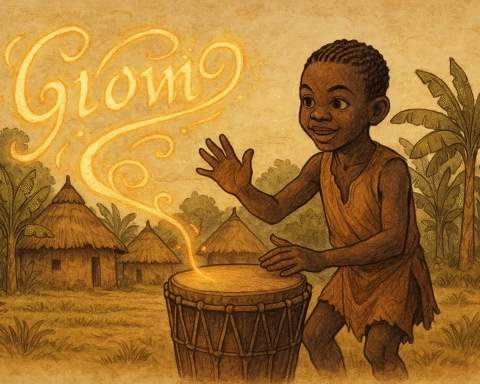
When his sacred drums are sounded, Legba is described as responding with joy and dancing. This detail provides a lively conclusion to a narrative that has otherwise centred on conflict, accusation and public demonstration.
His joyful dancing is part of the account’s explanation of his association with women and the privilege he declared.
The drums also remind readers that the story belongs to a living religious and cultural tradition in which music and dance can be connected with the presence and celebration of spiritual figures.
The Meaning of the Tale
Why Legba May Take All Women is an account of conflict among divine figures. It begins with Nunde’s relationship with Fa and develops into a public dispute about Legba’s sexual strength and authority.
The narrative uses this disagreement to explain a particular aspect of Legba’s character. His declaration about taking women becomes the central outcome of the confrontation.
The tale should not be read as a historical record of ordinary marriage practices or as evidence that all Dahomean communities accepted such behaviour. It is a specific traditional narrative about the exploits of the gods.
Its value lies in preserving the way the recorded story connects personal conflict, divine status and the customs associated with Legba.
Explore our complete Africa Folktales collection.
Moral of the Story
The tale explores pride, rivalry and the consequences of actions within relationships. It also shows how a private disagreement can become a public conflict when those involved seek to defend their reputation and authority. Its account of Legba’s declaration reflects the particular character of the myth rather than a general moral rule about relationships.
Knowledge Check
- Who was Nunde?
Nunde was Legba’s wife, also known in the account as Konikoni. - Which god became involved with Nunde while Legba was away?
Fa became involved with Nunde. - What did Nunde tell Legba when he questioned her?
She told him that he did not satisfy her sexually. - How did Legba respond to Nunde’s criticism?
He ate a large quantity of food and arranged a public demonstration of his sexual strength. - What declaration did Legba make after his demonstration?
He declared that he could take any woman who pleased him, even if she was married to another man. - How does the account describe Legba’s response when his sacred drums are played?
It describes him as responding joyfully and dancing.
Source
Source: Adapted from “Why Legba May Take All Women,” a Dahomean narrative recorded in Melville J. Herskovits and Frances S. Herskovits, Dahomean Narrative: A Cross-Cultural Analysis (1958), Narrative 11, p. 148.
Explore More Beninese Folktales
- The Orphan Girl and Her Stepmother
- The Truth Behind the King’s First Wife
- Turtle’s Revenge on the Lion
- The King and the Magic Stone
- Why Death Came to the World
- The Talking Drum’s Warning