A mule travelling with a jackal and a lion finds himself in danger when his companions decide that one of them must be eaten because of his ancestry. The lion and the jackal believe that the mule is the weakest among them, but the mule refuses to accept their judgement. Instead of fighting them directly, he claims that an old man can settle their dispute. His choice of adviser and a clever trick turn the hunters’ threat against them.
Three Travellers Make a Dangerous Agreement
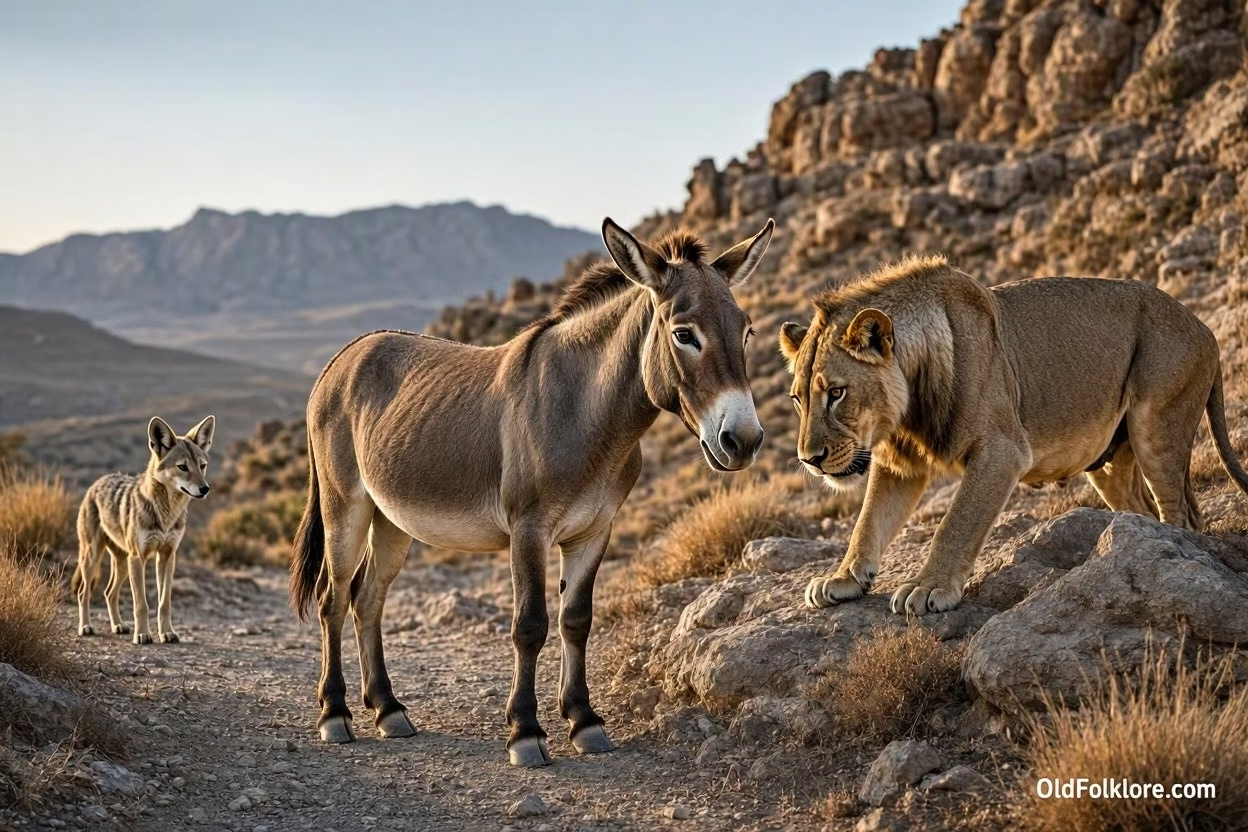
A mule, a jackal and a lion were travelling together. As they went along, they began discussing their ancestry and the families from which they had come.
The lion spoke proudly of his parents. His father was a lion, and his mother was a lioness. The jackal also declared that both his father and mother were jackals.
When they questioned the mule, he answered honestly. His father was a donkey, and his mother was a mare.
The lion and the jackal immediately used this answer against him. They declared that the mule’s parentage made his lineage inferior to theirs. On that basis, they decided that they would eat him.
The mule had no desire to become their meal. He understood that arguing about his ancestry would not protect him, especially when his two companions had already agreed to harm him. He needed another way to escape.
Explore more stories from our West African Folk-Tales collection.
The Mule Seeks an Adviser
Rather than challenge the lion and jackal to a fight, the mule proposed that they consult an old man. He told them that if the old man confirmed that his ancestry was inferior, they could carry out their threat and eat him.
The proposal gave the mule a chance to delay the decision and prepare a plan. The lion and jackal accepted because they believed the old man’s judgement would support their position.
The mule then went to a blacksmith and asked him to shoe his hind feet. He also gave a particular instruction: the nails were to be made to protrude.
The blacksmith carried out the request. Once his hooves had been prepared, the mule returned to his companions.
A Message the Jackal Cannot Read
When the mule came back, he showed his hind feet to the jackal and asked him to read what was written there.
The jackal examined the hooves but claimed that he could not understand the writing. He said that he knew only three words and repeated them.
The mule then approached the lion and made the same request. He told the lion that he, too, could not understand the message and knew only those three words.
The lion, confident in his own strength, came closer to inspect the mule’s feet.
This was precisely the opportunity the mule had been waiting for. As the lion approached, the mule struck him in the eyes with his hind feet. The blow brought the lion down, ending the immediate threat against the mule.
The story concludes with a warning: a person who keeps company with a deceiver may eventually be betrayed.
Explore our complete Algerian Folktales archive.
Moral Lesson
Do not judge others solely by their ancestry or background. Pride can make people cruel and careless, while cleverness and quick thinking can help someone escape danger. The tale also warns against keeping company with those who use deception or believe that strength gives them the right to harm others.
Knowledge Check
1. Who are the three animals travelling together?
The three animals are a mule, a jackal and a lion.
2. Why do the lion and jackal threaten the mule?
They judge the mule’s ancestry as inferior because his father is a donkey and his mother is a mare.
3. What does the mule suggest when the animals argue about his ancestry?
He suggests consulting an old man to decide whether his ancestry is inferior.
4. Whom does the mule visit before returning to his companions?
He visits a blacksmith and asks him to shoe his hind feet with the nails protruding.
5. What happens when the lion approaches the mule’s feet?
The mule strikes the lion in the eyes with his hind feet, bringing him down.
6. What warning does the story give about choosing companions?
It warns that someone who associates with a deceiver may eventually suffer betrayal.
Source
Adapted from “Le Mulet, le Chacal et le Lion” (“The Mule, the Jackal and the Lion”), included in Joseph Rivière’s Recueil de contes populaires de la Kabylie du Djurdjura, published in Paris by E. Leroux in 1882. The tale appears in the collection’s section of fables.
Explore More Algerian Folktales
- Loundja, Daughter of Tseriel: A Strange Kabyle Folktale
- The Woman Who Ate a Serpent’s Egg: A Strange Kabyle Folktale
- The Cow of the Orphans: A Powerful Algerian Folktale
- The Seven Brothers: A Powerful Algerian Folktale
- The Orphan and His Cruel Uncle